 Back
Plant Form and Function: Roots, Shoots, and Tissue Systems
Study Guide - Smart Notes
 Tailored notes based on your materials, expanded with key definitions, examples, and context.
Plant Form and Function
Roots and Shoots: Overview
Plants are complex eukaryotic organisms that synthesize sugars through photosynthesis, requiring water, carbon dioxide, and sunlight. Their structure is organized into root and shoot systems, each with specialized functions for growth, support, and resource acquisition.
Root System: Anchors the plant, absorbs water and ions, and stores materials.
Shoot System: Gathers CO2 and light, carries out photosynthesis, and supports leaves, buds, and flowers.
Key Nutrients: Nitrogen (N), Phosphorus (P), Potassium (K), Magnesium (Mg) are essential for cellular function and are absorbed as ions from soil.
Surface Area to Volume Ratio (SA:V): Leaves have the highest SA:V for absorption, followed by roots and storage structures.
Root System Structure and Types
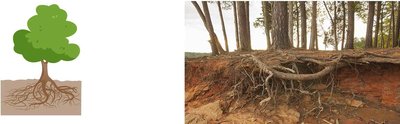
The root system is vital for anchoring the plant, absorbing water and nutrients, and storing resources. Roots can be classified based on their origin and function.
Taproot: The main, dominant root from which lateral roots branch.
Lateral Roots: Extend horizontally from the taproot.
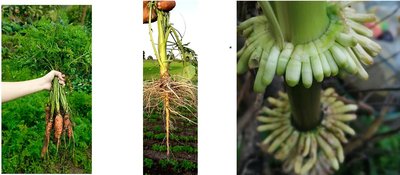
Adventitious Roots: Develop from the shoot system rather than the root system.
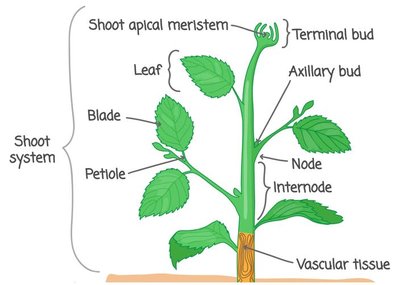
Shoot System Structure
The shoot system includes stems, leaves, and buds, which are essential for photosynthesis, growth, and reproduction.
Stem: Vertical structure supporting leaves and buds.
Node: Location on the stem where leaves and buds grow.
Internode: Segment between nodes.
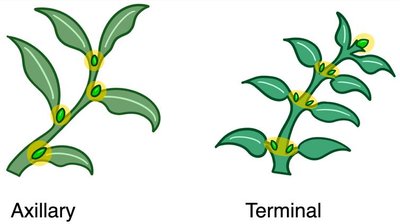
Lateral (Axillary) Bud: Embryonic shoot at the base of a leaf.
Apical Bud: Primary growth point at the tip of the plant.
Branch: Woody projection from the main stem.
Leaf Structure and Function
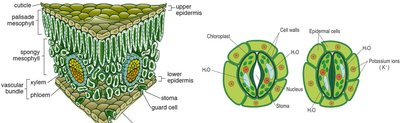
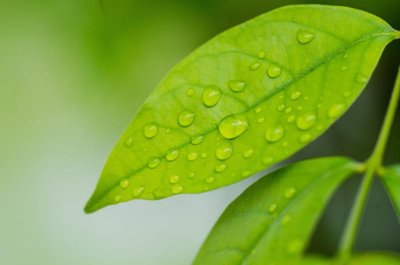
Leaves are the primary organs for photosynthesis and gas exchange. Their structure is adapted for efficient light capture and regulation of water loss.
Petiole: Stalk connecting the leaf to the stem.
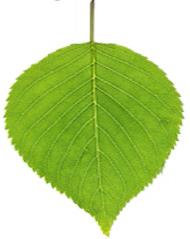
Blade: Flat portion of the leaf.
Mesophyll: Interior tissue where photosynthesis occurs.
Stomata: Pores for gas exchange, regulated by guard cells.
Phenotypic Plasticity in Plant Organs
Plants exhibit phenotypic plasticity, adapting their form to environmental conditions. Roots, stems, and leaves can be modified for specialized functions.
Roots:
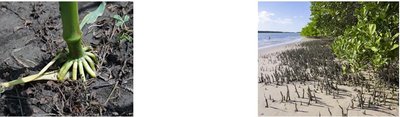
Prop roots: Adventitious roots for aerial support.
Pneumatophores: Allow gas exchange between roots and atmosphere.
Stems:
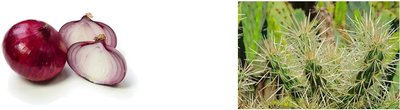
Cacti: Water storage.
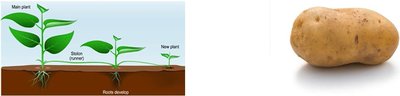
Stem tubers: Carbohydrate storage (e.g., potatoes).
Stolons: Produce new individuals above ground.
Thorns: Defense.
Rhizomes: Produce new individuals underground.
Leaves:
Bulbs (onions): Food storage.
Floral mimics: Attract pollinators.
Succulents: Water storage.
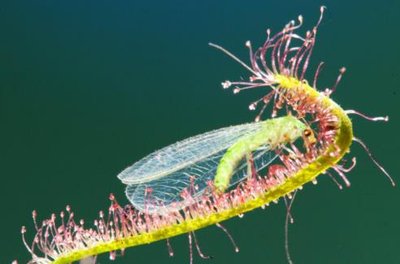
Traps: Capture and digest animals.
Tendrils: Climbing support.
Cactus spines: Defense.
Plant Tissue Systems
Vascular Tissue
Vascular tissue is responsible for transporting water, nutrients, and photosynthetic products throughout the plant. It is organized into vascular bundles.
Xylem: Conducts water and dissolved nutrients from roots to shoots.
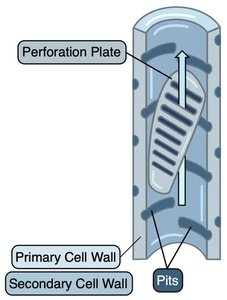
Tracheids: Long, thin water-conducting cells with pits.
Vessel elements: Short, wide cells with perforations for efficient water transport.
Fibers and parenchyma cells: Support and lateral transport.
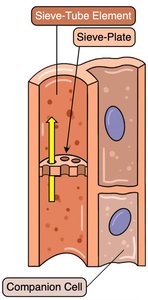
Phloem: Conducts sugars, amino acids, and signaling molecules.
Sieve tube elements: Transport sugars.
Sieve plates: Facilitate transport between cells.
Companion cells: Support sieve tube elements.
Epidermis and Ground Tissue
The epidermis protects the plant and prevents water loss, while ground tissue produces and stores important molecules.
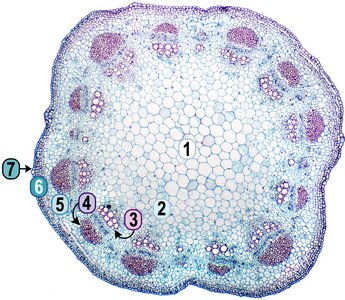
Epidermal Cells: Secrete cuticle, defend against pathogens.
Cuticle: Waxy film covering the epidermis.
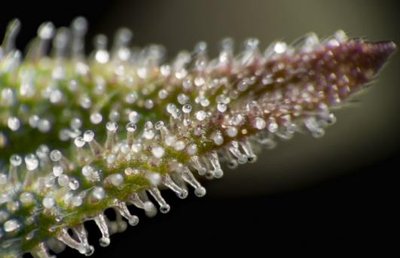
Trichomes: Hair-like structures for water loss prevention, defense, and sunlight reflection.
Ground Tissue:
Pith: Inside vascular bundles.
Cortex: Outside vascular bundles.
Endodermis: Innermost cortex layer.
Pericycle: Layer between endodermis and phloem.
Ground Tissue Cell Types
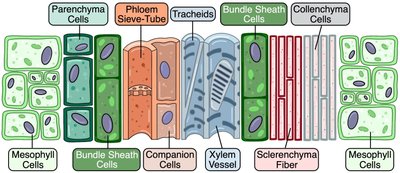
Ground tissue consists of three main cell types, each with distinct functions and properties.
Parenchyma Cells: Most abundant, totipotent, form pith, cortex, and mesophyll.
Collenchyma Cells: Provide structural support in growing shoots and leaves, flexible and stretchy.
Sclerenchyma Cells: Provide structural support where growth has ceased, dead at maturity, thick secondary walls.
Plant Growth and Development
Primary Growth
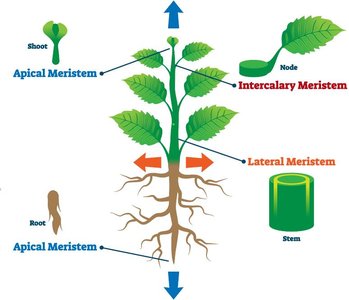
Primary growth increases the length of roots and shoots, driven by meristematic tissues.
Indeterminate Growth: Plants grow throughout their lives.
Meristem: Stem cells that produce daughter cells and differentiate into adult tissues.
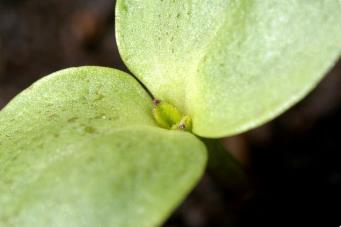
Apical Meristem: Located at tips of roots and shoots; gives rise to primary meristems.
Primary Meristems:
Protoderm: Develops into epidermis.
Procambium: Develops into vascular tissue.
Ground Meristem: Gives rise to ground tissue.
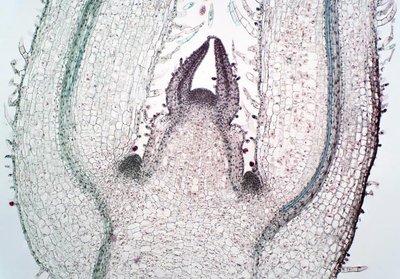
Root Growth
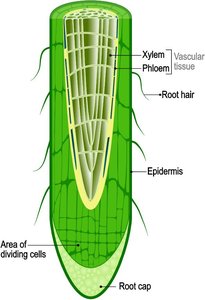
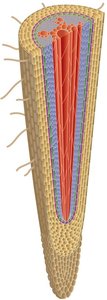
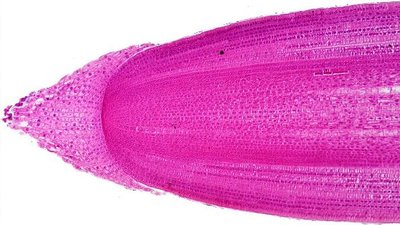
Root growth is organized into distinct zones, each with specialized functions for development and absorption.
Root Cap: Protects apical meristem, senses gravity, secretes lubricants.
Zone of Cellular Division: Area of active cell division.
Zone of Elongation: Cells elongate, pushing root through soil.
Zone of Cellular Maturation: Cells differentiate into dermal, vascular, and ground tissues; root hairs form for absorption.
Secondary Growth
Secondary growth increases the circumference of woody plants, producing new vascular and protective tissues.
Lateral Meristem: Responsible for secondary growth.
Vascular Cambium: Produces secondary xylem (wood) and secondary phloem.
Cork Cambium: Produces cork cells for protection.
Wood: Derived from secondary xylem; only outer layers transport water.
Bark: Protective layer made from secondary phloem, cork cambium, and cork cells.
Lenticels: Small openings in bark for gas exchange.
Region | Description |
|---|---|
Heartwood | Dark-colored inner xylem, accumulates gums and resins |
Sapwood | Light-colored outer xylem, actively transports water |
Bark | Outer protective layer |
Vascular Cambium | Meristematic tissue producing new xylem and phloem |
Cork Cambium | Produces cork cells |
Summary Table: Plant Tissue Systems
Tissue System | Main Cell Types | Function |
|---|---|---|
Dermal | Epidermal cells, trichomes | Protection, water loss prevention |
Vascular | Xylem (tracheids, vessel elements), phloem (sieve tube elements, companion cells) | Transport of water, nutrients, sugars |
Ground | Parenchyma, collenchyma, sclerenchyma | Photosynthesis, storage, support |
Additional info: These notes expand on the original content by providing definitions, examples, and context for each plant structure and tissue system, ensuring a comprehensive and self-contained study guide for exam preparation.
