 Back
Topic7B Plant Growth and Transport: Physiology and Cell Biology Study Notes
Study Guide - Smart Notes
 Tailored notes based on your materials, expanded with key definitions, examples, and context.
Topic7B Plant Growth and Transport
Introduction to Plant Physiology
Plant physiology explores the functional processes that allow plants to grow, develop, and respond to their environment. Central to this field are the mechanisms of resource acquisition, transport, and utilization within the plant body.
Vascular vs. Non-Vascular Plants
Structural Differences and Growth Potential
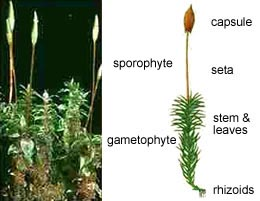
Vascular plants possess specialized tissues (xylem and phloem) for the transport of water, minerals, and sugars, enabling them to grow tall and complex. Non-vascular plants, such as mosses, lack these tissues and remain small due to limited transport capabilities.
Vascular plants: Have xylem (water/mineral transport) and phloem (sugar transport).
Non-vascular plants: Lack true vascular tissues; rely on diffusion and osmosis for transport.
Example: Mosses are non-vascular and do not grow tall because they lack xylem and phloem.
Resource Acquisition and Transport in Vascular Plants
Overview of Transport Pathways
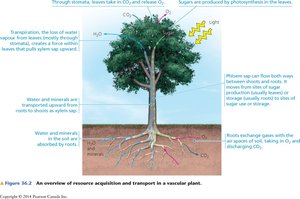
Vascular plants acquire resources from their environment and distribute them internally through specialized tissues. Water and minerals are absorbed by roots, transported upward via xylem, while sugars produced in leaves are distributed by phloem.
Transpiration: Loss of water vapor from leaves drives upward movement of water in xylem.
Photosynthesis: Leaves produce sugars, which are transported to other plant parts via phloem.
Root exchange: Roots absorb water and minerals, and exchange gases with the soil.
Short-Distance Transport in Plants
Cellular Pathways for Water and Nutrient Movement
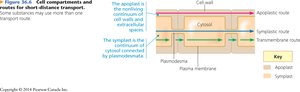
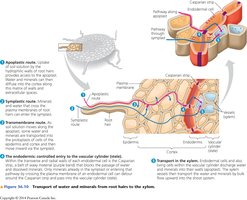
Within plant tissues, water and solutes move by three main pathways: apoplastic, symplastic, and transmembrane. These routes differ in their use of cell walls, membranes, and cytoplasm.
Apoplastic route: Movement through cell walls and intercellular spaces (does not cross membranes).
Symplastic route: Movement through the cytoplasm via plasmodesmata (cell-to-cell connections).
Transmembrane route: Movement across cell membranes, entering and exiting cells repeatedly.
Transport of Solutes Across Membranes
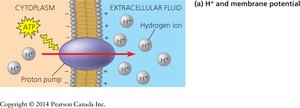
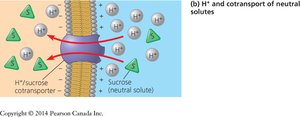
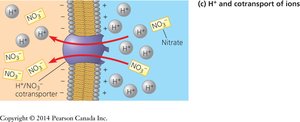
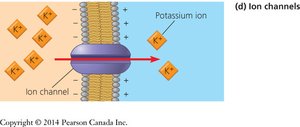
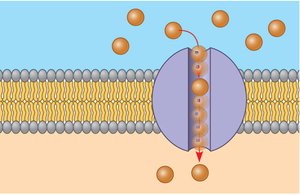
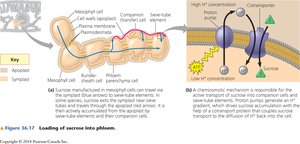
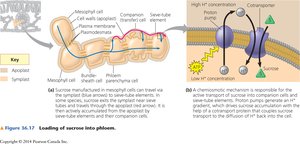
Solute transport across plant cell membranes is driven by membrane potential, established primarily by proton pumps. Co-transporters and ion channels facilitate the movement of specific molecules and ions.
Proton pumps: Use ATP to export H+, creating an electrochemical gradient.
Co-transporters: Use the H+ gradient to import neutral solutes (e.g., sucrose) or ions (e.g., nitrate).
Ion channels: Allow passive movement of ions such as K+.
Osmosis and Water Transport
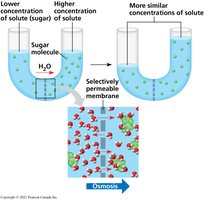
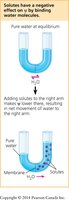
Water moves across membranes by osmosis, from regions of higher free water concentration (lower solute concentration) to lower free water concentration (higher solute concentration). Aquaporins facilitate rapid water movement across membranes.
Osmosis: Passive movement of water through a selectively permeable membrane.
Aquaporins: Channel proteins that allow water to cross membranes efficiently.
Water Potential and Its Components
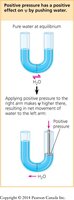
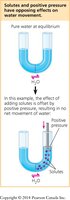
Water potential (Ψ) predicts the direction of water movement and is measured in megapascals (MPa). It is determined by solute potential (ΨS) and pressure potential (ΨP):
Water potential equation:
Solute potential (ΨS): Always negative; decreases as solute concentration increases.
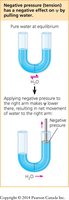
Pressure potential (ΨP): Positive (turgor pressure) or negative (tension).
Solute Potential Formula
The solute potential (osmotic potential) is calculated as:
i: Ionization constant (1 for sucrose, 2 for NaCl)
C: Molarity (mol L-1)
R: Ideal gas constant (8.32 J K-1 mol-1)
T: Temperature (K)
Water Movement in Plant Cells
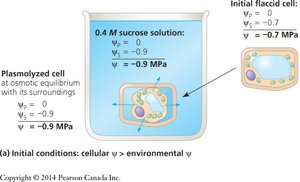
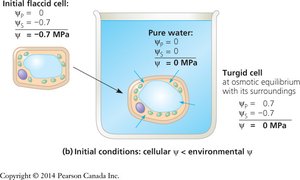
Water moves from regions of higher water potential to lower water potential. The balance of solute and pressure potentials determines cell states such as turgid, flaccid, or plasmolyzed.
Turgid cell: Water enters, cell is firm (normal for plants).
Flaccid cell: No net water movement.
Plasmolyzed cell: Water leaves, cell membrane pulls away from wall.
Long-Distance Transport in Plants
Xylem: Water and Mineral Transport
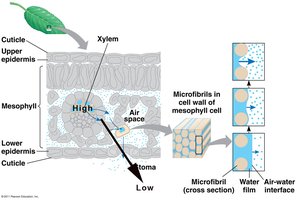
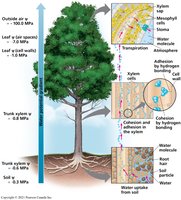
Long-distance transport of water and minerals occurs in the xylem, driven by bulk flow resulting from transpiration. Water moves from roots to leaves, powered by evaporation at the leaf surface.
Bulk flow: Movement of water due to pressure differences, not diffusion.
Transpiration: Evaporation of water from leaves creates negative pressure, pulling water upward.
Cohesion-adhesion theory: Water molecules stick together (cohesion) and to cell walls (adhesion), forming a continuous column.
Stomata: Regulation of Water Loss
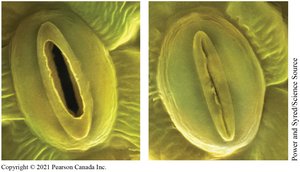
Stomata are pores on the leaf surface that regulate gas exchange and water loss. Guard cells control the opening and closing of stomata in response to environmental cues and internal signals, such as potassium ion concentration.
Open stomata: Guard cells are turgid due to K+ influx and water uptake.
Closed stomata: Guard cells are flaccid due to K+ efflux and water loss.
Regulation: Stomata usually open during the day for photosynthesis and close at night or under drought stress.
Phloem: Transport of Sugars
Source-to-Sink Movement
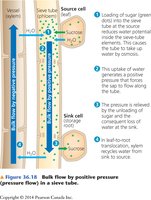
Sugars produced in photosynthetic tissues (sources) are transported to non-photosynthetic tissues (sinks) via the phloem. This movement is driven by pressure flow, resulting from active loading and unloading of sugars.
Source: Leaves or storage organs releasing sugars.
Sink: Growing tissues, roots, or storage organs absorbing sugars.
Phloem loading: Active transport of sucrose into sieve tube elements increases osmotic pressure, drawing in water and generating flow.
Phloem unloading: Sucrose is removed at the sink, lowering osmotic pressure and allowing water to exit.
Summary Table: Comparison of Xylem and Phloem Transport
Feature | Xylem | Phloem |
|---|---|---|
Transported Substances | Water, minerals | Sugars, amino acids, hormones |
Direction of Flow | Roots to leaves (unidirectional) | Source to sink (bidirectional) |
Driving Force | Transpiration (negative pressure) | Pressure flow (positive pressure) |
Cell Type | Dead (tracheids, vessel elements) | Living (sieve tube elements, companion cells) |
Key Equations
Water potential:
Solute potential:
Additional info:
Plant cells are normally turgid due to water uptake, while animal cells are normally isotonic with their environment.
Bulk flow in xylem does not require living cells or ATP; it is a passive process driven by evaporation.
