 Back
Plant Nutrition and Hormones: Essential Elements, Soil Interactions, and Hormonal Regulation
Study Guide - Smart Notes
 Tailored notes based on your materials, expanded with key definitions, examples, and context.
Plant Nutrition
Essential Elements in Plants
Plants require a variety of chemical elements for growth and development. These elements are classified based on the quantity required by the plant:
Macronutrients: Needed in large amounts. Includes carbon (C), oxygen (O), hydrogen (H), nitrogen (N), phosphorus (P), sulfur (S), potassium (K), calcium (Ca), and magnesium (Mg).
Micronutrients: Needed in trace amounts. Includes chlorine (Cl), iron (Fe), manganese (Mn), boron (B), zinc (Zn), copper (Cu), nickel (Ni), and molybdenum (Mo).
Each element plays a specific role in plant physiology, such as photosynthesis, enzyme function, and structural integrity.
Cation Exchange in the Soil
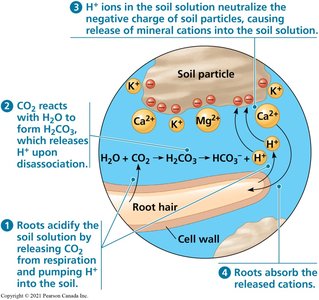
Soil particles, especially clay and organic matter, are negatively charged and attract positively charged ions (cations) such as K+, Ca2+, and Mg2+. This process prevents these nutrients from being washed away by water (leaching). However, for plants to absorb these cations, they must be released into the soil solution through a process called cation exchange:
Roots release H+ ions into the soil, often by pumping them out or by releasing CO2 that forms carbonic acid.
H+ ions displace the nutrient cations from soil particles, making them available for uptake by roots.
Negatively charged ions (anions) like nitrate (NO3-) and phosphate (H2PO4-) do not bind to soil particles and are more easily leached away.
Symptoms of Mineral Deficiency
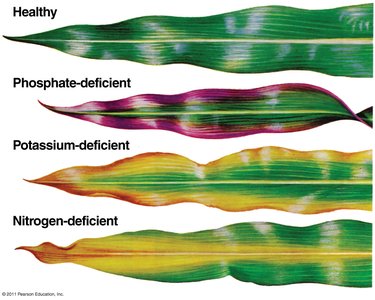
Mineral deficiencies in plants manifest as visible symptoms, which depend on the nutrient's function and mobility within the plant:
Mobile nutrients (e.g., N, P, K, Mg, Cl, Zn, Mo): Deficiency symptoms appear first in older leaves, as these nutrients are relocated to new growth.
Less mobile nutrients (e.g., Ca, S, Fe, B, Cu): Deficiency symptoms appear first in younger leaves, as these nutrients are not easily transported within the plant.
It can be challenging to distinguish between mineral deficiencies and pathogen attacks, as symptoms may overlap.
Plant Nutrition and Symbiotic Relationships
Rhizosphere and Rhizobacteria
The rhizosphere is the narrow region of soil directly influenced by root secretions and associated soil microorganisms. Rhizobacteria are beneficial bacteria that thrive in this zone, enhancing plant growth by:
Producing antibiotics to protect against pathogens
Facilitating nutrient uptake
Stimulating root growth
Mycorrhizae: Fungal Associations
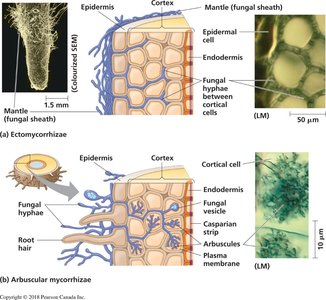
Mycorrhizae are mutualistic associations between fungi and plant roots. The fungus receives carbohydrates from the plant, while the plant benefits from increased water and mineral absorption due to the extensive fungal hyphae network. There are two main types:
Ectomycorrhizae: Fungal hyphae form a sheath around the root but do not penetrate root cells.
Arbuscular mycorrhizae: Fungal hyphae penetrate the cell wall (but not the plasma membrane) of root cells, forming structures called arbuscules for nutrient exchange.
Plant Hormones: Growth Regulators
Overview of Plant Hormones
Plant hormones, or plant growth regulators, are chemical signals that coordinate growth, development, and responses to environmental stimuli. They are active at very low concentrations and often interact to regulate physiological processes. Major plant hormones include:
Auxins: Promote cell elongation and apical dominance
Cytokinins: Stimulate cell division
Gibberellins: Promote stem elongation, seed germination, and fruit growth
Abscisic acid (ABA): Induces seed dormancy and drought tolerance
Ethylene: Regulates fruit ripening and stress responses
Other hormones: Brassinosteroids, jasmonates, salicylic acid, strigolactones
Auxins
Auxins are primarily produced in the shoot apical meristem (SAM) and young leaves. They regulate:
Cell elongation and apical dominance (suppression of lateral bud growth)
Root initiation and development
Fruit development
Pattern formation during development
Auxins are transported in a polar manner, influencing leaf venation and root architecture.
Practical Uses for Auxins
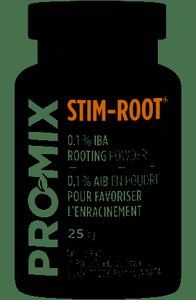
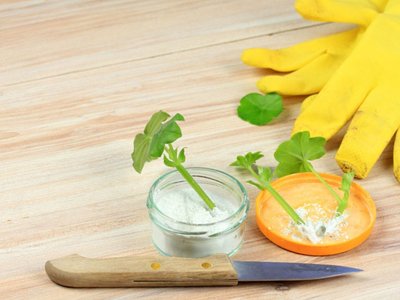
Indolebutyric acid (IBA) is used to stimulate root formation in plant cuttings for vegetative propagation.
Synthetic auxins like 2,4-D are used as herbicides, especially against broadleaf weeds (eudicots).
Cytokinins
Cytokinins are produced in actively growing tissues such as roots, embryos, and fruits. They:
Stimulate cytokinesis (cell division)
Work with auxin to control cell division and differentiation
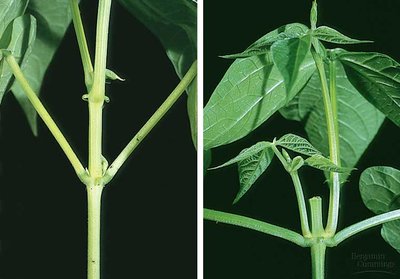
Regulate apical dominance and promote lateral bud growth
Delay leaf senescence
Removal of the terminal bud (source of auxin) leads to bushier plants due to reduced apical dominance.
Gibberellins (GA)
Gibberellins are produced in meristems, young leaves, and developing seeds. They:
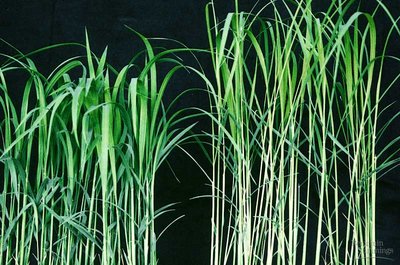
Promote stem elongation and rapid growth
Stimulate flowering and seed germination
Are used commercially to increase fruit size (e.g., in seedless grapes)
Seed Dormancy and Germination
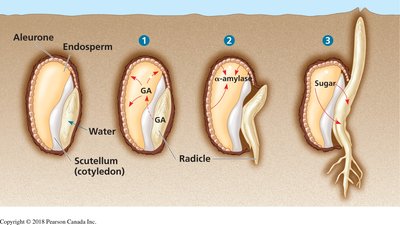
After water uptake (imbibition), gibberellins released from the embryo signal the seed to germinate by stimulating the production of enzymes that mobilize stored nutrients.
Abscisic Acid (ABA)
ABA is synthesized in many plant tissues and is involved in:
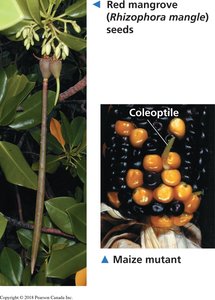
Inducing seed dormancy, ensuring germination only under optimal conditions
Promoting drought tolerance by causing stomatal closure
Regulating other stress responses
Ethylene
Ethylene is a gaseous hormone produced in response to stress and during fruit ripening. It:
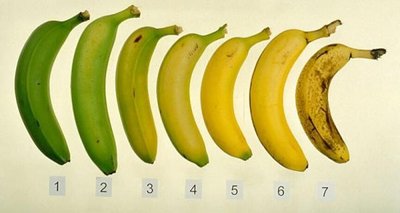
Promotes fruit ripening (e.g., bananas)
Regulates leaf abscission and senescence
Induces the triple response in seedlings (inhibition of stem elongation, promotion of lateral expansion, and horizontal growth)
Is produced in response to mechanical stress, injury, or infection
Summary Table: Major Plant Hormones
Hormone | Where Produced | Major Functions |
|---|---|---|
Auxin (IAA) | Shoot apical meristems, young leaves, root apical meristems, developing seeds/fruits | Stimulates stem elongation, promotes root formation, regulates fruit development, enhances apical dominance, phototropism, gravitropism, vascular differentiation, retards leaf abscission |
Cytokinins | Primarily roots, also embryos and fruits | Regulate cell division, modify apical dominance, promote lateral bud growth, stimulate seed germination, delay leaf senescence |
Gibberellins (GA) | Meristems, young leaves, developing seeds | Stimulate stem elongation, pollen development, fruit growth, seed germination, regulate sex determination, juvenile to adult phase transition |
Abscisic acid (ABA) | All plant cells | Inhibits growth, promotes stomatal closure, induces seed dormancy, delays germination, promotes desiccation tolerance |
Ethylene | Most plant parts, especially during senescence, abscission, and fruit ripening | Promotes fruit ripening, leaf abscission, triple response, enhances senescence, root and root hair formation, flowering in some species |
