 Back
BackPlant Nutrition and Symbiotic Relationships
Study Guide - Smart Notes
 Tailored notes based on your materials, expanded with key definitions, examples, and context.
Plant Nutrition and Symbiotic Relationships
Introduction
Plant nutrition is not solely dependent on the uptake of water and minerals from the soil; it often involves complex interactions with other organisms, including bacteria, fungi, and even other plants. These relationships can be mutualistic, parasitic, or predatory, and are essential for plant health, growth, and adaptation to various environments.
Plants and Soil Microbes
Mutualistic Relationships
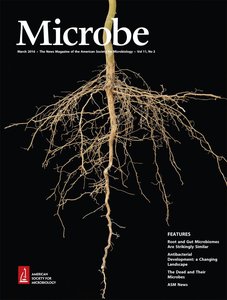
Plants and soil microorganisms frequently engage in mutualistic relationships, where both parties benefit. Dead plant material provides energy for soil microbes, while living roots secrete compounds that support microbial communities in the rhizosphere (the soil region near roots).
Mutualism: Both organisms benefit from the relationship.
Rhizosphere: The soil region influenced by root secretions and associated microorganisms.
Cross-Kingdom Interactions
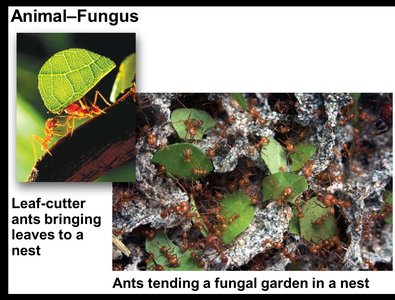
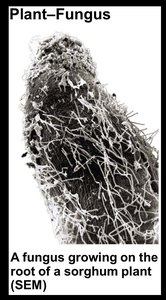
Many beneficial relationships occur between species from different kingdoms or domains, such as plants and fungi or animals and fungi.
Bacteria and Plant Nutrition
Roles of Soil Bacteria
Soil bacteria enhance plant nutrition by exchanging chemicals with roots, decomposing organic matter to release nutrients, and converting atmospheric nitrogen into forms usable by plants.
Exchanging chemicals: Bacteria provide nutrients and receive organic compounds from roots.
Decomposition: Bacteria break down dead material, increasing nutrient availability.
Nitrogen conversion: Bacteria play a key role in the nitrogen cycle.
Rhizobacteria and Endophytes
Rhizobacteria inhabit the rhizosphere, while endophytes live between plant cells. Both depend on root secretions and enhance plant growth by producing growth-stimulating chemicals, antibiotics, absorbing toxic metals, and making nutrients more available.
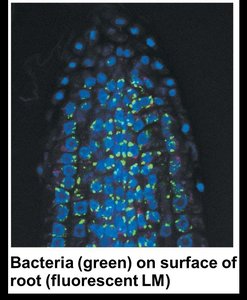
Growth stimulation: Production of hormones and other chemicals that promote root development.
Disease protection: Antibiotics produced by rhizobacteria protect roots from pathogens.
The Nitrogen Cycle
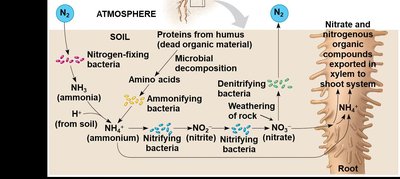
Nitrogen is a limiting nutrient for plant growth. The nitrogen cycle involves the transformation of atmospheric nitrogen and organic nitrogen compounds into forms plants can absorb, primarily nitrate (NO3–) and ammonium (NH4+).
Nitrogen fixation: Conversion of N2 gas to ammonia by bacteria.
Nitrification: Conversion of ammonia to nitrate by bacteria.
Denitrification: Conversion of nitrate back to N2 gas by bacteria.
Symbiotic Nitrogen Fixation: Rhizobium and Legumes
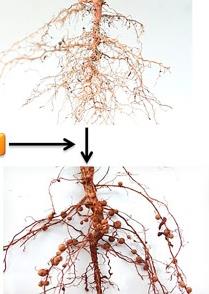
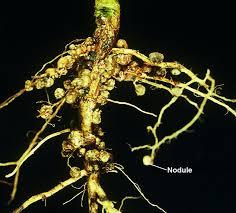
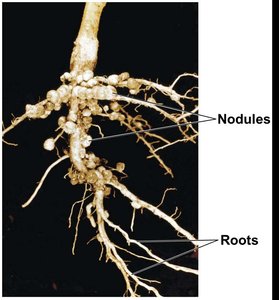
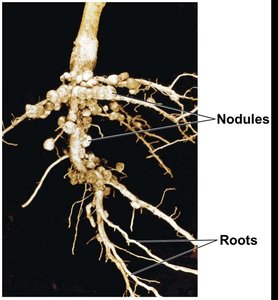
Some legumes form symbiotic relationships with nitrogen-fixing Rhizobium bacteria. The bacteria infect root cells, forming nodules where nitrogen fixation occurs. The plant provides sugars and an anaerobic environment, while the bacteria supply fixed nitrogen.
Nodules: Swellings on roots containing nitrogen-fixing bacteria.
Bacteroids: Form of Rhizobium inside nodules, specialized for nitrogen fixation.
Fungi and Plant Nutrition
Mycorrhizae
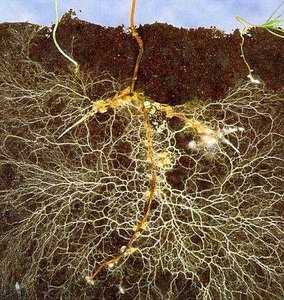
Mycorrhizae are mutualistic associations between fungi and plant roots. The fungus receives carbohydrates from the plant, while the plant benefits from increased water and mineral absorption due to the extensive fungal hyphae network.
Surface area: Fungal hyphae greatly increase the root's absorptive surface.
Growth factors: Mycorrhizal fungi secrete substances that stimulate root growth and branching.
Types of Mycorrhizae
Ectomycorrhizae
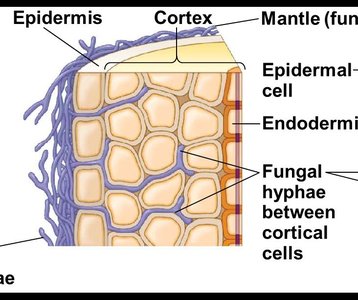
In ectomycorrhizae, the fungal mycelium forms a dense sheath over the root surface and penetrates the apoplast but not the root cells. Common in woody plants such as pine, birch, and eucalyptus.
Arbuscular Mycorrhizae (Endomycorrhizae)
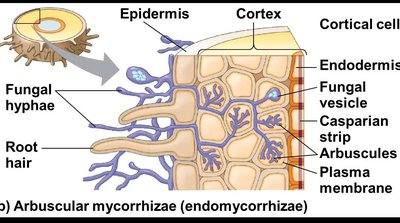
In arbuscular mycorrhizae, fungal hyphae penetrate the cell wall (but not the plasma membrane) and form branched arbuscules within root cells, which are key sites for nutrient exchange. These occur in about 85% of plant species, including most crops.
Agricultural and Ecological Importance of Mycorrhizae
Seeds can be inoculated with fungal spores to promote mycorrhizal formation.
Some invasive plants, such as garlic mustard, disrupt native plant-mycorrhizal interactions, negatively affecting ecosystem health.


Specialized Plant Nutritional Adaptations
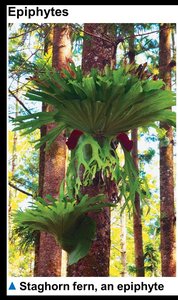
Epiphytes
Epiphytes are plants that grow on other plants but do not parasitize them. They obtain water and minerals from rain and the air, not from their host.
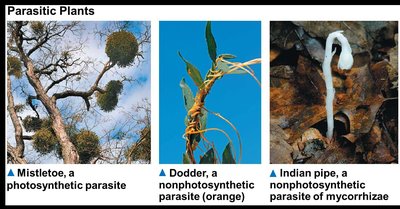
Parasitic Plants
Parasitic plants absorb water, sugars, and minerals from living host plants. Some are photosynthetic, while others rely entirely on their host or even parasitize mycorrhizal fungi.
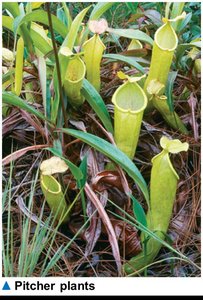
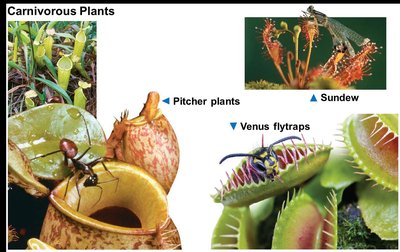
Carnivorous Plants
Carnivorous plants are photosynthetic but supplement their nitrogen intake by trapping and digesting insects and other small animals. This adaptation is common in nutrient-poor environments.

Summary Table: Types of Plant Relationships with Other Organisms
Type | Description | Example |
|---|---|---|
Mutualism | Both organisms benefit | Mycorrhizae, Rhizobium-legume |
Parasitism | One organism benefits, the other is harmed | Mistletoe, Dodder |
Commensalism | One benefits, the other is unaffected | Epiphytes |
Carnivory | Plant traps and digests animals for nutrients | Pitcher plants, Venus flytrap |
Additional info: These relationships are crucial for plant adaptation and survival in diverse environments, influencing ecosystem structure and function.
