 Back
Plant Physiology: Plant Hormones and Movement
Study Guide - Smart Notes
 Tailored notes based on your materials, expanded with key definitions, examples, and context.
Plant Physiology: Plant Hormones and Movement
Learning Outcomes
By the end of this lesson, students should be able to:
Understand how plants sense and respond to various external biotic and abiotic signals.
Identify the role of plant hormones in regulating plant growth, development, and defense mechanisms.
Explain the significance of phytochrome and other light-sensing molecules in plants.
Describe how plants respond to gravity and touch.
Recognize the various protective responses of plants to environmental stresses such as flooding, heat, drought, and cold, as well as the process of vernalization.
Explain the mechanisms by which plants defend themselves against attack from pathogenic microorganisms.
Plant Movement: Perception and Response
Signal Transduction in Plants
Plants respond to internal and external stimuli through complex signal transduction pathways. These processes allow plants to perceive changes in their environment and adjust their physiology accordingly.
Signal Transduction: Proteins on cell membranes recognize and bind to specific molecules, initiating a cascade of chemical changes inside the cell.
Calcium Ion Release: Many signals trigger the release of calcium ions (Ca2+), which act as secondary messengers to induce cellular responses.
Nitric Oxide: Functions as a chemical messenger, controlling various physiological processes in plants.
Plant Hormones
Introduction to Plant Hormones
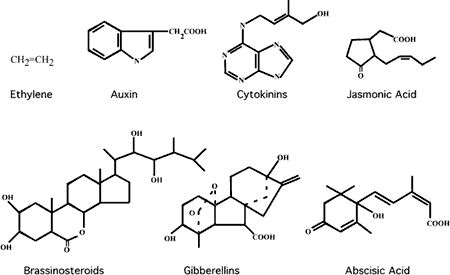
Plant hormones, or phytohormones, are chemical messengers produced in various plant tissues. They regulate growth, development, and responses to environmental stimuli. Unlike animal hormones, plant hormones are not produced in specialized organs.
Auxin: Promotes cell elongation, root growth, and apical dominance.
Cytokinin: Stimulates cell division, shoot growth, and delays leaf senescence.
Gibberellin: Promotes stem elongation, seed germination, and fruit development.
Abscisic Acid (ABA): Promotes seed dormancy, stomatal closure, and drought tolerance.
Ethylene: Stimulates fruit ripening, leaf senescence, and stress responses.
Brassinosteroids: Promote cell elongation, stem/vascular growth, and stress tolerance.
Jasmonates: Mediate plant defense, senescence, and reproductive processes.
Salicylic Acid: Involved in defense responses and developmental regulation.
Ethylene and Fruit Ripening
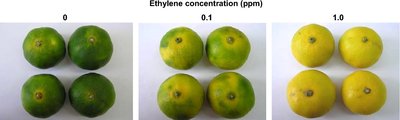
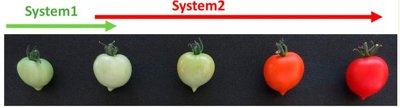
Ethylene is a gaseous hormone that plays a crucial role in fruit ripening. It triggers the breakdown of starches into sugars, softening of cell walls, and pigment production, making fruit more attractive to animals for seed dispersal.
Non-climacteric fruits (e.g., citrus) only ripen while attached to the plant; ethylene is used in the citrus industry to promote degreening.
Climacteric fruits (e.g., tomatoes) continue to ripen after harvest due to autocatalytic ethylene production.
Auxin and Phototropism
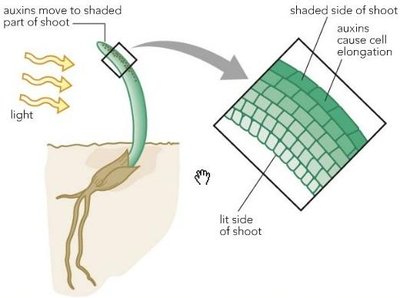
Auxin is central to phototropism, the growth of a plant towards light. Auxin accumulates on the shaded side of the stem, stimulating cell elongation and causing the stem to bend towards the light source.
Auxin also influences the growth of climbing vines and is involved in thigmotropism (growth response to touch).
Cytokinin and Apical Dominance
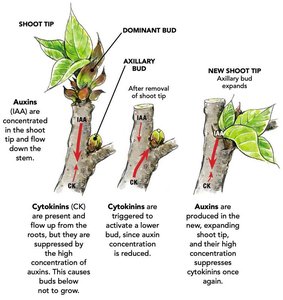
Cytokinins regulate apical dominance, where the main stem grows more vigorously than lateral buds. Cytokinins produced in the terminal bud suppress lateral bud growth, focusing energy on vertical growth for optimal light capture.
Removal of the shoot tip reduces auxin concentration, allowing lateral buds to grow.
Gibberellin and Seed Germination
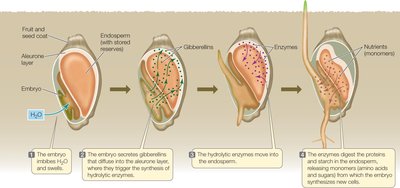
Gibberellins break seed dormancy and stimulate cell elongation in shoots and roots, enabling seedlings to emerge from the soil. They also promote fruit development and flowering.
Abscisic Acid (ABA) and Stress Responses
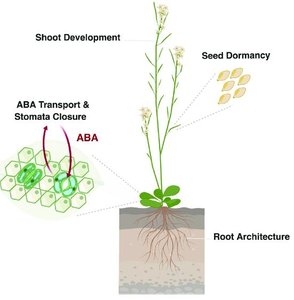
ABA is vital for plant responses to stress, such as drought. It promotes stomatal closure to reduce water loss and induces seed dormancy and cold tolerance.
Brassinosteroids
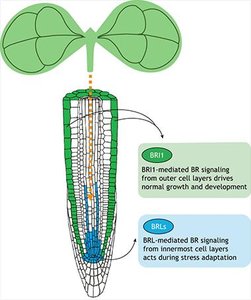
Brassinosteroids are essential for cell elongation, division, and overall plant growth. They also help plants adapt to stress by regulating physiological processes.
Jasmonates
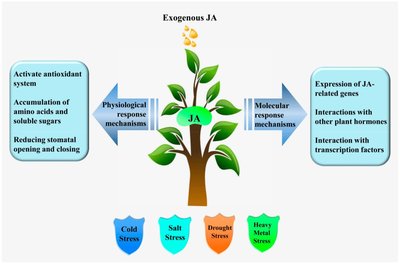
Jasmonates, including jasmonic acid, regulate plant responses to biotic (e.g., herbivory) and abiotic (e.g., drought, salt) stresses, as well as senescence and flowering.
Salicylic Acid
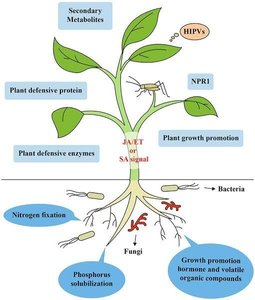
Salicylic acid mediates plant defense against pathogens, systemic acquired resistance, and other stress signals.
Plant Movement: Light and Growth
Light Sensing and Phytochromes
Light is a critical environmental factor for plant growth. Phytochromes are pigment-protein complexes that regulate seed germination and flowering in response to light. Photoperiodism describes how plants flower based on day length, while phototropism is the directional growth towards light.
Plant Movement: Tropisms and Nastic Movements
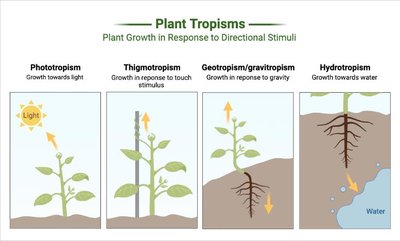
Tropisms: Directional Growth Responses
Tropisms are directional growth responses to external stimuli, allowing plants to optimize their position for resources such as light, water, and support.
Phototropism: Growth towards light.
Gravitropism (Geotropism): Growth in response to gravity.
Thigmotropism: Growth in response to touch (e.g., tendrils wrapping around supports).
Hydrotropism: Growth towards water.
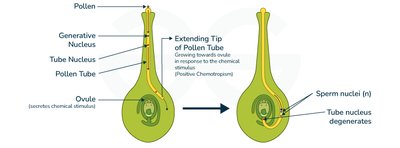
Chemotropism: Growth in response to chemicals (e.g., pollen tubes growing towards ovules).
Heliotropism: Tracking or avoidance of sunlight by leaves or flowers.
Thigmotropism: The Touch Response
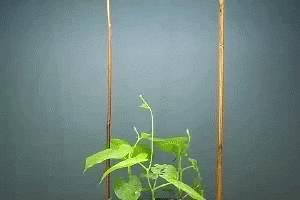
Thigmotropism is the directional growth response to touch or contact with a solid object. It is commonly observed in climbing plants, where tendrils wrap around supports. Auxin accumulates on the side away from the touch, causing cell elongation and bending towards the support.
Chemotropism: Chemical Communication
Chemotropism is the growth response to chemical stimuli. For example, pollen tubes grow towards ovules for fertilization, and root hairs grow towards nutrients in the soil.
Nastic Movements: Non-directional Responses
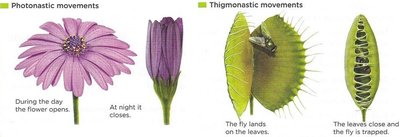
Nastic movements are non-directional responses to stimuli, such as touch, light, or temperature. These movements are often rapid and reversible.
Seismonasty: Rapid movement in response to touch or vibration (e.g., Venus Flytrap).
Photonasty: Movement in response to light (e.g., flower opening/closing).
Thermonasty: Movement in response to temperature changes.
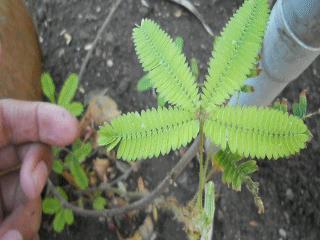
Thigmonasty: Non-directional movement in response to touch (e.g., Mimosa pudica).
Thigmotropism vs. Thigmonasty
It is important to distinguish between thigmotropism and thigmonasty:
Thigmotropism: Directional growth response to touch, involving long-term growth changes (e.g., tendrils wrapping around supports).
Thigmonasty: Non-directional, rapid movement in response to touch, not involving growth (e.g., Mimosa pudica leaf folding).
Plant Defense and Protective Responses
Hormones in Plant Defense
Jasmonates and salicylic acid are key hormones in plant defense. Jasmonates mediate responses to herbivory and abiotic stress, while salicylic acid is involved in pathogen defense and systemic acquired resistance.
Summary Table: Major Plant Hormones and Their Functions
Hormone | Main Functions |
|---|---|
Auxin | Cell elongation, root growth, phototropism, apical dominance |
Cytokinin | Cell division, shoot growth, delay of leaf senescence |
Gibberellin | Stem elongation, seed germination, fruit development |
Abscisic Acid (ABA) | Seed dormancy, stomatal closure, drought tolerance |
Ethylene | Fruit ripening, leaf senescence, stress responses |
Brassinosteroids | Cell elongation, vascular growth, stress tolerance |
Jasmonates | Defense responses, senescence, reproductive processes |
Salicylic Acid | Pathogen defense, systemic acquired resistance |
Conclusion
Plant hormones and movement responses are essential for plant survival, growth, and adaptation to their environment. Understanding these processes provides insight into how plants interact with their surroundings and defend themselves against various stresses.
