 Back
BackPlant Reproduction and Development: Structure, Function, and Evolution
Study Guide - Smart Notes
 Tailored notes based on your materials, expanded with key definitions, examples, and context.
Plant Reproduction and Development
Overview
This chapter explores the mechanisms of plant reproduction, the structure and function of flowers, the development of fruits and seeds, and the evolutionary relationships between plants and their pollinators. It also discusses the strategies plants use to disperse their seeds and ensure survival in diverse environments.
How Do Plants Reproduce?
Sexual and Asexual Reproduction
Asexual reproduction involves mitotic cell division, producing offspring genetically identical to the parent. Examples include aspen trees sprouting new shoots from roots and strawberries spreading via runners.
Sexual reproduction is widespread among eukaryotes, including most plants, and involves the fusion of gametes, increasing genetic diversity.
Example: Aspen clones covering large areas are genetically identical due to asexual reproduction.
Alternation of Generations
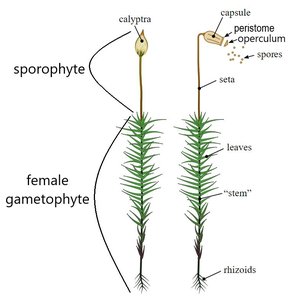
Plants exhibit a life cycle known as alternation of generations, alternating between multicellular diploid (sporophyte) and haploid (gametophyte) stages.
The sporophyte (2n) produces haploid spores via meiosis.
These spores grow into the gametophyte (1n), which produces gametes by mitosis.
Fusion of gametes forms a diploid zygote, which develops into a new sporophyte.

Additional info: This cycle is fundamental to all land plants, but the dominance of each stage varies among groups.
Variation Among Plant Groups
Mosses: The gametophyte is the dominant, independent stage; the sporophyte grows on the gametophyte and is not independent.
Ferns: Both sporophyte and gametophyte are free-living, but the sporophyte is dominant.
Seed plants (gymnosperms and angiosperms): The sporophyte is dominant; the gametophyte is reduced and dependent.
Sexual Life Cycle of Flowering Plants
The visible plant is the diploid sporophyte.
Flowers contain male and female reproductive structures that produce spores via meiosis.
Male gametophyte = pollen grain; Female gametophyte = embryo sac within the ovule.
Pollen is transferred by wind or animals to the stigma of another flower.
Fertilization produces a zygote, which develops into an embryo and eventually a new sporophyte.
Functions and Structures of Flowers
Flower Structure
Flowers are the reproductive organs of angiosperms, produced by the diploid sporophyte.
A complete flower has four sets of modified leaves: sepals, petals, stamens (male), and carpels (female).
Sepals: Protect the flower bud; green in dicots, petal-like in monocots.
Petals: Often colorful and fragrant to attract pollinators.
Stamens: Male structures consisting of a filament and anther (produces pollen).
Carpels: Female structures with stigma, style, and ovary (contains ovules).

Imperfect and Incomplete Flowers
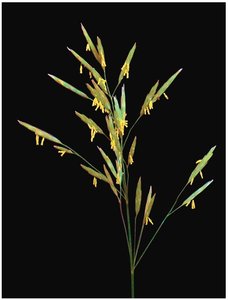
Incomplete flowers lack one or more floral parts (e.g., grass flowers lack petals and sepals).
Imperfect flowers lack either stamens or carpels, producing separate male and female flowers (e.g., zucchini, corn).

Male Gametophyte (Pollen) Development
Pollen grains develop inside anthers, where diploid microspore mother cells undergo meiosis to produce four haploid microspores.
Each microspore divides mitotically to form an immature pollen grain (tube cell + generative cell).
The generative cell divides again to produce two sperm cells.
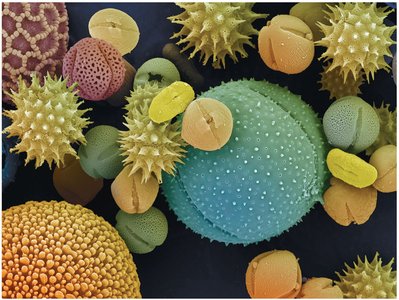
Pollen grains are protected by a tough, sculpted coat.

Female Gametophyte (Embryo Sac) Development
Within the ovary, ovules contain a diploid megaspore mother cell, which undergoes meiosis to produce four haploid megaspores (only one survives).
The surviving megaspore undergoes three mitotic divisions, forming eight nuclei in seven cells (the embryo sac).

Pollination and Fertilization
Pollination is the transfer of pollen to the stigma of a compatible flower.
Pollen germinates, forming a tube that delivers two sperm to the ovule.
Double fertilization is unique to angiosperms: one sperm fertilizes the egg (zygote), the other fuses with two nuclei to form triploid endosperm (nutritive tissue).
The ovule develops into a seed; the ovary becomes a fruit.

Fruits and Seeds: Development and Function
Fruit and Seed Development
The fruit develops from the ovary wall, enclosing the seeds.
Seeds develop from ovules, protected by a seed coat (from integuments).
The triploid endosperm forms as a food reserve for the embryo.
The embryo differentiates into shoot and root, with one (monocot) or two (dicot) cotyledons.

Monocots vs. Dicots
Monocots: One cotyledon; endosperm remains until germination; embryo enclosed in sheaths (coleoptile for shoot, another for root).
Dicots: Two cotyledons; cotyledons absorb endosperm before germination and transfer nutrients to the embryo.
Seed Germination and Growth
Seed Dormancy and Germination
Germination is the process by which the embryonic plant emerges from the seed and begins growth.
Seeds often undergo a period of dormancy to avoid germinating under unfavorable conditions.
Breaking dormancy may require drying, cold exposure, or disruption of the seed coat.
Seedling Development
The root emerges first, followed by the shoot.
In dicots, cotyledons may emerge above ground (hypocotyl hook) or remain below (epicotyl hook).
In monocots, the coleoptile protects the shoot as it pushes through the soil.
Plant-Pollinator Interactions
Coevolution of Plants and Pollinators
Plants and pollinators have coevolved, each influencing the other's traits.
Flowers may offer food (nectar, pollen), mimic mates, or provide nurseries for pollinators' offspring.
Pollinators have evolved to efficiently locate and extract floral rewards.
Pollination Syndromes
Bee-pollinated flowers: Bright colors, UV patterns, nectar guides.
Moth/butterfly-pollinated flowers: Tubular shapes, open at night, strong scents.
Bat-pollinated flowers: White, open at night.
Fly/beetle-pollinated flowers: Smell like dung or carrion.
Hummingbird-pollinated flowers: Deep, tubular, red or orange, suited to bird bills.
Seed Dispersal by Fruits
Mechanisms of Seed Dispersal
Animal dispersal: Edible fruits attract animals, which eat the fruit and disperse seeds via excretion or dropping.
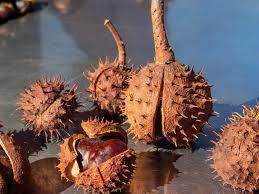
Clingy fruits: Hooks, spines, or adhesive hairs attach to animal fur or clothing.
Explosive fruits: Mechanically eject seeds away from the parent plant.
Wind dispersal: Lightweight fruits with wings or tufts (e.g., dandelions, maples).
Water dispersal: Buoyant fruits (e.g., coconuts) float to new locations.
Summary Table: Comparison of Major Plant Groups
Plant Group | Dominant Stage | Gametophyte Independence | Seed/Fruit | Pollination |
|---|---|---|---|---|
Mosses | Gametophyte | Independent | No seeds/fruits | Water |
Ferns | Sporophyte | Independent | No seeds/fruits | Water |
Gymnosperms | Sporophyte | Dependent | Seeds, no fruit | Wind |
Angiosperms | Sporophyte | Dependent | Seeds and fruit | Wind/Animals |
Key Terms
Sporophyte: Diploid, spore-producing stage.
Gametophyte: Haploid, gamete-producing stage.
Pollination: Transfer of pollen to stigma.
Double fertilization: Unique to angiosperms; produces zygote and endosperm.
Fruit: Mature ovary containing seeds.
Cotyledon: Seed leaf; stores/transfers nutrients to embryo.
