Back
Plant Responses to Environmental Stimuli and Stress
Study Guide - Smart Notes
 Tailored notes based on your materials, expanded with key definitions, examples, and context.
Plant Responses to Environmental Stimuli
Gravity: Gravitropism
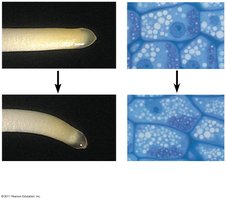
Plants sense and respond to gravity through a process called gravitropism. This directional growth response ensures that roots grow downward (positive gravitropism) and shoots grow upward (negative gravitropism), optimizing resource acquisition and anchorage.
Roots exhibit positive gravitropism, growing toward gravity.
Shoots exhibit negative gravitropism, growing away from gravity.
Gravity is detected by the settling of specialized organelles called statoliths within certain plant cells.
Statoliths are dense, starch-filled plastids (amyloplasts) found in statenchyma cells.
Auxin distribution is influenced by statolith position: in roots, auxin accumulates on the lower side and inhibits cell elongation, causing downward bending; in shoots, auxin promotes elongation on the lower side, causing upward bending.
Plant Responses to Mechanical Stimuli
Thigmomorphogenesis and Thigmotropism
Plants can alter their growth and development in response to mechanical disturbances such as wind, touch, or physical contact. These responses are crucial for survival in dynamic environments.
Thigmomorphogenesis: Adaptive changes in plant form due to mechanical disturbance (e.g., wind, touch). Controlled by hormones such as ethylene, gibberellins, and auxin.
Thigmotropism: Directional growth in response to touch, commonly seen in climbing plants and vines.
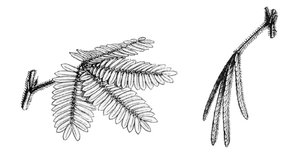
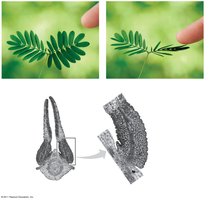
Some plants exhibit thigmonasty, a rapid, non-directional movement in response to touch (e.g., Mimosa pudica leaf folding).

Signal Transmission in Mechanical Responses
Mechanical stimulation triggers electrical signals (action potentials) that travel through the plant, leading to physiological changes such as loss of turgor in specialized motor organs (pulvini), resulting in rapid leaf movements.
Action potentials are transmitted via phloem sieve tubes, accompanied by a strong proton flux (ΔH+).
Rapid unloading of K+ and sugars into the apoplast causes water to exit cells, leading to loss of turgor and leaf collapse.
Plant Responses to Abiotic Stresses
Drought Stress
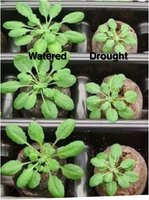
Drought occurs when water loss through evapotranspiration exceeds water uptake, leading to reduced cell turgor, wilting, and stunted growth. Plants employ several strategies to cope with drought:
Accumulation of abscisic acid (ABA) induces stomatal closure, reducing water loss.
Preferential root growth increases the root:shoot ratio, enhancing water uptake capacity.
Flooding Stress
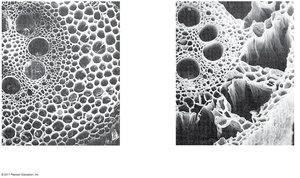
Flooding deprives roots of oxygen, triggering ethylene production. Ethylene induces programmed cell death (apoptosis) in root cortex cells, forming air tubes that facilitate oxygen diffusion to submerged tissues.
Salt Stress
High soil salinity lowers water potential (Ψ), making water uptake difficult. Plants respond by accumulating compatible solutes (osmoprotectants) to decrease their own water potential, favoring water uptake despite the salty environment.
Condition | Water Potential (Ψ) | Plant Response |
|---|---|---|
Normal | Ψ (root) > Ψ (soil) | Water uptake |
Salt Stress | Ψ (root) ≈ Ψ (soil) | Reduced water uptake |
Plant Response | Ψ (root) < Ψ (soil) | Water uptake restored |
Heat Stress
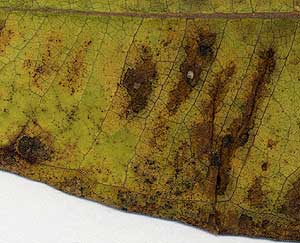
High temperatures can denature proteins and disrupt cellular processes. Plants respond by:
Evaporative cooling (transpiration) to lower leaf temperature.
Producing heat-shock proteins that stabilize and refold denatured proteins.
Cold Stress
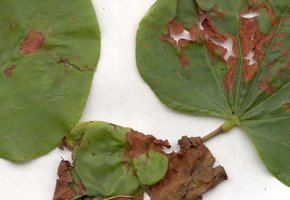
Cold temperatures decrease membrane fluidity and can cause ice formation in cell walls and intercellular spaces. Plants adapt by:
Increasing unsaturated fatty acids in membrane lipids to maintain fluidity.
Producing antifreeze proteins that inhibit ice crystal growth.
Plant Responses to Pathogen and Herbivore Attack
Biotic Stresses: Plant Pathogens
Plants face threats from viruses, fungi, bacteria, and phytoplasmas. Defense mechanisms include:
Virulent pathogens: Not recognized by the plant, causing disease.
Avirulent pathogens: Recognized by the plant, may cause harm but not death.
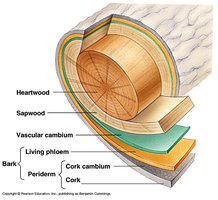
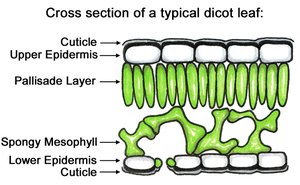
First line of defense: Physical barriers such as the epidermis and periderm (bark).
Gene-for-Gene Recognition and Plant Immunity
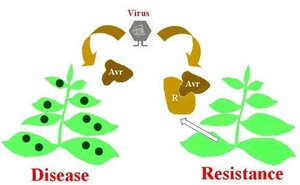
Plants use gene-for-gene recognition to detect pathogens. Resistance (R) genes encode proteins that recognize specific pathogen avirulence (avr) gene products, activating defense responses.
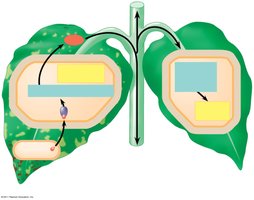
Recognition triggers signal transduction pathways, leading to the hypersensitive response and systemic acquired resistance (SAR).
Salicylic acid (SA) is a key signaling molecule in SAR.
The Hypersensitive Response
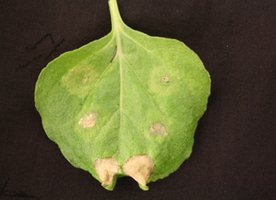
The hypersensitive response is a localized defense mechanism that restricts pathogen spread by inducing cell death around the infection site. It involves:
Production of hydrogen peroxide (H2O2), phytoalexins, pathogenesis-related (PR) proteins, and salicylic acid.
Cell wall modifications to confine the pathogen.
Phytoalexins and PR Proteins
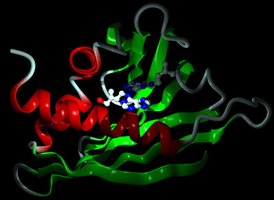
Phytoalexins are antimicrobial compounds that accumulate rapidly at infection sites, while PR proteins are induced by infection and can have antimicrobial or signaling functions.
Phytoalexins may degrade pathogen cell walls, disrupt metabolism, or prevent reproduction.
PR proteins can attack pathogen cell walls or act as signals for further defense responses.
Systemic Acquired Resistance (SAR)
SAR is a long-lasting, whole-plant resistance response triggered by localized infection. Salicylic acid synthesized near the infection site acts as a mobile signal, inducing defense gene expression throughout the plant.
Plant Resistance to Insect Herbivores
Mechanical Defenses
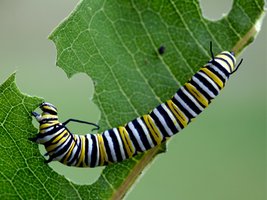
Plants possess various physical barriers to deter herbivores:
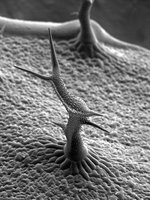
Trichomes: Hair-like structures that can impede or injure insects.
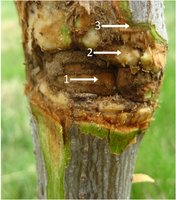
Sap discharge, wound periderm formation, silica deposits, and increased leaf toughness.
Chemical Defenses
Plants produce a variety of chemical compounds to deter herbivores:
Primary metabolites: Essential for growth (e.g., amino acids, sugars, lipids).
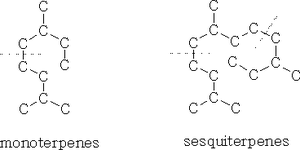
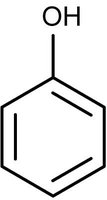
Secondary metabolites: Specialized compounds for defense, including terpenes, phenolics, glycosides, and alkaloids.
Induced Defenses and Jasmonic Acid Pathway
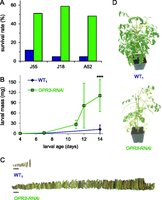
Herbivore attack or mechanical damage can induce the jasmonic acid (JA) pathway, leading to upregulation of defense genes. Genetic manipulation (e.g., OPRN3-RNAi in tomato) can block this pathway, reducing defense responses.
Recruitment of Natural Enemies
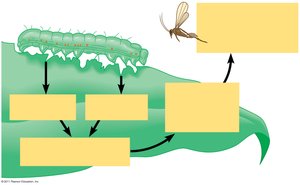
Plants can emit volatile organic compounds (VOCs) in response to herbivory, which serve to:
Warn neighboring plants of impending attack.
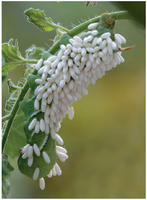
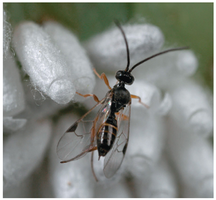
Attract parasitoids and predators of the herbivores.