 Back
Plant Responses to Environmental Stimuli and Stress
Study Guide - Smart Notes
 Tailored notes based on your materials, expanded with key definitions, examples, and context.
Plant Responses to Environmental Stimuli
Gravity: Gravitropism
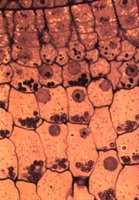
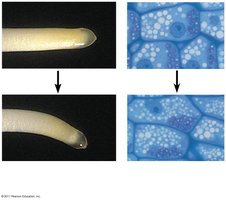
Plants respond to gravity through a process called gravitropism. Roots exhibit positive gravitropism, growing downward toward gravity, while shoots show negative gravitropism, growing upward away from gravity. The detection of gravity in plants is mediated by the settling of specialized organelles called statoliths within cells.
Statoliths: Dense, starch-filled plastids (amyloplasts) found in statenchyma cells.
Auxin Distribution: In roots, auxin accumulates on the side where statoliths settle, inhibiting cell elongation and causing downward growth. In shoots, auxin promotes cell elongation on the lower side, resulting in upward growth.
Example: Roots bending downward in response to gravity.
Mechanical Stimuli: Thigmomorphogenesis and Thigmotropism
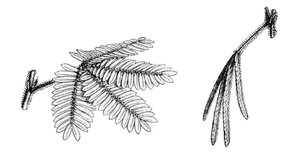
Plants adapt to mechanical disturbances through thigmomorphogenesis, which involves changes in growth form. Thigmotropism is the directional growth in response to touch, commonly seen in climbing plants and vines. Some plants exhibit rapid touch-induced responses, such as thigmonasty, where leaves fold quickly upon stimulation.
Hormonal Control: Ethylene, gibberellins, and auxin regulate these responses.
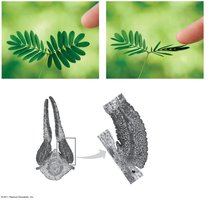
Example: Mimosa pudica (sensitive plant) folds its leaves rapidly when touched.
Signal Transmission in Mechanical Response
Mechanical stimulation triggers action potentials that travel through phloem sieve tubes, driven by a positive proton flux (). The signal reaches the pulvinus (motor organ), causing rapid unloading of potassium ions (K+) and sugars into the apoplast. Water follows, resulting in loss of turgor and leaf collapse.
Pulvinus: Specialized structure responsible for rapid leaf movement.
Loss of Turgor: Cells on one side of the pulvinus become flaccid, causing movement.
Plant Responses to Abiotic Stresses
Drought Stress
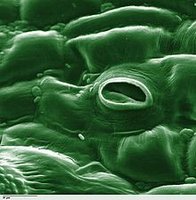
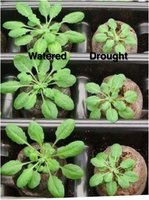
Drought occurs when evapotranspiration exceeds water uptake, leading to loss of cell turgor, wilting, and reduced growth. Plants respond by accumulating abscisic acid (ABA), which induces stomatal closure to conserve water. Preferential root growth increases the root:shoot ratio, enhancing water acquisition.
Stomatal Closure: Reduces water loss through transpiration.
Root Growth: Roots grow deeper or more extensively to access water.
Flooding Stress
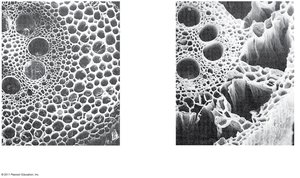
Flooding deprives roots of oxygen, inducing ethylene production. Ethylene triggers apoptosis (programmed cell death), opening air tubes that supply oxygen to submerged roots.
Apoptosis: Facilitates formation of air spaces for oxygen transport.
Ethylene: Key hormone in response to flooding.
Salt Stress
Salt stress lowers the water potential () of soil, reducing water uptake. Plants counteract this by producing compatible solutes, decreasing water potential in root cells and favoring water uptake.
Water Potential (): Determines direction of water movement.
Compatible Solutes: Organic molecules that help maintain cell turgor.
Heat Stress
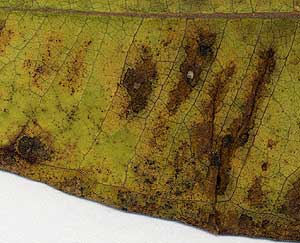
High temperatures can denature proteins and damage plant tissues. Plants respond by evaporative cooling (transpiration) and producing heat-shock proteins that stabilize and refold denatured proteins.
Evaporative Cooling: Loss of water vapor cools leaf surfaces.
Heat-Shock Proteins: Protect cellular proteins from heat-induced damage.
Cold Stress
Cold temperatures decrease membrane fluidity. Plants adapt by increasing unsaturated fatty acids in membranes. Freezing causes ice formation in cell walls and intercellular spaces; antifreeze proteins prevent ice crystal growth.
Membrane Fluidity: Maintained by lipid composition.
Antifreeze Proteins: Inhibit ice formation and protect cells.
Plant Responses to Biotic Stresses
Plant Pathogens
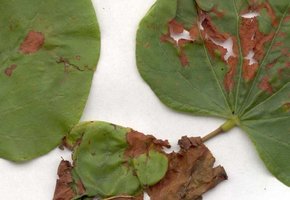
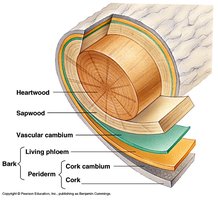
Plants face biotic stresses from viruses, fungi, bacteria, and phytoplasmas. Pathogens are classified as virulent (cause disease) or avirulent (recognized by plant, may harm but not kill). The first line of defense is the epidermis and periderm (bark).
Virulent Pathogen: Not recognized, causes disease.
Avirulent Pathogen: Recognized, triggers defense.
Gene-for-Gene Recognition
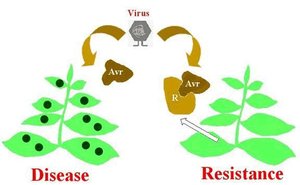
Plants use gene-for-gene recognition to detect pathogens. Resistance (R) genes encode proteins that recognize avirulence (avr) gene products from pathogens. Recognition activates signal transduction pathways, leading to the hypersensitive response and systemic acquired resistance (SAR), often mediated by the salicylic acid (SA) pathway.
Hypersensitive Response: Localized cell death to confine pathogen.
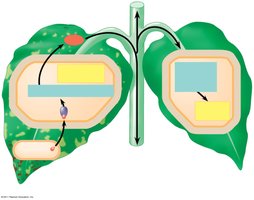
Systemic Acquired Resistance: Long-lasting, whole-plant defense activation.
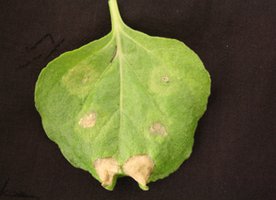
Phytoalexins and Pathogenesis-Related (PR) Proteins
Phytoalexins are antimicrobial compounds that accumulate rapidly at infection sites. PR proteins are induced by infection and may attack pathogen cell walls or act as signals.
Phytoalexins: Delay pathogen maturation, disrupt metabolism, or prevent reproduction.
PR Proteins: Some are antimicrobial, others are signaling molecules.
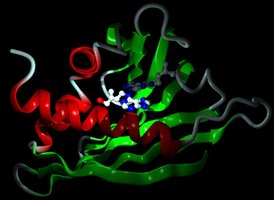
Systemic Acquired Resistance (SAR)
SAR involves systemic expression of defense genes, providing long-lasting protection. Salicylic acid (SA) is synthesized at infection sites and acts as a signal for SAR.
Long-Distance Signaling: SA triggers defense gene expression throughout the plant.
Plant Resistance to Insect Herbivores
Mechanical Defense
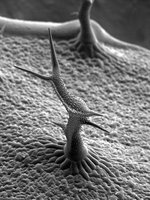
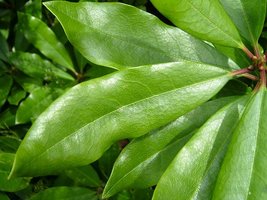
Plants employ mechanical defenses such as trichomes (hair-like structures), sap discharge, wound periderm formation, silica deposition, and leaf toughness to deter insect herbivores.
Trichomes: Physical barrier against insects.
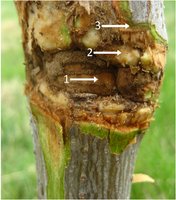
Wound Periderm: Protective tissue formed after injury.
Leaf Toughness: Makes leaves less palatable.
Defense Chemistry
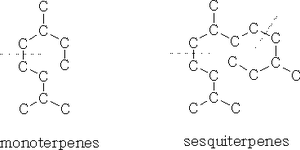
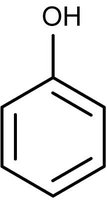
Plants produce secondary metabolites for defense, including terpenes, phenolics, glycosides, and alkaloids. These compounds are not essential for growth but deter herbivores and pathogens.
Primary Metabolites: Essential for growth (amino acids, sugars, lipids).
Secondary Metabolites: Defensive compounds (terpenes, phenolics, glycosides, alkaloids).
Induced Defenses and Jasmonic Acid Pathway
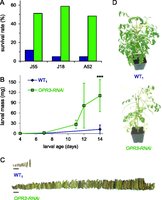
Insect feeding and mechanical damage activate the jasmonic acid (JA) pathway, leading to transcriptional changes and upregulation of defense mechanisms. Genetic modifications, such as OPRN3-RNAi in tomato plants, can block JA signaling.
JA Pathway: Regulates defense gene expression.
OPRN3-RNAi: Example of genetic modification affecting defense.
Recruitment of Enemies
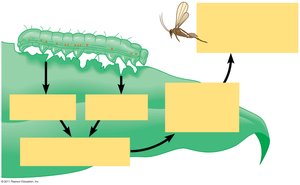
Plants emit volatile organic compounds (VOCs) in response to insect herbivory. VOCs warn nearby plants and attract parasitoids and predators, such as wasps, that attack herbivores.
VOC Emission: Induced by herbivore attack.
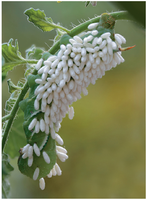
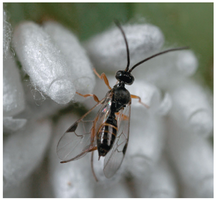
Parasitoid Wasps: Lay eggs in caterpillars, reducing herbivore populations.
Summary Table: Plant Responses to Environmental Stimuli
Stimulus | Response | Key Hormones/Compounds | Example |
|---|---|---|---|
Gravity | Gravitropism | Auxin | Root growth downward |
Touch | Thigmotropism, Thigmonasty | Ethylene, Gibberellins, Auxin | Mimosa pudica leaf folding |
Drought | Stomatal closure, root growth | Abscisic acid (ABA) | Wilting, increased root:shoot ratio |
Flooding | Air tube formation | Ethylene | Apoptosis in roots |
Salt | Solute production | Compatible solutes | Water uptake under salt stress |
Heat | Evaporative cooling, heat-shock proteins | Heat-shock proteins | Leaf cooling, protein protection |
Cold | Membrane adaptation, antifreeze proteins | Antifreeze proteins | Ice inhibition in cells |
Pathogens | Hypersensitive response, SAR | Salicylic acid (SA), phytoalexins, PR proteins | Cell death at infection site |
Herbivores | Mechanical/chemical defense, VOC emission | Jasmonic acid (JA), secondary metabolites | Trichomes, VOCs attracting wasps |
