 Back
Plant Responses to Environmental Stress and Ecophysiological Adaptations
Study Guide - Smart Notes
 Tailored notes based on your materials, expanded with key definitions, examples, and context.
Plant Responses to Environmental Stress
Introduction to Plant Environmental Stress
Plants are constantly exposed to a variety of environmental stressors, including flooding, drought, heat, and cold. Their survival depends on a range of physiological, anatomical, and molecular adaptations that allow them to sense, respond, and adapt to these challenges.
Flooding Stress
Flooding leads to oxygen deprivation in the soil, which inhibits root mineral absorption and can threaten plant survival. Plants have evolved specific adaptations to cope with these conditions.
Oxygen Deprivation: Waterlogged soils lack oxygen, impeding root respiration and nutrient uptake.
Ethylene Production: Plants increase ethylene synthesis in response to low oxygen, which triggers anatomical changes.
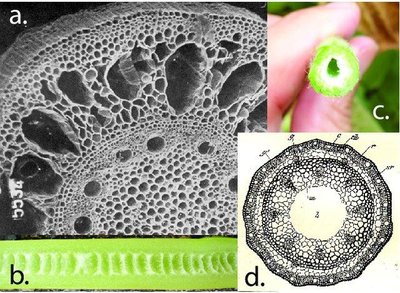
Aerenchyma Formation: Aerenchyma is a specialized tissue with large air spaces that facilitate gas exchange between aerial and submerged parts, allowing oxygen to reach roots and supporting cellular respiration. It also provides buoyancy in aquatic plants.
Example: Wetland plants such as Phragmites australis develop extensive aerenchyma to survive prolonged flooding.
Drought Stress
Drought stress occurs when water availability is limited, leading to physiological and molecular responses that help conserve water and maintain cellular function.
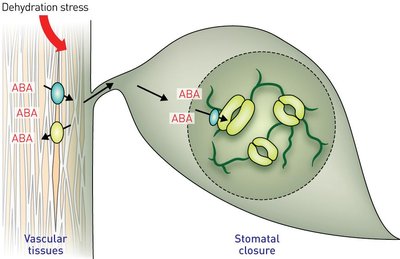
Detection of Water Deficit: Plants sense reduced water potential, triggering increased biosynthesis of abscisic acid (ABA).
Stomatal Closure: ABA mediates the closure of stomata, reducing transpiration and water loss.
Gene Expression: ABA signaling alters gene expression, leading to the production of proteins involved in osmotic adjustment and antioxidant defense.
Root Growth Modifications: ABA can promote deeper root growth, enhancing water uptake from deeper soil layers.
Example: Many crop plants exhibit leaf rolling and deeper rooting as drought responses.
Heat and Cold Stress
Extreme temperatures can damage cellular structures and disrupt metabolic processes. Plants employ several strategies to mitigate these effects.
Heat Stress:
Heat Shock Proteins (HSPs): Act as molecular chaperones, stabilizing and refolding denatured proteins.
Isoprene Gas: Stabilizes cell membranes and protects the photosynthetic apparatus from heat damage.
Cold Stress:
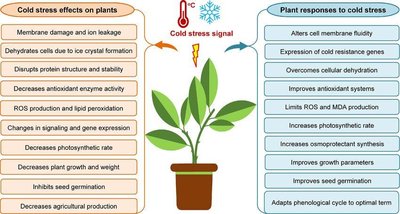
Solute Accumulation: Increases intracellular solute concentration, lowering the freezing point of water and preventing ice crystal formation.
Vernalization: Prolonged cold exposure triggers flowering in some species, preventing premature flowering during transient warm spells in winter.
Plant Defense Mechanisms
Physical and Chemical Barriers
Plants possess both constitutive and inducible defense mechanisms to protect against herbivores and pathogens.
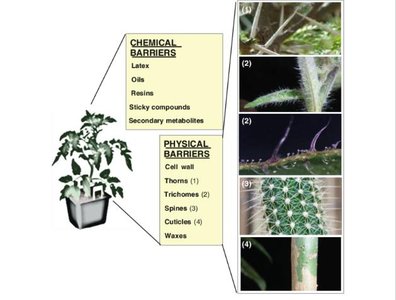
Physical Barriers: Thick cuticles, tough cell walls, thorns, spines, and trichomes deter herbivores and prevent pathogen entry.
Chemical Defenses: Secondary metabolites (e.g., alkaloids, tannins), phytoalexins, and allelopathic chemicals inhibit herbivores, pathogens, and competing plants.
Example: Tomato plants produce trichomes and toxic compounds to deter insect feeding.
Hypersensitive Response (HR) and Systemic Acquired Resistance (SAR)
Plants can mount localized and systemic responses to pathogen attack, involving complex signaling pathways.
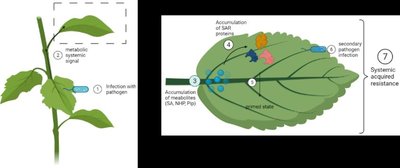
Hypersensitive Response (HR): Recognition of pathogen molecules triggers localized cell death, forming a barrier to restrict pathogen spread. Reactive oxygen species (ROS) and antimicrobial compounds are produced.
Signal Molecules: Hydrogen peroxide and salicylic acid act as messengers, alerting other plant tissues to activate defenses.
Systemic Acquired Resistance (SAR): Following HR, plants develop broad-spectrum resistance throughout their tissues, providing long-term protection against diverse pathogens. SAR can be artificially induced by certain chemicals.
Plant-Gene Interactions: Vernalization
Vernalization and Flowering Control
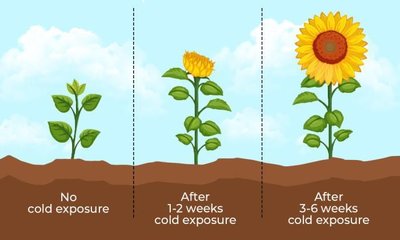
Vernalization is the process by which prolonged exposure to cold induces flowering in certain plants, ensuring reproductive success by preventing premature flowering during winter.
Genetic Regulation: VRN1 and VRN2 genes act as molecular switches, controlling the timing of flowering in response to cold exposure.
Ecological Importance: Prevents flowering during transient warm periods in winter, reducing the risk of frost damage to reproductive organs.
Example: Winter cereals such as wheat require vernalization for optimal flowering and yield.
Ecophysiology and Plant Adaptations
Introduction to Ecophysiology
Ecophysiology examines how physiological traits enable plants to survive and reproduce in diverse environments. It integrates environmental cues, physiological responses, and evolutionary adaptations.
Environmental Interactions: Plants respond to temperature, light, water, and nutrient availability.
Physiological Adaptations: Traits such as water storage, photosynthetic pathways, and root architecture enhance survival in specific habitats.
Applied Context: Knowledge of ecophysiology informs crop improvement, ecosystem restoration, and conservation strategies.
Plant Adaptations to Desert Environments
Desert plants face low precipitation and high evaporation rates, requiring specialized adaptations for water conservation and survival.
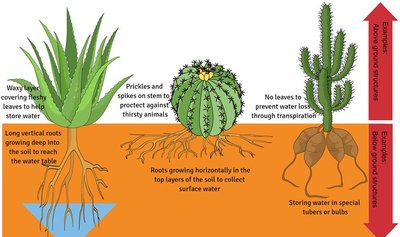
Water Storage: Succulents store water in leaves, stems, or roots.
Reduced Leaf Area: Minimizes water loss through transpiration.
CAM Photosynthesis: Stomata open at night to reduce water loss.
Deep or Spreading Roots: Access water from deep or wide soil layers.
Protective Structures: Waxy cuticles, spines, and thorns deter herbivores and reduce water loss.
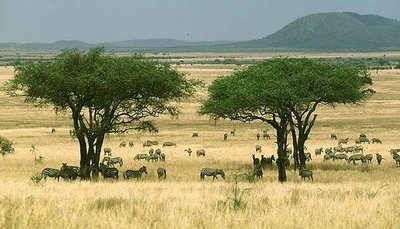
Plant Adaptations to Grasslands
Grassland plants are adapted to periodic drought, fire, and grazing. Their traits support survival and rapid recovery in these dynamic ecosystems.
Deep Root Systems: Access water from deep soil layers and stabilize plants.
Narrow Leaves: Reduce water loss and resist wind damage.
Silica in Tissues: Provides structural support and deters herbivores.
Reproductive Strategies: Adapted to seasonal changes and disturbances.
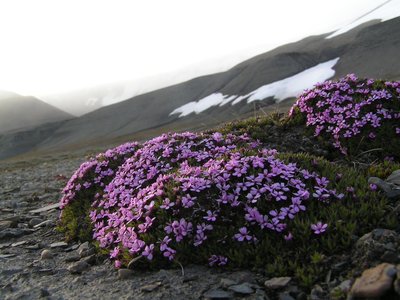
Plant Adaptations in Alpine Tundra
Alpine tundra plants endure low temperatures, strong winds, and short growing seasons. Their adaptations maximize survival in these harsh conditions.
Low Growth Forms: Minimize exposure to wind and cold.
Cushion Growth: Compact growth reduces wind speed and conserves heat.
Snow Utilization: Snow cover insulates plants from extreme cold.
Rapid and Perennial Growth: Quick growth during short summers; perennial organs survive winter.
Efficient Water Absorption: Specialized leaf surfaces maximize moisture uptake.
Plant Adaptations in Montane Coniferous Forests
Montane coniferous forests are characterized by cold temperatures, heavy snow, and wind. Coniferous trees dominate due to their unique adaptations.
Needle-like Leaves: Reduce water loss and withstand snow accumulation.
Evergreen Habit: Retain leaves year-round for continuous photosynthesis.
Flexible Branches: Prevent breakage under snow load.
Wind Resistance: Flexible trunks and branches resist wind damage.

Plant Adaptations in Temperate Deciduous Forests
Temperate deciduous forests experience distinct seasons. Plants have evolved strategies to cope with seasonal changes in temperature and light.
Deciduous Habit: Trees shed leaves in autumn to conserve water and energy during winter.
Timing of Leaf-out: Leaf emergence is synchronized with optimal sunlight availability.
Seed Dispersal: Various mechanisms, including animal and wind dispersal, ensure reproductive success.
Pollination: Wind pollination is common, often occurring before leaf-out.
Plant Adaptations in Tropical Rainforests
Tropical rainforests are characterized by high biodiversity, constant warmth, and abundant rainfall. Plants exhibit unique adaptations to thrive in this environment.
Great Age and Rapid Evolution: Long-term stability and high moisture promote rapid speciation.
Carbon Storage: Woody plants act as major carbon sinks.
Water Cycling: High transpiration rates contribute to local rainfall.
Complex Structure: Multiple vegetation layers support diverse life forms.
Diverse Reproductive Strategies: Wind and animal pollination are common.
Ecology: Levels of Organization
Population, Community, Ecosystem, Biome, and Biosphere
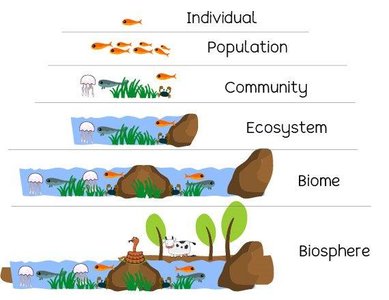
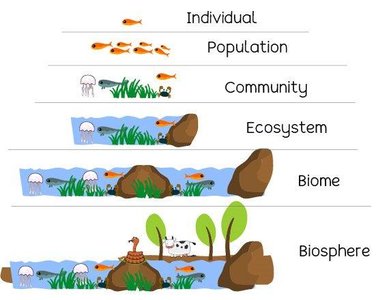
Ecology studies the interactions of organisms with each other and their environment, organized into hierarchical levels.
Level | Description |
|---|---|
Population | Group of individuals of the same species in a given area. |
Community | All populations of different species in a given area. |
Ecosystem | Community plus the abiotic environment. |
Biome | Large regions characterized by similar climate, vegetation, and organisms. |
Biosphere | All ecosystems on Earth; the global sum of all life-supporting environments. |
Summary Table: Plant Responses to Abiotic Stressors
Abiotic Stressor | Plant Response |
|---|---|
Flooding | Aerenchyma development, increased ethylene production, root rot, yellow leaves |
Drought | Stomatal closure, increased ABA biosynthesis, wilting, leaf curling, deeper root growth |
Heat | Production of heat shock proteins, isoprene synthesis, leaf rolling, browning, stunted growth |
Cold | Solute accumulation, altered membrane fluidity, vernalization, improved antioxidant systems |
