 Back
BackPlant Responses to Internal and External Signals: Biological Clocks, Environmental Stimuli, and Stress Adaptations
Study Guide - Smart Notes
 Tailored notes based on your materials, expanded with key definitions, examples, and context.
Biological Clocks and Circadian Rhythms
Introduction to Circadian Rhythms
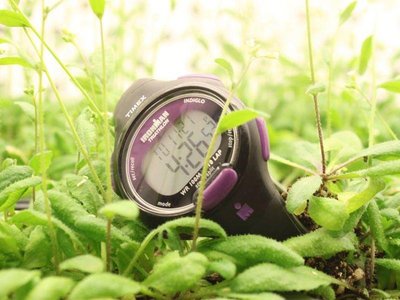
Many plant processes exhibit daily oscillations that persist even in constant environmental conditions, indicating the presence of internal biological clocks. These rhythms, known as circadian rhythms, are approximately 24 hours long and are regulated by internal mechanisms rather than external cues alone.
Circadian rhythms are endogenous cycles that can be synchronized (entrained) to exactly 24 hours by environmental signals such as the day/night cycle.
The internal clock often involves the synthesis of proteins regulated by negative-feedback loops.
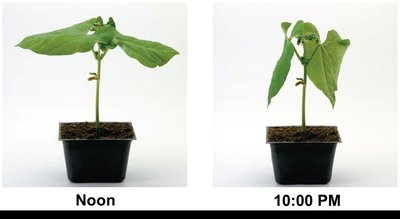
Examples include the movement of leaves in legumes, which lower their leaves at night and raise them during the day, even under constant light or darkness.
The Effect of Light on the Biological Clock
Light is a critical environmental cue for entraining circadian rhythms in plants. Two main types of photoreceptors, phytochromes and blue-light photoreceptors, are involved in this process.
Phytochrome conversion marks sunrise and sunset, providing timing information to the biological clock.
These photoreceptors help synchronize internal rhythms with the external environment.

Photoperiodism and Responses to Seasons
Photoperiodism and Control of Flowering
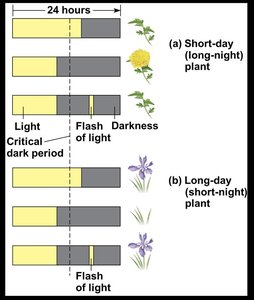
Photoperiod refers to the relative lengths of day and night, which plants use to detect seasonal changes. Photoperiodism is the physiological response to photoperiod, most notably seen in the control of flowering time.
Short-day plants flower when the light period is shorter than a critical length.
Long-day plants flower when the light period is longer than a critical length.
Day-neutral plants flower based on maturity, not photoperiod.
Research has shown that it is actually the length of the night (critical night length), not the day, that controls flowering and other responses.
Role of Light Quality in Photoperiodism
The quality and timing of light during the night can influence flowering responses in plants.
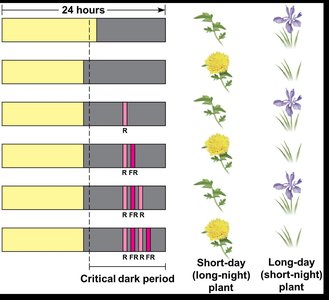
Red light is most effective in interrupting the nighttime portion of the photoperiod.
A flash of red light followed by a flash of far-red light does not disrupt the night length, indicating the involvement of phytochrome in photoperiodic measurement.
Florigen: The Flowering Hormone
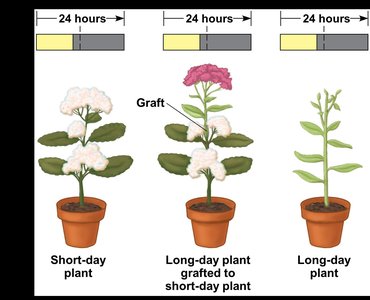
Photoperiod is detected by leaves, which then signal buds to develop as flowers. The signaling molecule responsible for inducing flowering is called florigen.
Florigen is likely a protein encoded by the FLOWERING LOCUS T (FT) gene.
Florigen acts as a mobile signal, moving from leaves to the shoot apical meristem to trigger flowering in both short-day and long-day plants.
Plant Responses to Other Environmental Stimuli
Gravitropism
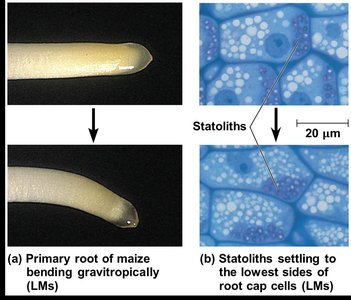
Plants respond to gravity through a process called gravitropism. Roots exhibit positive gravitropism (growing downward), while shoots show negative gravitropism (growing upward).
Gravity detection may involve the settling of statoliths (dense cytoplasmic components) in root cap cells.
Other mechanisms, such as mechanical pulling on proteins and the presence of dense organelles or starch granules, may also contribute to gravity sensing.
Mechanical Stimuli: Thigmomorphogenesis and Thigmotropism
Plants can alter their growth in response to mechanical disturbances (thigmomorphogenesis) or directional touch (thigmotropism).
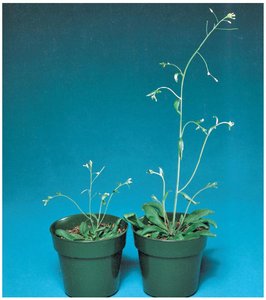
Thigmomorphogenesis refers to changes in plant form due to mechanical disturbance, such as rubbing stems, which results in shorter plants.
Thigmotropism is directional growth in response to touch, as seen in tendrils of climbing plants that coil around supports.
Plant Responses to Environmental Stresses
Abiotic and Biotic Stresses
Plants face a variety of environmental stresses that can affect their survival, growth, and reproduction. These stresses are classified as abiotic (nonliving) or biotic (living).
Abiotic stresses: drought, flooding, salt stress, heat stress, cold stress
Biotic stresses: herbivores and pathogens
Drought
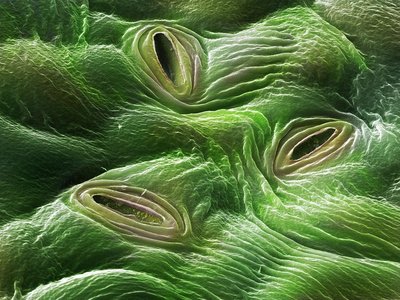
During drought, water loss due to transpiration can cause wilting and death. Plants respond by closing stomata, reducing leaf surface area, or shedding leaves to minimize water loss.
Flooding
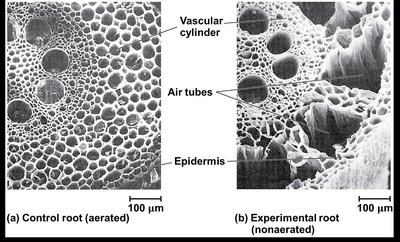
Flooded soils lack air spaces, depriving roots of oxygen. Plants may produce ethylene, which kills root cortex cells and creates air tubes (aerenchyma) that supply oxygen to submerged roots.
Salt Stress
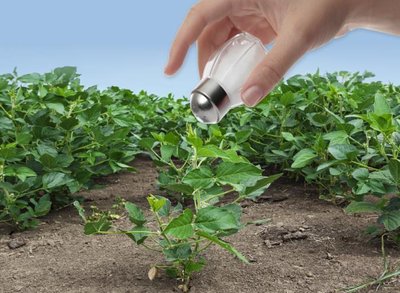
High soil salinity lowers water potential and can be toxic to plants. Plants respond by producing compatible solutes that help maintain water uptake and cellular water potential.
Heat Stress
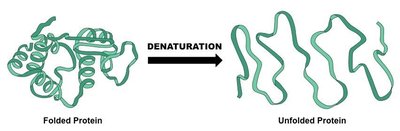
Excessive heat can denature enzymes, disrupting cellular function. Plants cool leaves via transpiration and produce heat-shock proteins to protect other proteins from denaturation.
Cold Stress
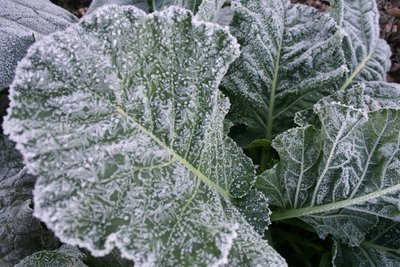
Cold temperatures decrease membrane fluidity and can cause ice formation in cell walls and intercellular spaces. Plants adapt by altering membrane lipid composition and accumulating nontoxic solutes to reduce water loss during freezing.
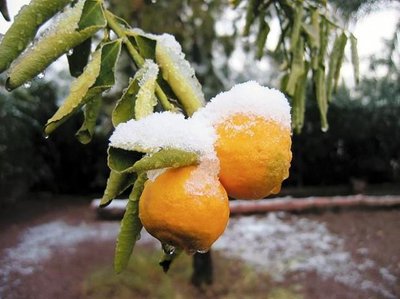
Some plants produce antifreeze proteins that inhibit ice crystal formation, a trait that has evolved independently in multiple groups (convergent evolution).
Plant Defenses Against Herbivores and Pathogens
Defenses Against Herbivores
Herbivory is a major biotic stress for plants. Plants have evolved multiple defense strategies:
Physical defenses: thorns, trichomes
Chemical defenses: production of toxic or distasteful compounds
Behavioral defenses: releasing volatile chemicals to attract predators of herbivores or warn neighboring plants

Defenses Against Pathogens
The plant epidermis and periderm act as physical barriers to pathogen entry. If breached, plants mount immune responses:
PAMP-triggered immunity: Recognition of pathogen-associated molecular patterns (PAMPs) triggers a chemical attack to isolate and prevent pathogen spread.
Effector-triggered immunity: Recognition of pathogen effectors by plant resistance (R) proteins activates stronger defenses, including the hypersensitive response (localized cell death) and systemic acquired resistance (plant-wide defense gene expression).
Systemic acquired resistance involves the movement of signaling molecules such as methylsalicylic acid, which is converted to salicylic acid in distant tissues to initiate defense responses.
Additional info: The study of plant responses to environmental and biotic stimuli is essential for understanding plant adaptation, survival, and productivity in changing environments.
