Back
BackPlant Structure, Function, and Reproduction; Animal Organization and Homeostasis – Study Guide
Study Guide - Smart Notes
 Tailored notes based on your materials, expanded with key definitions, examples, and context.
Plant Structure and Growth
Plant Organs and Tissues
Plants are composed of three main organs: roots, stems, and leaves. These organs are made up of tissues, which are integrated groups of cells with a common structure and function. An organ is a specialized center of body function composed of several different types of tissues.
Roots: Anchor the plant, absorb minerals and water, and store carbohydrates.
Stems: Support leaves and transport fluids between roots and leaves.
Leaves: Primary site of photosynthesis, gas exchange, transpiration, and regulation of water loss.
Root Structure and Function
Roots serve to anchor the plant, absorb minerals and water, and often store carbohydrates. Root hairs increase the surface area for water absorption.
Leaf Functions
Photosynthesis: Conversion of light energy to chemical energy.
Gas Exchange: CO2 enters and O2 exits through stomata.
Transpiration: Water evaporates from leaf stomata, pulling water up from roots.
Regulation of Water Loss: Stomata open and close to balance CO2 uptake and water conservation.
Vascular Tissues
Xylem: Conducts water and dissolved minerals upward from roots.
Phloem: Transports sugars from leaves to other parts of the plant.
Growth and Meristems
Apical Meristems: Enable primary growth (lengthening).
Lateral Meristems: Enable secondary growth (thickening).
Dendrochronology and Growth Rings
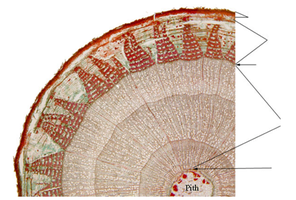
Growth rings are formed by differential growth during the growing season. Early wood has large, thin-walled cells; late wood has thick-walled cells. Rings are absent in tropical trees due to lack of seasonal growth.
Root Adaptations
Prop-roots and Buttress Roots: Provide additional support in shallow soils.
Exposed Roots in Mangroves: Allow oxygen uptake in waterlogged soils.
Stomata and Guard Cells
Stomata are pores surrounded by guard cells, which regulate gas exchange and water loss.
Common Garden Experiments
Used to distinguish genetic vs. environmental influences on plant traits.
Secondary Growth and Cambium
Vascular Cambium: Produces secondary xylem and phloem.
Cork Cambium: Produces protective outer covering.
Resource Acquisition, Transport, and Nutrition in Plants
Water and Nutrient Uptake
Plants acquire resources through specialized structures and processes. Mosses lack roots and absorb water and nutrients by diffusion and osmosis.
Overview of Resource Acquisition
CO2 uptake and O2 release through stomata.
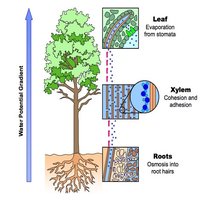
Transpiration creates a pull for xylem sap.
Phloem sap moves sugars between sources and sinks.
Apoplastic and Symplastic Routes
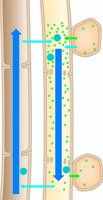
Water and minerals move through roots via apoplastic (cell wall) and symplastic (cytoplasm) routes. The Casparian strip in the endodermis regulates entry into the vascular cylinder.
Water Potential
Definition: Predicts the direction of water movement, influenced by solute concentration and pressure.
Water moves from regions of higher to lower water potential.
Adding solutes lowers water potential (always negative).
Unusual Nutritional Adaptations
Epiphytes: Grow on other plants, gather their own nutrients.
Parasitic Plants: Absorb nutrients from hosts.
Carnivorous Plants: Supplement diet by capturing insects.
Cohesion-Tension Hypothesis
Transpiration pulls water up the xylem, with cohesion and adhesion maintaining an unbroken chain of water molecules.
Stomatal Regulation
Guard cells control stomatal opening and closing.
Environmental stimuli: light, CO2 depletion, drought (abscisic acid).
Cation Exchange in Soil
Roots acidify soil, releasing H+ ions that displace mineral cations for uptake.
Translocation and Phloem Transport
Translocation: Movement of photosynthetic products in phloem.
Sugar Source: Net producer (e.g., mature leaf).
Sugar Sink: Net consumer (e.g., root, fruit).
Nitrogen Cycle and Mutualisms
Rhizobium: Nitrogen-fixing bacteria in legume root nodules.
Mycorrhizae: Fungi aiding nutrient and water uptake.
Angiosperm Reproduction and Double Fertilization
Flower Structure and Function
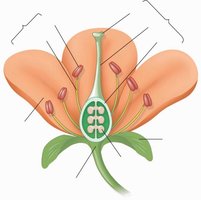
Flowers contain reproductive organs: stamen (male) and carpel (female). Essential parts for reproduction are the stamen and carpel.
Pollination and Fertilization
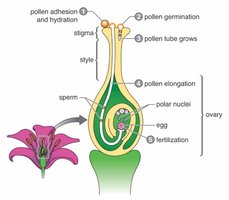
Pollination: Transfer of pollen to stigma.
Fertilization: Fusion of gametes to form zygote.
Double fertilization: One sperm fertilizes egg (zygote), other fertilizes two polar nuclei (endosperm).
Alternation of Generations
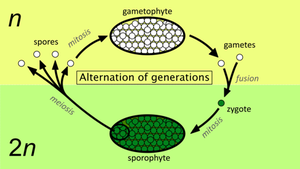
Plants alternate between haploid gametophyte and diploid sporophyte generations.
Plant Response to Environmental Stimuli
Hormones and Tropisms
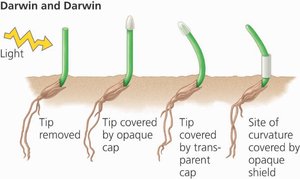
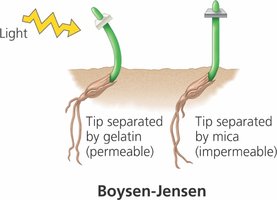
Auxins: Cell elongation, phototropism.
Gibberellins, Cytokinins, Abscisic Acid, Ethylene: Growth, dormancy, ripening, stress responses.
Tropisms: Phototropism (light), gravitropism (gravity), thigmotropism (touch).
Animal Organization and Homeostasis
Animal Tissues
Epithelial: Secretion, absorption, protection.
Connective: Support, cushioning.
Muscle: Contraction.
Nervous: Electrical signaling.
Excretory Systems
Filtration: Least selective, removes most solutes.
Reabsorption: Returns valuable substances to blood.
Secretion: Adds toxins and excess ions to filtrate.
Excretion: Removes urine from body.
Osmoregulation in Fish
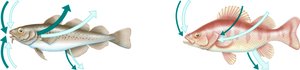
Marine Fish: Drink water, excrete concentrated urine.
Freshwater Fish: Do not drink, excrete dilute urine.
Nitrogenous Waste Excretion
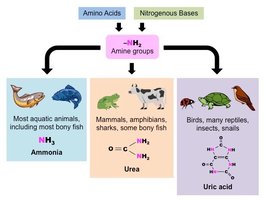
Ammonia: Aquatic animals, highly toxic, requires much water.
Urea: Mammals, less toxic, moderate water.
Uric Acid: Birds, reptiles, insects, low water, high energy.
Thermoregulation and Feedback
Endothermy: Internal heat generation (mammals, birds).
Ectothermy: External heat sources (reptiles, fish).
Negative Feedback: Restores homeostasis.
Positive Feedback: Drives process to completion.
Heat Exchange Mechanisms
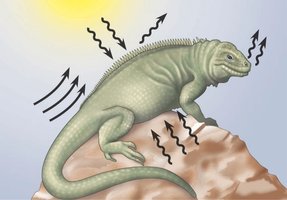
Radiation: Absorption/emission of electromagnetic waves.
Evaporation: Loss of heat via water vapor.
Conduction: Direct transfer of heat.
Convection: Heat transfer via air/liquid movement.
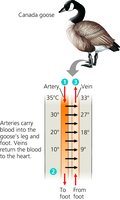
Countercurrent Exchange
Arteries and veins in extremities exchange heat to minimize loss.
Excretory System Steps
Filtration: Blood pressure forces water and solutes into tubule.
Reabsorption: Valuable substances returned to body fluids.
Secretion: Toxins and excess ions added to filtrate.
Excretion: Urine leaves the body.
Thermoregulatory Adaptations in Horses
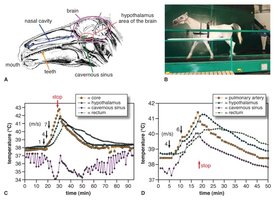
Horses use nasal breathing and the cavernous sinus to cool blood before it reaches the brain, protecting the hypothalamus during exercise.