 Back
BackPlant Structure, Growth, and Development – Study Notes
Study Guide - Smart Notes
 Tailored notes based on your materials, expanded with key definitions, examples, and context.
Plant Structure, Growth, and Development
Overview of Plant Body Organization
Plants are complex multicellular organisms with specialized structures and functions. Their bodies are organized into hierarchical levels: cells, tissues, and organs, each contributing to the plant's survival and adaptation.
Cells: Differentiated for specific functions such as photosynthesis, support, absorption, and transport.
Tissues: Groups of cells with similar structure and function. The three main tissue types are:
Dermal tissue: Outer protective covering.
Vascular tissue: Conducts water, minerals, and sugars.
Ground tissue: Functions in photosynthesis, storage, and support.
Organs: Combinations of tissues organized to perform specific functions. The two main organ systems are:
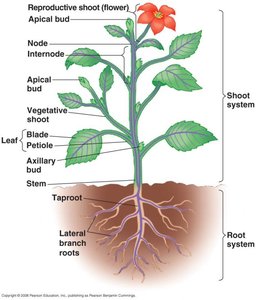
Root system: Roots
Shoot system: Stems and leaves
Root System
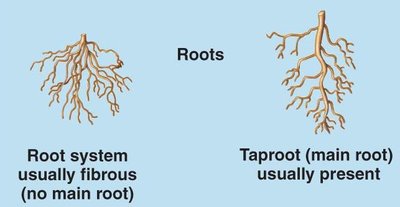
The root system operates below ground, anchoring the plant, absorbing water and minerals, and storing carbohydrates. There are two main types of root morphologies:
Taproot system: Main vertical root with lateral branches; typical of gymnosperms and most eudicots.
Fibrous root system: No main root, many thin roots; common in monocots and seedless vascular plants.
Root hairs: Extensions of root epidermal cells that increase surface area for absorption.
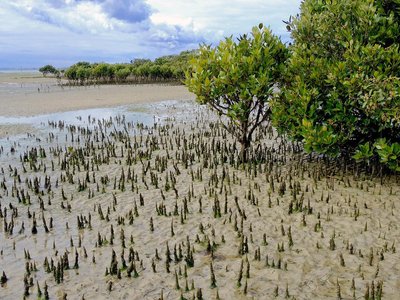
Modified roots: Roots adapted for specialized functions, such as adventitious roots (arising from stems or leaves), prop roots, and pneumatophores (as seen in mangroves).
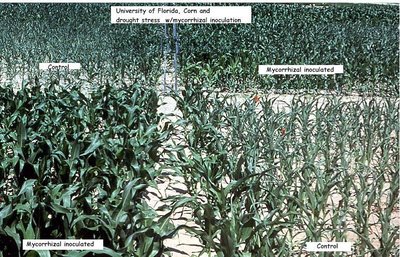
Mycorrhizal associations: Mutualistic relationships between plant roots and fungi, enhancing nutrient uptake.
Shoot System
The shoot system functions above ground and is responsible for reproduction and photosynthesis. It consists of stems and leaves.
Stems: Support leaves and reproductive structures, and facilitate transport between roots and leaves. Stems are composed of nodes (branching points) and internodes (segments between nodes).
Growth: Primary growth occurs via apical buds (at the tip), while branches form from axillary buds (in leaf axils).
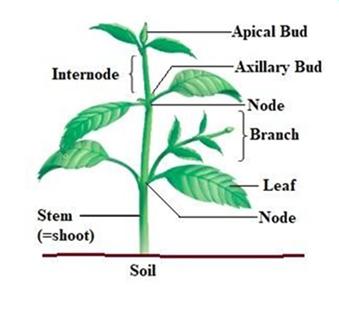
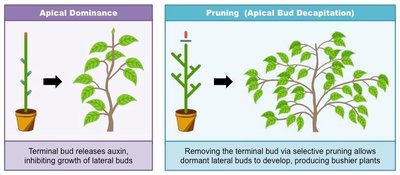
Apical dominance: The apical bud inhibits the growth of axillary buds, preventing the plant from becoming too bushy or top-heavy. Removal of the apical bud (pruning) releases axillary buds from inhibition, resulting in bushier growth.
Leaf Structure and Function
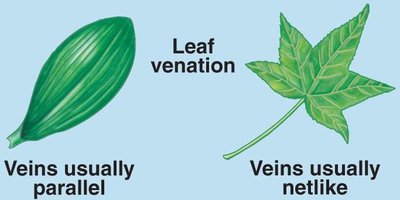
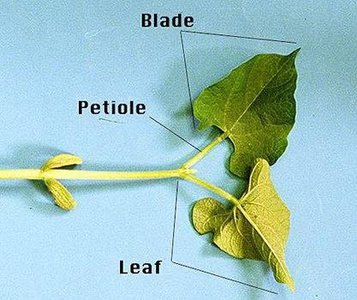
Leaves are the main organs of photosynthesis. They are typically composed of a blade and a petiole. Leaf venation patterns differ between monocots (parallel veins) and eudicots (netlike veins).
Simple vs. compound leaves: Simple leaves have a single undivided blade, while compound leaves have blades divided into leaflets. The presence of an axillary bud at the base distinguishes a leaf from a leaflet.
Leaf modifications: Leaves can be adapted for support, protection, storage, or other specialized functions (e.g., tendrils, spines).
Plant Tissue Types
Plant tissues are classified into three main types, each with distinct functions and cell types:
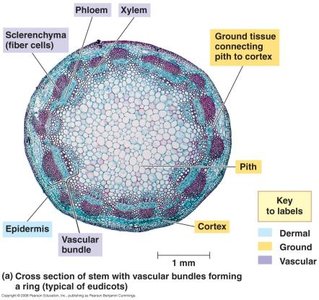
Dermal tissue: The outer protective layer, including the epidermis and specialized structures like stomata and trichomes.
Vascular tissue: Conducts water, minerals, and sugars throughout the plant. It consists of xylem (water transport) and phloem (sugar transport).
Ground tissue: Functions in photosynthesis, storage, and support. It includes parenchyma, collenchyma, and sclerenchyma cells.
Plant Cell Types
There are five characteristic plant cell types, each with unique structures and functions:
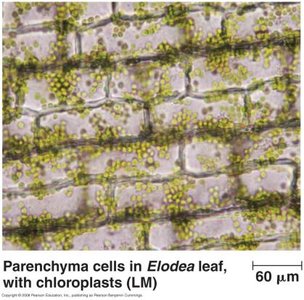
Parenchyma cells: Thin primary walls, alive at maturity, function in photosynthesis, storage, and metabolic processes. Can differentiate into other cell types.
Collenchyma cells: Living support cells with unevenly thickened primary walls, provide flexible support, especially around vascular tissues.
Sclerenchyma cells: Dead at maturity, with thick secondary walls containing lignin, provide rigid support (fibers and sclereids).
Xylem cells: Dead at maturity, conduct water and minerals. Two main types: tracheids (long, narrow) and vessel elements (shorter, wider).
Phloem cells: Living cells that conduct sugars. Sieve-tube elements (no nucleus, fast conductance) are assisted by companion cells (with nucleus and organelles).
Plant Growth and Meristems
Plant growth is generally indeterminate, meaning plants can continue to grow throughout their lives due to the presence of meristems—regions of undifferentiated, perpetually embryonic cells.
Primary growth: Increase in length, occurs at apical meristems (tips of roots and shoots).
Secondary growth: Increase in girth, occurs at lateral meristems (vascular cambium and cork cambium), producing woody tissues.
Annuals: Complete their life cycle in one year.
Perennials: Live for multiple years, capable of indefinite growth.
Tissues of Leaves
Leaves are composed of dermal, ground, and vascular tissues:
Dermal tissue: Upper and lower epidermis, containing stomata (pores for gas exchange) regulated by guard cells.
Ground tissue: Mesophyll, primarily parenchyma cells for photosynthesis, with air spaces for gas diffusion.
Vascular tissue: Veins (xylem and phloem) surrounded by bundle sheath cells, continuous with stem vascular tissue.
Control of Plant Development
Plant development is regulated by genetic and environmental factors, involving three main processes:
Growth: Cell division and elongation.
Morphogenesis: Formation of specific tissues and organs in defined patterns.
Differentiation: Specialization of cells from meristematic to mature forms.
Arabidopsis thaliana is a model organism for studying plant development due to its small genome and ease of genetic manipulation.
Summary Table: Comparison of Plant Tissue Types
Tissue Type | Main Function | Key Cell Types |
|---|---|---|
Dermal | Protection, gas exchange | Epidermal cells, guard cells, trichomes |
Vascular | Transport of water, minerals, sugars | Xylem (tracheids, vessel elements), Phloem (sieve-tube elements, companion cells) |
Ground | Photosynthesis, storage, support | Parenchyma, collenchyma, sclerenchyma |
