 Back
Plants as Ecosystem Engineers: Roles, Interactions, and Biomes in South Africa
Study Guide - Smart Notes
 Tailored notes based on your materials, expanded with key definitions, examples, and context.
Plants as Ecosystem Engineers
Introduction to Plants as Ecosystem Engineers
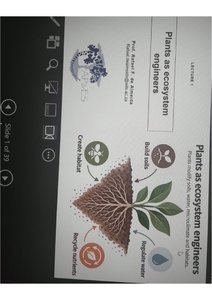
Plants play a foundational role in terrestrial ecosystems by modifying their environment and supporting other forms of life. As ecosystem engineers, plants stabilize soils, regulate water, recycle nutrients, and provide habitat and food for a wide range of organisms.
Soil Stabilization: Plant roots bind soil, reducing erosion and maintaining soil structure.
Water Regulation: Plants influence water cycles through transpiration and water retention.
Nutrient Recycling: Plants contribute to nutrient cycling by decomposing organic matter and facilitating nutrient uptake.
Habitat Provision: Plants create habitats for animals, fungi, and microorganisms.
Learning Outcomes
Key Concepts and Applications
This section outlines the main learning outcomes related to the study of plants as ecosystem engineers:
The Importance of Plants: Understanding the ecological and economic significance of plants.
Economic Botany: Exploring how plants benefit human societies, especially in South Africa.
Diversity of South African Plants: Recognizing the variety and uniqueness of plant species in the region.
Plant Roles in Ecosystems: Examining how plants regulate water, stabilize soil, and support food webs.

How Do Plants Make Ecosystems Possible?
Mechanisms of Ecosystem Engineering by Plants
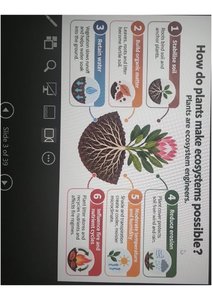
Plants enable the existence and maintenance of terrestrial ecosystems through several key processes:
Stabilize Soil: Roots anchor soil, preventing erosion.
Build Organic Matter: Dead plant material enriches soil organic content.
Retain Water: Plant cover reduces water runoff and increases infiltration.
Regulate Climate: Plants absorb carbon dioxide and release oxygen, influencing atmospheric composition.
Support Wildlife: Plants provide food and shelter for animals.
Recycle Nutrients: Decomposition of plant material returns nutrients to the soil.
Plants Make Life on Land Possible
Photosynthesis and Environmental Transformation
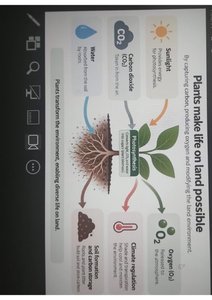
Through photosynthesis, plants capture carbon, produce oxygen, and modify the terrestrial environment, making it suitable for life.
Photosynthesis Equation:
Inputs: Water, carbon dioxide, and sunlight.
Outputs: Oxygen and glucose.
Soil Formation: Plant roots and organic matter contribute to soil development.
Climate Regulation: Plants absorb CO2, mitigating climate change.
Food Webs and Ecosystem Interactions
South African Food Web
Plants form the base of terrestrial food webs, supporting herbivores, predators, and decomposers. Nutrient cycling is essential for ecosystem stability.
Producers: Grasses and other plants convert solar energy into biomass.
Herbivores: Animals such as springbok and kudu feed on plants.
Predators: Carnivores like jackals and raptors feed on herbivores.
Decomposers: Organisms that break down dead organic matter, recycling nutrients.

Plants and the Water Cycle
Shaping Water Cycles and Healthy Landscapes
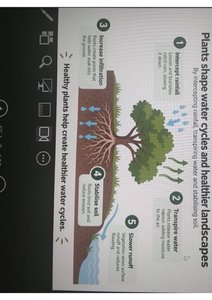
Plants influence the water cycle by intercepting rainfall, stabilizing soil, and facilitating water infiltration and transpiration.
Interception: Leaves and stems capture rainfall, reducing runoff.
Soil Stabilization: Roots prevent soil erosion and enhance water retention.
Increased Infiltration: Plant cover allows more water to enter the soil.
Transpiration: Plants release water vapor, contributing to atmospheric moisture.
Streamflow Regulation: Healthy vegetation supports stable streamflow and reduces flooding.
Carbon Storage in Ecosystems
Role of Plants in Carbon Sequestration
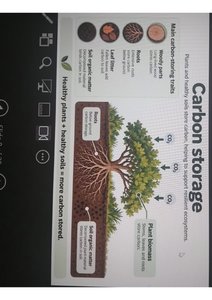
Plants and healthy soils store carbon, helping to mitigate climate change by removing CO2 from the atmosphere.
Plant Biomass: Carbon is stored in leaves, stems, and roots.
Soil Organic Matter: Decomposed plant material enriches soil carbon content.
Major Carbon Sinks: Forests, grasslands, and wetlands are important for carbon storage.
Soil Stabilization by Plants
Different Root Structures and Their Functions
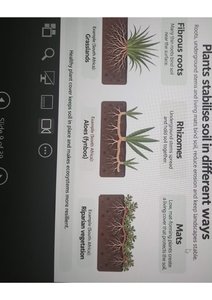
Plants stabilize soil using various root structures, each adapted to specific environments.
Fibrous Roots: Common in grasses, these roots form dense mats that hold soil together.
Rhizomes: Underground stems (e.g., in aloes) spread horizontally, stabilizing loose soils.
Mats: Found in riparian vegetation, these roots protect riverbanks from erosion.
Animal Interactions with Plants
Mutualistic and Trophic Relationships
Animals interact with plants in various ways, including pollination, seed dispersal, herbivory, and using plants for shelter and nesting.
Pollination: Birds, insects, and mammals transfer pollen, enabling plant reproduction.
Seed Dispersal: Animals transport seeds, aiding plant distribution.
Shelter and Nesting: Plants provide habitats for many animal species.
Herbivory: Animals feed on plant tissues, influencing plant populations and community structure.

Cultural and Economic Services of Plants
Plants in Human Societies
Plants provide essential resources and cultural value to human societies, including food, medicine, materials, and spiritual significance.
Food: Staple crops and wild plants support human nutrition.
Medicines: Many traditional and modern medicines are derived from plants.
Materials: Plants supply fibers, wood, and other materials for construction and crafts.
Spiritual and Cultural Value: Plants are integral to rituals, traditions, and cultural identity.

Food Systems and Wild Plants
Plant Contributions to Diet and Knowledge
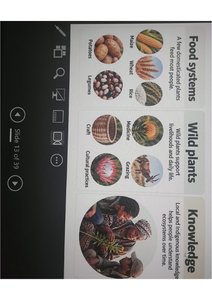
Domesticated and wild plants are vital for food security and cultural knowledge, especially in indigenous communities.
Food Systems: Crops like maize, legumes, and nuts are dietary staples.
Wild Plants: Provide nutrition, medicine, and resilience in changing environments.
Knowledge: Traditional ecological knowledge preserves sustainable use of plant resources.
From Plants to People: Ecosystem Services
Key Ecosystem Functions Supported by Plants
Plants support ecosystem functions such as carbon storage, soil stabilization, water regulation, wildlife support, and pollination, all of which benefit human societies.
Store Carbon: Mitigates climate change.
Stabilize Soil: Prevents erosion and land degradation.
Regulate Water: Maintains water quality and availability.
Support Wildlife: Ensures biodiversity and ecosystem resilience.
Provide Cultural Services: Supports livelihoods and cultural practices.

South African Biomes
Major Biomes and Their Characteristics
South Africa contains a diversity of biomes, each with unique climate, vegetation, and ecological roles. Understanding these biomes is essential for conservation and sustainable management.
Albany Thicket
Nama Karoo
Succulent Karoo
Desert
Forest
Fynbos
Grassland
Savanna
Indian Ocean Coastal Belt

Biome Case Studies
Examples of South African Biomes
Each biome is characterized by specific climate, vegetation, adaptations, and threats. Examples include:
Coastal Belt Biome: High biodiversity, unique plant adaptations, and significant human impact.
Desert Biome: Extreme aridity, succulent plants, and specialized animal life.
Albany Thicket Biome: Dense, woody vegetation and high endemism.
Forest Biome: High rainfall, tall trees, and complex food webs.
Fynbos Biome: Mediterranean climate, fire-adapted plants, and high species richness.
Succulent Karoo Biome: Rich in succulent plants, adapted to low rainfall.
Nama Karoo Biome: Semi-arid, dominated by grasses and shrubs.
Grassland Biome: Dominated by grasses, supports large herbivores.
Savanna Biome: Mixed grass and tree cover, supports diverse wildlife.









Biome Contrasts and Climate Change
Comparing Biomes and the Impact of Climate Change
South African biomes differ in climate, vegetation, and ecosystem services. Climate change is altering these biomes, affecting biodiversity and ecosystem function.
Biome Contrasts: Differences in rainfall, temperature, and dominant vegetation types.
Climate Change Effects: Increased temperatures, altered rainfall patterns, more frequent fires, and shifting biome boundaries.
Result: Ecosystem and biodiversity changes, with consequences for human societies.


Climate Change and Ecosystem Responses
How Climate Change Alters Ecosystems
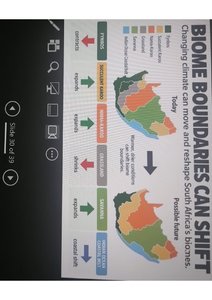
Climate change leads to higher temperatures, changing rainfall, more fires, shifting habitats, and impacts on wildlife. These changes can reassemble communities and shift biome boundaries.
Species Responses: Migration, adaptation, or extinction depending on tolerance and dispersal ability.
Community Reassembly: New combinations of species may emerge as conditions change.
Biome Boundary Shifts: Biomes may expand, contract, or move geographically.


Species-Specific Responses and Human Impacts
Species Adaptation and Ecosystem Services
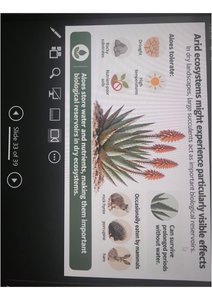
Different plant species respond uniquely to environmental changes. The loss of key species, such as aloes, can have cascading effects on ecosystem services and human well-being.
Migration: Some species move to more suitable habitats.
Adaptation: Others adapt to new conditions or face extinction.
Human Impacts: Loss of ecosystem services such as food, medicine, and cultural value.


Summary Table: Key Ecosystem Services Provided by Plants
Service | Description | Example |
|---|---|---|
Soil Stabilization | Roots bind soil, prevent erosion | Grasslands, riparian mats |
Water Regulation | Plants intercept and transpire water | Forests, wetlands |
Carbon Storage | Biomass and soil organic matter store carbon | Forests, thickets |
Wildlife Support | Provide food and habitat | Savannas, fynbos |
Cultural Value | Food, medicine, spiritual significance | Wild plants, traditional crops |
Additional info: This table summarizes the main ecosystem services provided by plants, as discussed throughout the notes.
