 Back
Polymerase Chain Reaction (PCR) and DNA Fingerprinting: Study Notes for General Biology
Study Guide - Smart Notes
 Tailored notes based on your materials, expanded with key definitions, examples, and context.
Polymerase Chain Reaction (PCR)
Introduction to PCR
The Polymerase Chain Reaction (PCR) is a revolutionary technique in molecular biology that allows for the exponential amplification of specific DNA segments from very small samples. PCR is widely used in gene cloning, gene therapy, diagnostics, and forensic science.
Definition: PCR is a method to amplify a targeted DNA sequence using cycles of temperature changes and DNA polymerase.
Applications: Gene cloning, disease diagnosis, forensic analysis, and genetic research.
Key Point: PCR enables scientists to obtain millions of copies of a DNA segment from a single or few molecules.
Discovery of PCR
PCR was conceptualized by Dr. Kary Banks Mullis in 1983 and earned him the Nobel Prize in Chemistry in 1993. The invention of PCR is considered one of the most important scientific advances of the twentieth century.

PCR Process: Steps and Mechanism
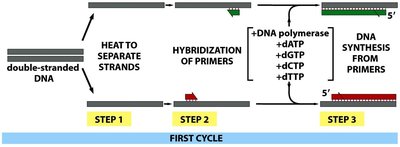
PCR consists of three main steps repeated for 20-40 cycles, resulting in exponential DNA amplification:
Denaturation: The double-stranded DNA is heated (typically to 94-98°C) to separate into single strands.
Annealing: The temperature is lowered (typically to 50-65°C) to allow primers to bind (anneal) to their complementary sequences on the single-stranded DNA.
Extension: The temperature is raised (typically to 72°C) for DNA polymerase to synthesize new DNA strands from the primers.
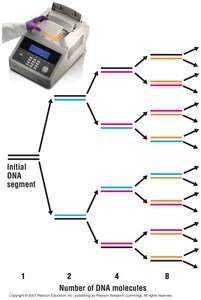
Exponential Amplification
Each cycle of PCR doubles the number of DNA molecules, leading to exponential growth. After n cycles, the number of DNA molecules is approximately times the original amount.
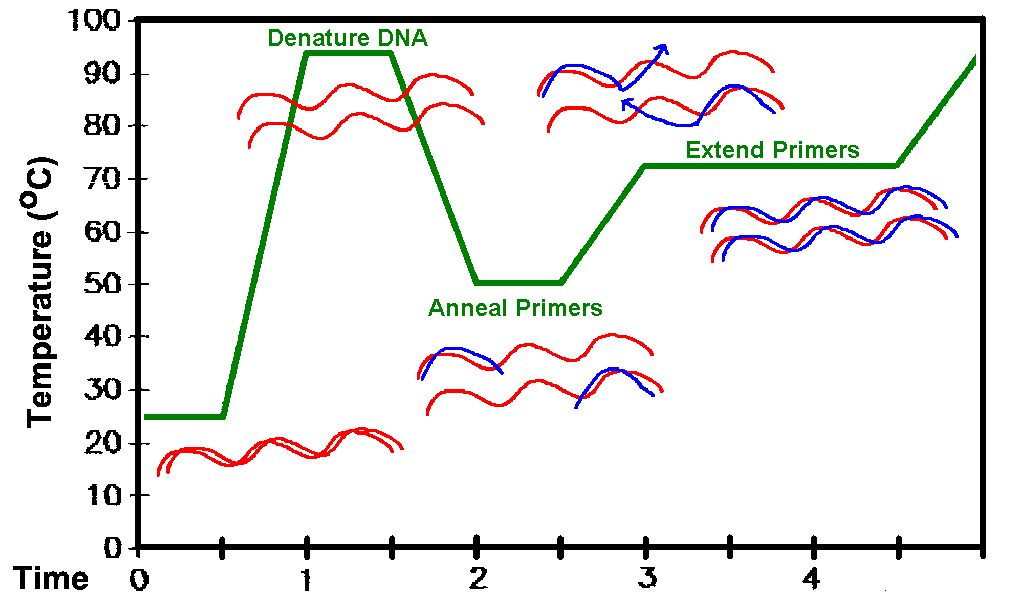
Temperature Shifts in PCR
The PCR process relies on precise temperature changes to facilitate each step:
Denaturation: High temperature breaks hydrogen bonds between DNA strands.
Annealing: Lower temperature allows primers to bind to target sequences.
Extension: Intermediate temperature enables DNA polymerase to synthesize new DNA.
Thermostable DNA Polymerase
DNA polymerase used in PCR must withstand high temperatures. Thermus aquaticus (Taq polymerase) is a bacterium discovered in hot springs, whose enzyme remains stable during the denaturation step.

Reagents Required for PCR
DNA template: The segment to be amplified.
Primers: Short DNA sequences that initiate replication.
dNTPs: Deoxynucleotide triphosphates (building blocks of DNA).
DNA polymerase: Enzyme that synthesizes new DNA.
Buffer: Maintains optimal conditions for the reaction.
Importance of Each Step and Component
Denaturation: Failure to denature prevents strand separation, so no amplification occurs.
dNTPs: Without dNTPs, DNA synthesis cannot proceed.
Primers: Both forward and reverse primers are needed for amplification; using only one primer results in linear, not exponential, amplification.
Verification of PCR Success
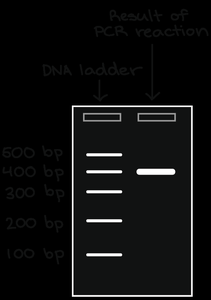
To confirm successful DNA amplification, the PCR product is analyzed by gel electrophoresis, which separates DNA fragments by size.
DNA Fingerprinting
Introduction to DNA Fingerprinting
DNA fingerprinting is a technique used to identify individuals based on unique patterns in their DNA. It is widely used in forensic science, paternity testing, and genetic research.
Definition: The process of collecting, processing, and comparing DNA samples to match individuals.
Applications: Crime investigation, paternity identification, population genetics.

History and Development
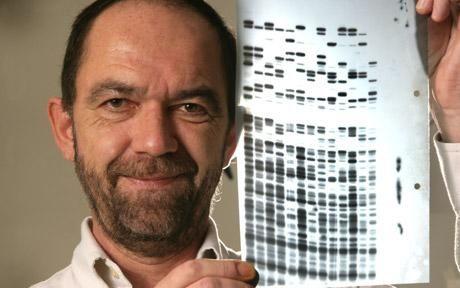
Sir Alec Jeffreys developed DNA fingerprinting in 1984, revolutionizing forensic science. He was awarded the Albert Einstein World Award of Science in 1996.
Short Tandem Repeats (STRs)
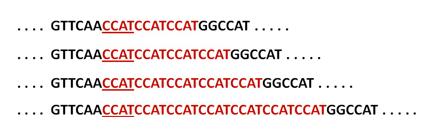
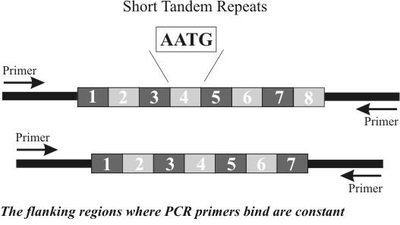
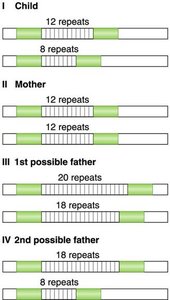
STRs are repetitive DNA sequences (2-5 nucleotides) found throughout the genome. The number of repeats varies between individuals, making STRs ideal for identification.
STRs: Short, repetitive DNA sequences used in DNA fingerprinting.
Variation: The number of repeats at each STR locus differs among individuals.
Amplification and Analysis of STRs
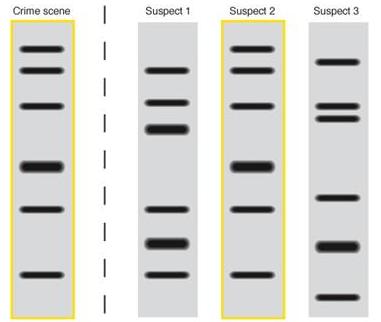
PCR is used to amplify STR regions from DNA samples. The amplified fragments are separated by gel electrophoresis, producing a unique pattern for each individual.
Combined DNA Index System (CODIS)
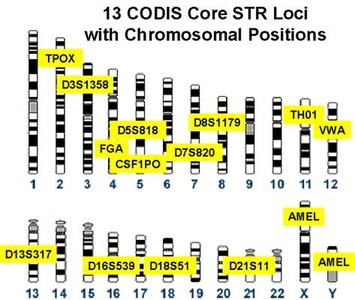
CODIS is a database used by law enforcement to store and compare DNA profiles based on 13 core STR loci. Each locus is located at a specific chromosomal position.
CODIS: National DNA database for criminal identification.
Core STR loci: 13 standardized regions used for comparison.
Forensic Applications: Crime Scene Investigation
DNA evidence from a crime scene can be compared to suspects using STR analysis. Matching patterns indicate a likely source of the DNA.

Paternity Testing Using STRs
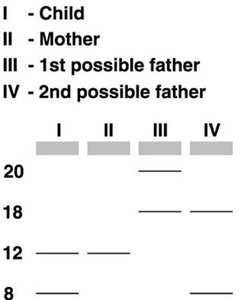
STR analysis can determine biological relationships. By comparing the STR profiles of a child, mother, and possible fathers, the true father can be identified.
Summary Table: PCR vs. DNA Fingerprinting
Technique | Main Purpose | Key Steps | Applications |
|---|---|---|---|
PCR | Amplify DNA segments | Denaturation, Annealing, Extension | Cloning, diagnostics, research |
DNA Fingerprinting | Identify individuals | STR amplification, gel electrophoresis | Forensics, paternity, population studies |
Example: Primer Design for PCR
To amplify a DNA segment, primers must flank the region of interest. For the sequence:
5’ GCATGTCAATTGGGGCTATATGGCATGTAATTTGGCCGGCTATA 3’
3’ CGTACAGTTAACCCCGATATACCGTACATTAAACCGGCCGATAT 5’
Primers of 6 bases should be designed to match the start and end of the target region.
Additional info:
Two bands of amplified DNA may occur if there are two similar regions or if primers bind to multiple sites.
STR analysis is robust for forensic and paternity testing due to high variability among individuals.
