 Back
Population and Disease Ecology: Study Notes for General Biology
Study Guide - Smart Notes
 Tailored notes based on your materials, expanded with key definitions, examples, and context.
Population Ecology
Life Histories and Population Growth Rates
Life history traits determine how populations grow and change over time. These traits include the timing of growth, development, reproduction, and death in an average individual's life.
Life History: The sequence of events related to growth, development, reproduction, and death.
Survivorship: The fraction of individuals surviving from birth to different life stages or ages.
Survivorship Types:
Type I: High juvenile survival, most mortality occurs among older individuals.
Type II: Individuals die at equal rates regardless of age.
Type III: High juvenile death rate, low mortality among other ages.
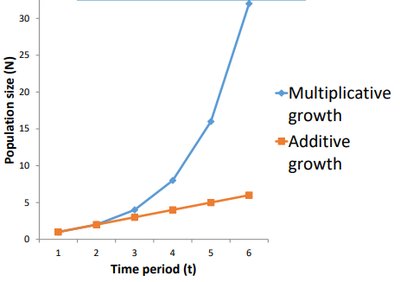
Population Growth Types
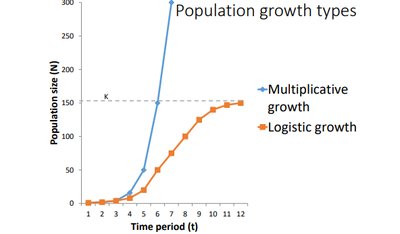
Population growth can be additive or multiplicative, and may follow exponential or logistic patterns.
Additive Growth: Population increases by a constant number each period.
Multiplicative (Exponential) Growth: Population increases by a constant proportion each period.
Logistic Growth: Population growth slows as it approaches carrying capacity (K).
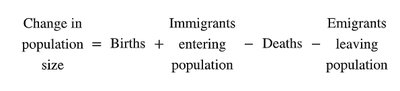
Population Change Equation
The change in population size is determined by births, deaths, immigration, and emigration.
Equation:
Population Equilibrium and Density
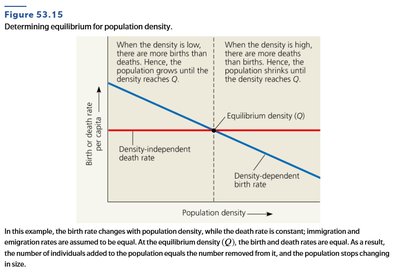
Population density affects birth and death rates, leading to equilibrium when these rates are equal.
Equilibrium Density (Q): The population size at which birth and death rates are equal.
Density-dependent death rate: Death rate increases with population density.
Density-independent death rate: Death rate does not change with population density.
Human Population Growth
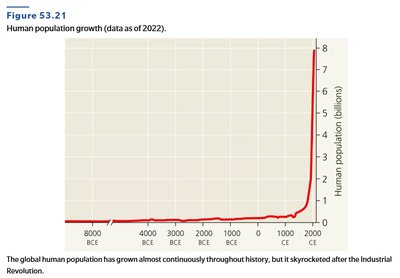
Human population growth has accelerated dramatically, especially after the Industrial Revolution.
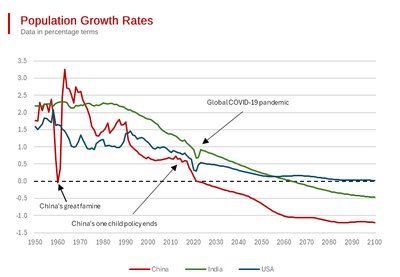
Growth Rate Trends: Population growth rates vary by country and are influenced by events such as famines and pandemics.
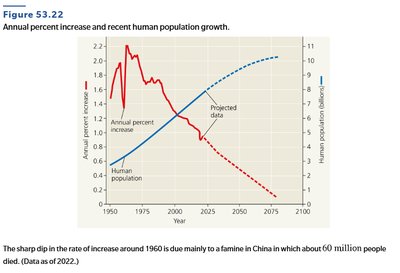
Annual Percent Increase: The rate of population growth changes over time and is projected to decline in the future.
Life History Classification: r vs. K Selection
Species are classified by their reproductive strategies, which affect population dynamics.
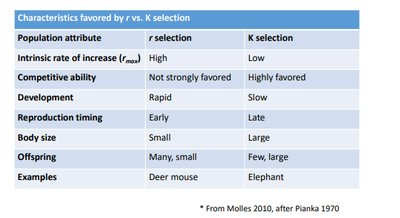
r Selection: High rate of increase, rapid development, early reproduction, small body size, many small offspring. Common in disturbed habitats.
K Selection: Low rate of increase, slow development, late reproduction, large body size, few large offspring. Common in stable environments.
Distribution Patterns
Species distribution depends on habitat and interactions.
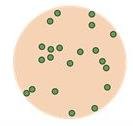
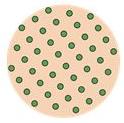
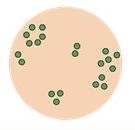
Random Distribution: Individuals have equal chance of occurring anywhere.
Regular Distribution: Individuals are uniformly spaced due to antagonistic interactions or resource depletion.
Clumped Distribution: Individuals live in areas of high local abundance due to attraction to resources or each other.
Dispersal Mechanisms
Dispersal allows organisms to access resources, reduce competition, and increase genetic diversity.
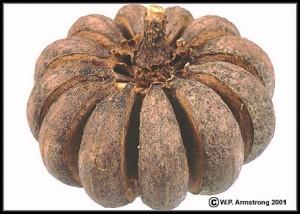
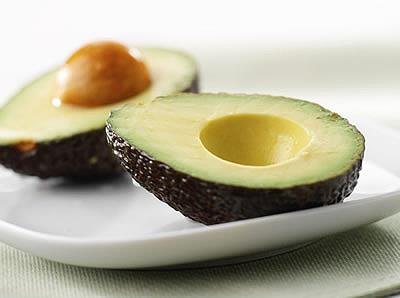
Abiotic Dispersal: Gravity, water, wind, ballistic mechanisms (e.g., coconuts, dandelion seeds, sandbox tree seeds).
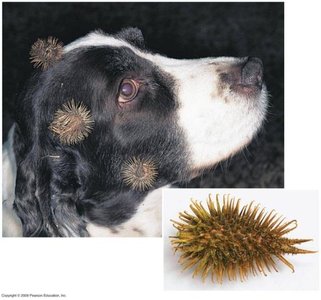
Animal Transport: Seeds adapted to attach to animals or be eaten and dispersed (e.g., cockleburs, fruits, grass seeds).
Range Changes and Dispersal in Response to Environmental Change
Climate change and food supply shifts can alter species ranges and dispersal patterns.
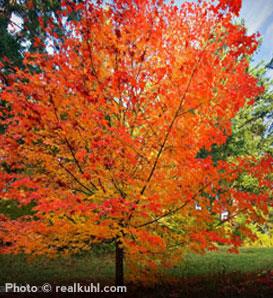
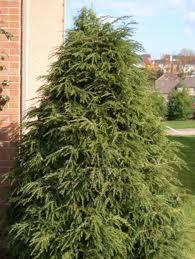
Climate Change: Opens new territory; organisms track suitable conditions (e.g., maple and hemlock trees shifting range).
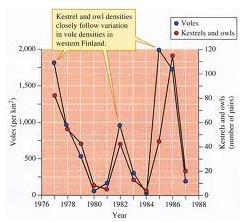
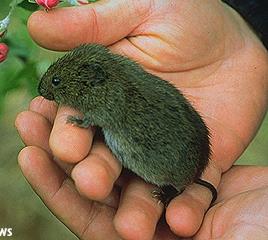
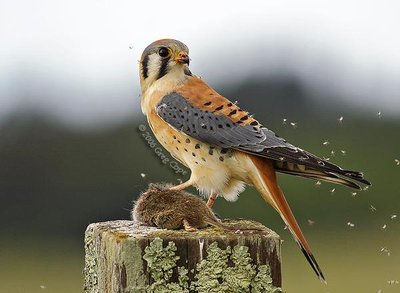
Food Supply: Predators disperse or starve in response to prey density changes; predator density lags behind prey density.
Dispersal in Rivers and Streams
Aquatic organisms use various strategies to avoid or utilize water currents for dispersal.
Swimming: Larger fish swim against current.
Adhesion: Microorganisms adhere to surfaces.
Streamlining: Aquatic insects are flattened or streamlined.
Planktonic Dispersal: Snail species allow eggs/larvae to be swept downstream, then migrate upstream as adults.
Disease Ecology
Factors Affecting Disease
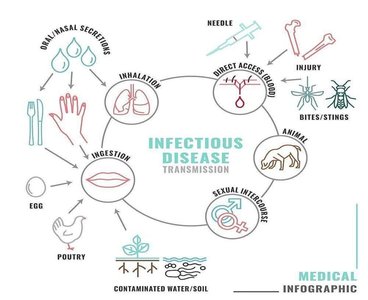
Disease occurrence depends on host susceptibility, environmental conditions, and frequency of contact between host and pathogen.
Transmission Modes:
Direct: Airborne, physical contact.
Indirect: Inanimate (fomite, water, food), animate (biological vector).
Pathogen Types
Pathogens are disease-causing microbes classified into five groups.
Bacteria: Prokaryotes.
Protozoans & Helminths: Eukaryotes.
Fungi: Eukaryotes.
Viruses: DNA or RNA with protein coat.
Prions: Misfolded proteins.
SIR Model of Disease Spread
The SIR model describes disease dynamics in populations.
S: Susceptible individuals.
I: Infected individuals.
R: Recovered individuals.
Basic reproductive rate ():
If , disease spreads through population.
Zoonoses
Zoonoses are diseases transmitted from animals to humans.
Examples: Avian Influenza, SARS, MERS, COVID-19.
COVID-19 is 96% similar to bat coronavirus; intermediate host unknown.
Viral Diseases
Canine Distemper: Paramyxovirus affecting carnivores; symptoms include respiratory congestion, fever, immune suppression, neurological damage.
Hantavirus: RNA virus affecting humans and rodents; symptoms include pulmonary distress in humans.
Rabies: Rhabdovirus affecting mammals; symptoms include encephalitis, pain, uncontrolled movements, death.
Prion Diseases
Bovine Spongiform Encephalopathy: Prion disease causing nervous system damage in bovids and humans.
Chronic Wasting Disease: Prion disease affecting deer, elk, moose; causes neurodegeneration and death.
Bacterial Diseases
Plague: Caused by Yersinia pestis, transmitted by fleas; affects humans and animals.
Lyme Disease: Caused by Borrelia, transmitted by ticks; symptoms include rash, fever, fatigue, neuropathy.
Tuberculosis: Caused by Mycobacterium tuberculosis; transmitted by coughing, milk, feces, nasal contact.
Parasitic Diseases
Toxoplasmosis: Caused by Toxoplasma gondii; transmitted through ingestion; affects humans and animals.
Pathogens of Conservation Concern
Devil Facial Tumor Disease: Parasitic cancer affecting Tasmanian Devils; transmitted by direct contact.
White-Nose Syndrome: Fungal disease affecting bats; caused by Pseudogymnoascus destructans.
Summary Table: r vs. K Selection
Population Attribute | r Selection | K Selection |
|---|---|---|
Intrinsic rate of increase () | High | Low |
Competitive ability | Not strongly favored | Highly favored |
Development | Rapid | Slow |
Reproduction timing | Early | Late |
Body size | Small | Large |
Offspring | Many, small | Few, large |
Examples | Deer mouse | Elephant |
Conclusion
Population and disease ecology are central to understanding how organisms interact with their environment and each other. These concepts are critical for conservation, public health, and predicting future changes in biodiversity and population dynamics.
