 Back
BackPopulation Connectivity, Genetic Drift, and Hybridization in Evolutionary Biology
Study Guide - Smart Notes
 Tailored notes based on your materials, expanded with key definitions, examples, and context.
Population Connectivity and Hybridization
Species and Populations
Understanding the concepts of species and populations is fundamental to evolutionary biology. A species is defined as a group of organisms that can interbreed in nature and produce viable, fertile offspring. A population consists of individuals of the same species that live in the same geographic area and interact with one another.
Species: Capable of interbreeding and producing fertile offspring.
Population: Group of the same species in a specific area.
Population Connectivity and Gene Flow
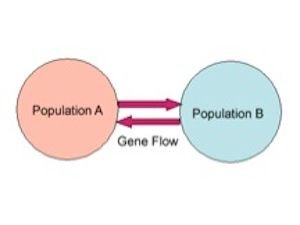
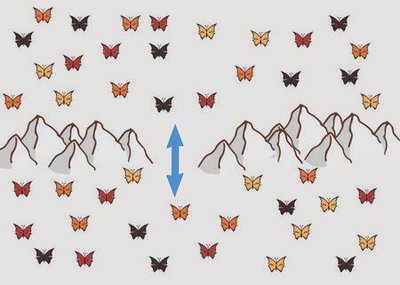
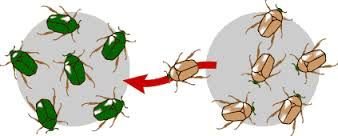
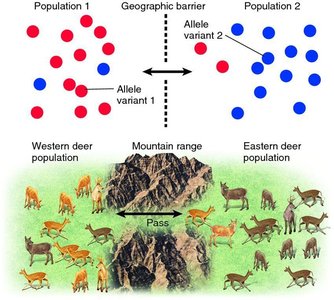
Gene flow refers to the transfer of alleles or genes from one population to another, typically through the movement of individuals (emigration and immigration). This process increases genetic diversity within populations and can reduce differences between populations.
Gene Flow: Movement of alleles between populations via migration.
Effect: Maintains genetic diversity and can counteract the effects of genetic drift and natural selection.
Example: Migration of butterflies or beetles between separated populations.
Genetic Drift
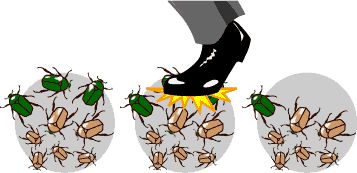
Genetic drift is a mechanism of evolution that involves random changes in allele frequencies in a population, especially significant in small populations. It can lead to the loss of genetic variation and can cause certain alleles to become fixed or lost purely by chance.
Genetic Drift: Random fluctuations in allele frequencies from one generation to the next.
Significance: More pronounced in small populations.
Example: Random survival of beetles after a chance event.
Founder Effect
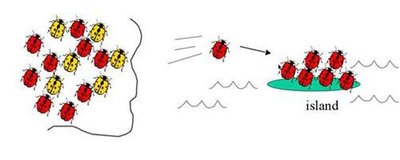
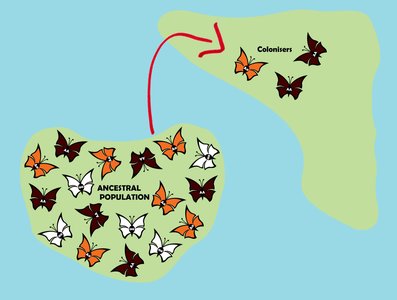
The founder effect is a specific type of genetic drift that occurs when a small group of individuals becomes isolated from a larger population and establishes a new population. The new population may have reduced genetic diversity and different allele frequencies compared to the original population.
Founder Effect: Small group establishes a new population with different genetic makeup.
Consequence: Reduced genetic diversity, potential for unique traits to become common.
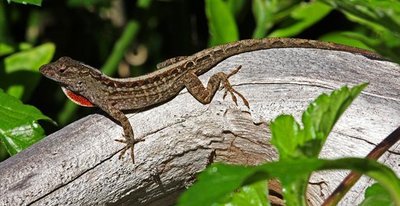
Examples: Brown anoles in Caribbean islands, polydactyly in Amish populations.
Bottleneck Effect
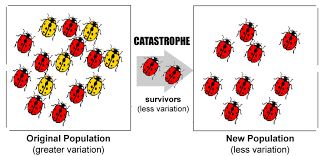
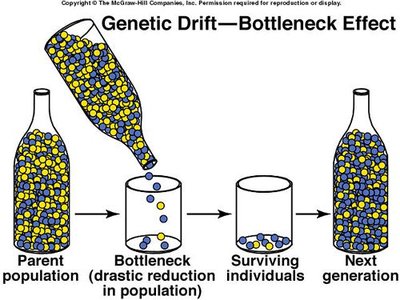
The bottleneck effect is another form of genetic drift that occurs when a population undergoes a severe reduction in size due to a sudden event (e.g., natural disaster). The surviving population may have different allele frequencies and reduced genetic diversity compared to the original population.
Bottleneck Effect: Drastic reduction in population size alters allele frequencies.
Consequence: Loss of genetic variation, increased risk of inbreeding.
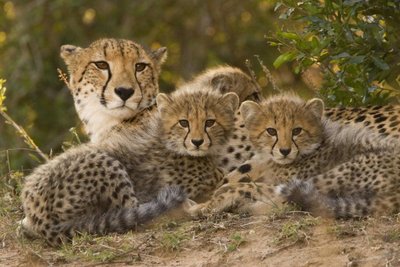
Examples: Elephant seals, cheetahs.
Hybridization and Hybrid Zones
Hybridization
Hybridization occurs when individuals from two different species with incomplete reproductive barriers mate and produce offspring. This process can result in gene flow between species, but not within a single species. Hybrids often have reduced fitness compared to parent species.
Hybridization: Mating between two species with incomplete reproductive barriers.
Gene Flow: Occurs between species, not within species.
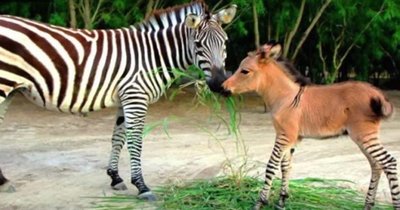
Examples: Wholphin (whale-dolphin hybrid), zonkey (zebra-donkey hybrid).
Hybrid Zones
A hybrid zone is a geographic region where two species with incomplete reproductive barriers meet, mix, and mate in the wild. These zones are important for studying the process of speciation and the outcomes of hybridization.
Hybrid Zone: Area where interbreeding between two species occurs.
Significance: Provides insight into reproductive isolation and gene flow.
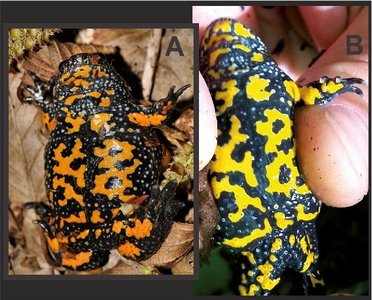
Example: Hybrid zones between fire-bellied and yellow-bellied toads in Europe.
Outcomes of Hybrid Zones Over Time
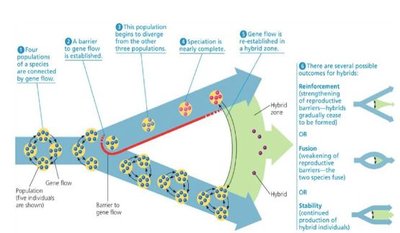
Hybrid zones can have different evolutionary outcomes over time, including reinforcement, fusion, and stability.
Reinforcement: Strengthening of reproductive barriers; hybrids are less fit, so fewer hybrids are produced over time.
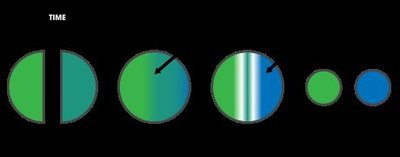
Fusion: Weakening of reproductive barriers; gene flow increases, and the two species may merge into one.
Stability: Continued production of hybrids at a constant rate; hybrid zone remains stable.
Case Study: Tigers (Panthera tigris) Range
Historical vs. Current Range
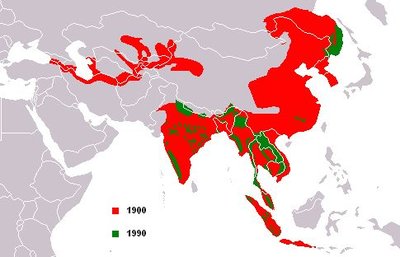
The range of tigers (Panthera tigris) has dramatically decreased over the past century due to habitat loss, hunting, and fragmentation. This reduction in range is an example of how population connectivity and gene flow can be disrupted, leading to isolated populations and increased risk of genetic drift and inbreeding.
Historical Range: Much larger, continuous populations.
Current Range: Severely fragmented, smaller populations.
Cladogram Practice and Shared Derived Characters
Cladogram Construction
Cladograms are diagrams that show evolutionary relationships among species based on shared derived characters. The table below lists several animal groups and the presence (1) or absence (0) of specific traits.
Shared derived characters | Lion | Fish | Scorpion | Jellyfish | Sea urchin |
|---|---|---|---|---|---|
Deuterostome | 1 | 1 | 0 | 0 | 1 |
Backbone | 1 | 1 | 0 | 0 | 0 |
Hair | 1 | 0 | 0 | 0 | 0 |
Segmentation | 1 | 1 | 1 | 0 | 1 |
Three tissue layers | 1 | 1 | 1 | 0 | 1 |
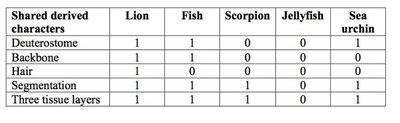
Application: Use the table to construct a cladogram, grouping species by shared derived characters to infer evolutionary relationships.
Summary
Population connectivity, gene flow, and genetic drift are key mechanisms influencing genetic diversity and evolution.
Hybridization and hybrid zones provide insight into the process of speciation and the maintenance or breakdown of reproductive barriers.
Case studies and cladogram practice help apply these concepts to real-world and theoretical examples.
