 Back
BackPopulation Ecology and Ecological Relationships: Structured Study Notes
Study Guide - Smart Notes
 Tailored notes based on your materials, expanded with key definitions, examples, and context.
Ecology: The Study of Interactions
Definition and Importance
Ecology is the scientific study of the interactions between organisms and their environment. This field helps us understand how living organisms affect each other and the world they inhabit, emphasizing the interconnectedness of all life forms.
Ecology explains the relationships and dependencies among organisms and their surroundings.
Environment includes both biotic (living) and abiotic (nonliving) factors.
Application: Ecological principles are used in conservation, resource management, and understanding environmental impacts.

Levels of Ecological Organization
Hierarchy of Complexity
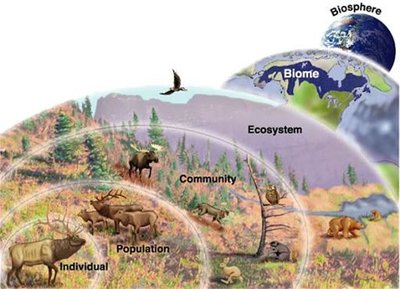
Ecologists classify interactions into hierarchical levels based on complexity, from individual organisms to the biosphere.
Organism: An individual living thing that exhibits all characteristics of life (cellular structure, energy use, reproduction, response, growth, and development).
Population: A group of organisms of the same species living in the same place at the same time, capable of interbreeding.
Community: Interacting populations of different species in a shared environment.
Ecosystem: All biotic and abiotic factors in a given area, including their interactions.
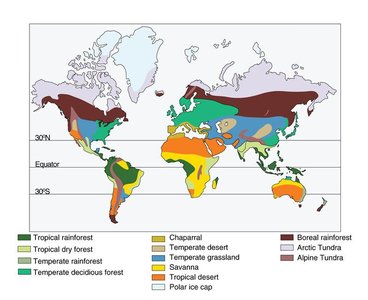
Biome: Large geographic regions characterized by specific climate, soil, and communities of plants and animals.
Biosphere: The global ecosystem, encompassing all living organisms and the abiotic factors they depend on.
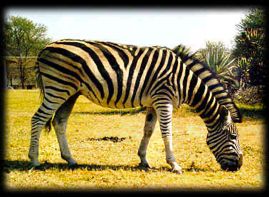
Organism Level
The organism is the fundamental unit of ecological study, representing a single living entity.
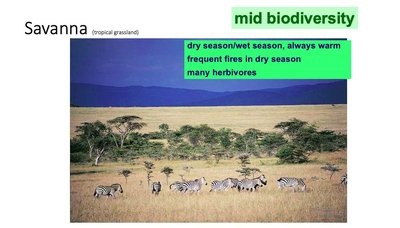
Example: A zebra grazing in the savanna.
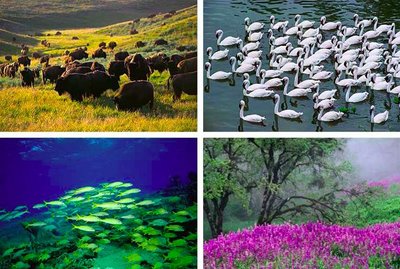
Population Level
A population consists of multiple individuals of the same species in a defined area.
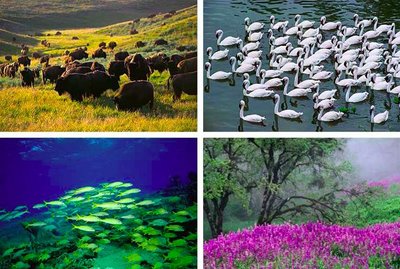
Example: Groups of bison, flamingos, fish, or flowers in their respective habitats.
Community Level
Communities are composed of populations of different species that interact in complex ways, including competition and cooperation for resources.
Interactions: Competition for resources, mating, territory, and cooperation for survival.
Example: A pond ecosystem with insects, algae, bacteria, fungi, and other organisms.
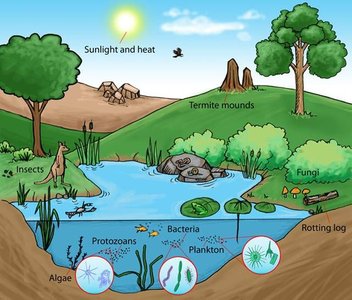
Ecosystem Level
An ecosystem includes all living (biotic) and nonliving (abiotic) factors in a specific area, and their interactions.
Biotic factors: Living organisms such as frogs, fungi, bacteria.
Abiotic factors: Nonliving components like air, water, temperature, soil.
Biosphere Level
The biosphere is the global sum of all ecosystems, where life is found from the ocean depths to the upper atmosphere.
Example: The biosphere includes all biomes and ecosystems on Earth.
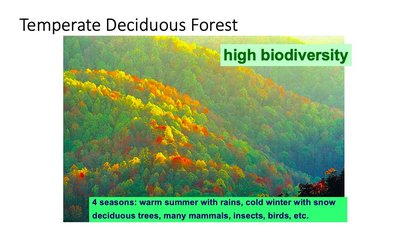
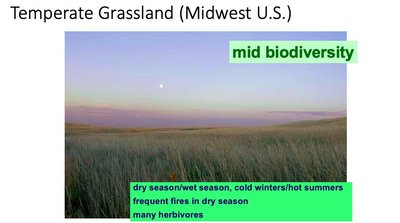
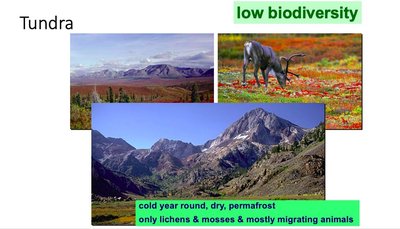
Biomes
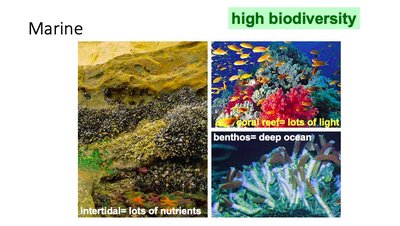
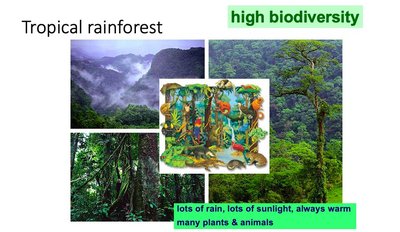
Biomes are large, distinct regions characterized by similar climate, soil, and communities of plants and animals.
Examples: Tropical rainforest, savanna, tundra, temperate grassland, marine environments.
Classification: Biomes are classified by climate and dominant vegetation.
Population Ecology
Population Description and Health
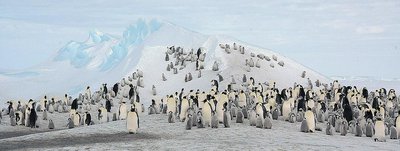
A population is defined as a group of individuals of one species living in a specific geographic area. Ecologists use several metrics to describe population health.
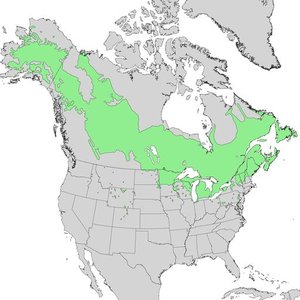
Range: The geographic area where a population can be found.
Density: The number of individuals per unit area.
Growth: The rate at which population size changes.
Population Growth Models
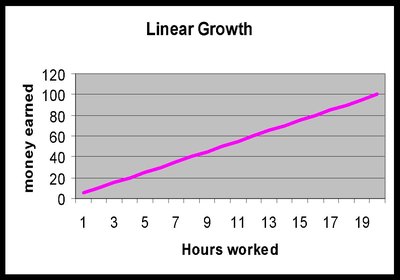
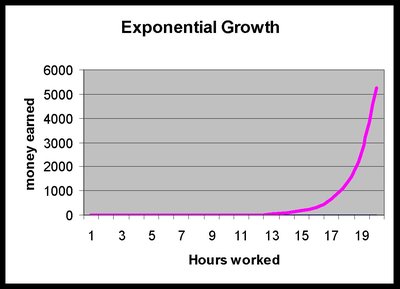
Population growth can be described mathematically and visually. Two primary models are linear and exponential growth.
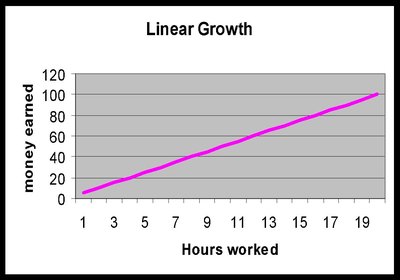
Linear Growth: Population increases by a constant amount over time.
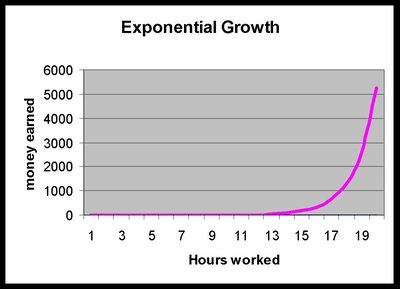
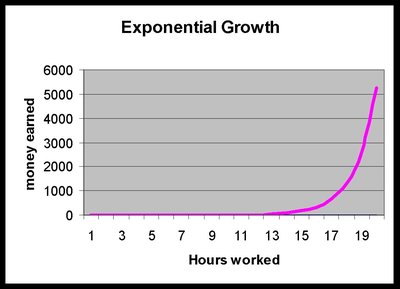
Exponential Growth: Population increases at a constant rate, resulting in a J-shaped curve.
Linear Growth Equation:
Exponential Growth Equation:
Factors Affecting Population Growth
Population growth is influenced by several factors related to individual life histories and environmental conditions.
Natality: Birth rate; addition of new individuals.
Fecundity: Ability to reproduce.
Fertility: Number of offspring produced.
Mortality: Death rate.
Life Expectancy: Predicted length of survival.
Limiting Factors
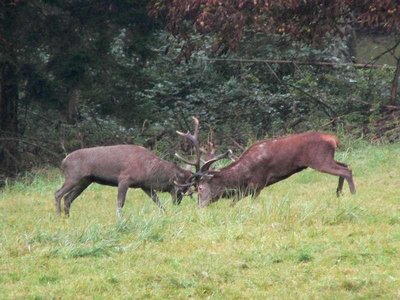
Populations do not grow indefinitely due to environmental limits called limiting factors, which can be biotic or abiotic.
Biotic Limiting Factors: Competition, predation, parasites, disease.
Abiotic Limiting Factors: Weather, natural disasters, temperature, water, space.
Types of Limiting Factors
Limiting factors are classified as density-dependent or density-independent.
Density-dependent: Effects increase as population size increases (e.g., competition, disease).
Density-independent: Affect populations regardless of size (e.g., storms, floods, drought).
Logistic Growth and Carrying Capacity
Logistic growth occurs when population size stabilizes at the carrying capacity, forming an S-shaped curve.
Carrying Capacity (K): Maximum number of organisms an environment can support over time.
Limiting Factors: Food, water, space determine carrying capacity.
Population Equilibrium: Population fluctuates around carrying capacity, with birth and death rates balancing.
Logistic Growth Equation:
Population Ecology and Natural Selection
Fitness and Survival Strategies
Natural selection favors behaviors and traits that increase survival and reproductive fitness. Fitness is measured by an organism's ability to survive and pass on genes to offspring.
Fitness: Ability to survive and reproduce.
Adaptation: Traits that enhance survival in changing environments.
Reproductive Strategies: R-Selected vs. K-Selected
Species adopt different reproductive strategies to maximize fitness and population survival.
R-Selected: Produce many small offspring with limited parental care; most offspring die, but energy investment is low.
K-Selected: Produce few, larger offspring with significant parental care; most offspring survive, but population growth is slow.
Growth and Survivorship Curves
Survivorship curves and growth curves illustrate differences between R- and K-selected species.
K-Selected: Many survivors, longer life span, slow population growth, stable at carrying capacity.
R-Selected: Fewer survivors, shorter life span, rapid population growth, extreme population cycles.
Example: Elephants (K-selected) vs. insects (R-selected).
Strategy | Offspring Number | Parental Care | Population Growth | Survivorship |
|---|---|---|---|---|
R-Selected | Many | Low | Rapid | Low |
K-Selected | Few | High | Slow | High |
*Additional info: Academic context was added to clarify definitions, equations, and examples for completeness.*
