 Back
Population Ecology and the Distribution of Organisms – Study Notes
Study Guide - Smart Notes
 Tailored notes based on your materials, expanded with key definitions, examples, and context.
Population Ecology and the Distribution of Organisms
Introduction to Ecology
Ecology is the scientific study of the interactions between organisms and their environment. Ecologists investigate how these interactions influence the distribution and abundance of organisms, as well as the flow of energy and cycling of nutrients in ecosystems.
Ecology Hierarchy: Research in ecology is organized into several hierarchical levels, from individual organisms to the entire biosphere.
Key Questions: Ecologists may ask what limits the geographic distribution of a species, or how interactions with other species affect population size.
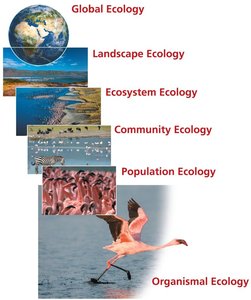
Levels of Ecological Study
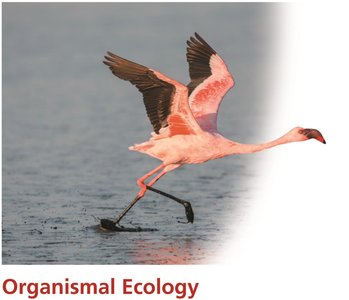
Organismal Ecology: Examines how an organism’s structure, physiology, and behavior help it meet environmental challenges. Includes physiological, evolutionary, and behavioral ecology.
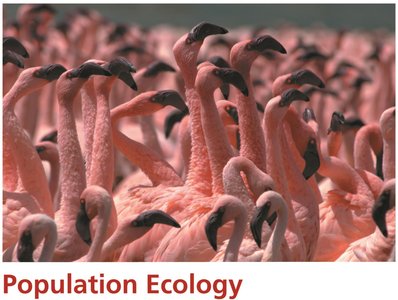
Population Ecology: Focuses on factors that affect population size and how and why it changes over time. A population is a group of individuals of the same species living in an area.
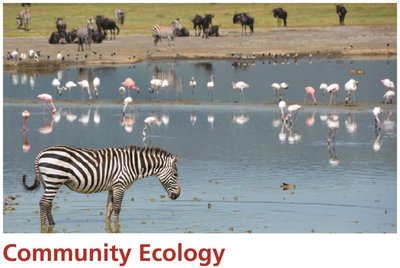
Community Ecology: Studies interactions between species and how these affect community structure and organization. A community is a group of populations of different species in an area.
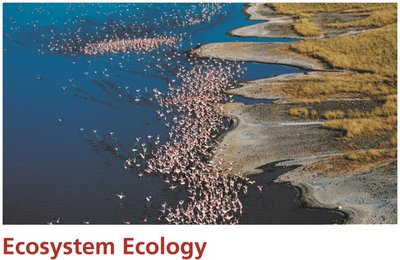
Ecosystem Ecology: Emphasizes energy flow and chemical cycling between organisms and the environment. An ecosystem includes all organisms in an area and the physical factors with which they interact.
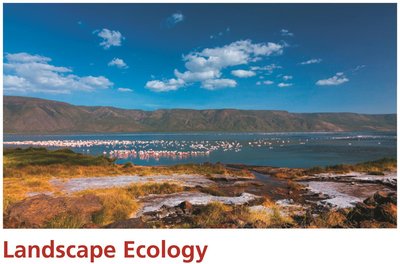
Landscape Ecology: Investigates the factors controlling exchanges of energy, materials, and organisms across multiple ecosystems. A landscape is a mosaic of connected ecosystems.
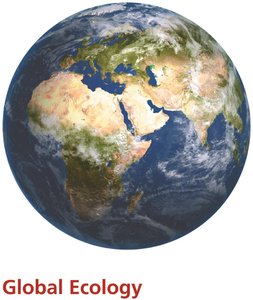
Global Ecology: Concerned with the biosphere, the sum of all the planet’s ecosystems and landscapes. Examines the influence of energy and materials on organisms across the biosphere.
Climate and Its Role in Ecology
The long-term prevailing weather conditions in an area constitute its climate. Climate is a major factor determining the locations of terrestrial biomes and the distribution of organisms.
Abiotic Factors: Temperature, precipitation, sunlight, and wind are the four major physical components of climate.
Global Climate Patterns
Solar Energy and Earth’s Movement
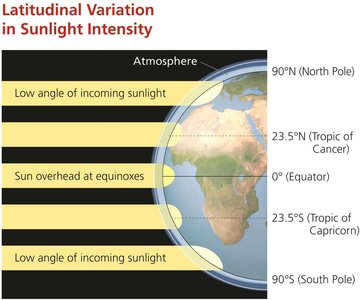
Global climate patterns are determined largely by solar energy and Earth’s movement in space. The sun’s warming effect causes temperature variations, which drive evaporation and the circulation of air and water, resulting in latitudinal variations in climate.
Latitudinal Variation: The angle at which sunlight hits Earth affects its intensity, creating different climate zones from the equator to the poles.
Global Air Circulation and Precipitation Patterns
Warm, wet air rises near the equator, creating precipitation in the tropics.
Dry air descends at 30° north and south, absorbing moisture and creating deserts.
This pattern repeats at higher latitudes, influencing global precipitation and wind patterns.
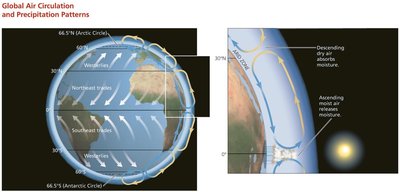
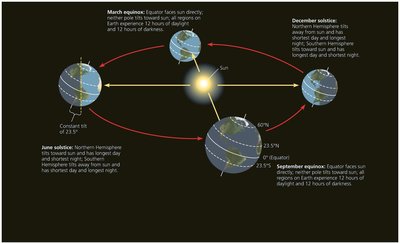
Seasonality and Local Climate Effects
Seasonality: Caused by the tilt of Earth’s axis and its orbit around the sun, leading to seasonal variations in light and temperature, especially at higher latitudes.
Shifts in wet and dry air belts cause wet and dry seasons at certain latitudes.
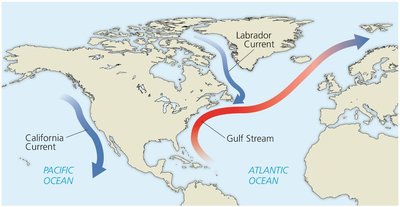
Influence of Bodies of Water
Oceans and large lakes moderate the climate of nearby land by heating or cooling air masses.
Ocean currents, such as the California Current and Gulf Stream, transport warm or cold water, affecting coastal climates.
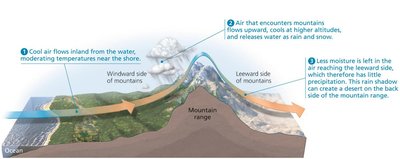
Mountains and Climate
Mountains influence climate by affecting sunlight, temperature, and rainfall patterns.
Rising air releases moisture on windward slopes, creating a rain shadow on the leeward side, often resulting in deserts.
Elevation affects temperature, with every 1,000-m increase causing a drop of about 6°C.
Terrestrial Biomes
Definition and Distribution
Biomes are major life zones characterized by vegetation type (terrestrial biomes) or physical environment (aquatic biomes). Climate determines the vegetation type and limits the distribution of terrestrial biomes, which show latitudinal patterns reflecting climate zones.
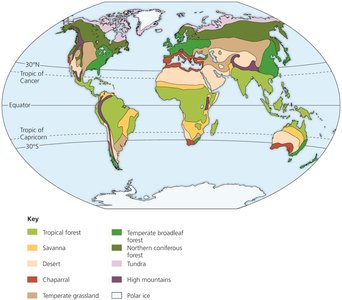
Climographs
A climograph plots the annual mean temperature and precipitation in a region, helping to distinguish between different biomes. Patterns of temperature and precipitation throughout the year also affect biome distribution.
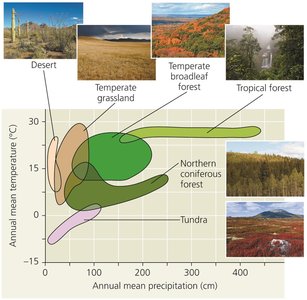
Disturbance and Biome Distribution
Natural and human-caused disturbances (e.g., fires, storms, human activity) can alter the distribution of biomes by removing organisms and changing resource availability.
Disturbances can prevent the transition of one biome to another (e.g., frequent fires maintaining savanna).
General Features of Terrestrial Biomes
Named for major physical or climatic features and predominant vegetation.
Vertical layering (e.g., canopy, understory, ground layer) provides diverse habitats.
Biomes usually grade into each other through ecotones, which are areas of intergradation.
Major features include global distribution, mean annual temperature and precipitation, and dominant plants and animals.
Aquatic Biomes
Characteristics and Zonation
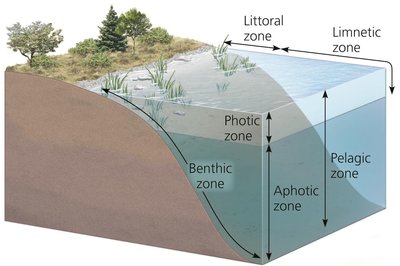
Aquatic biomes are primarily characterized by their physical and chemical environment. They are stratified into vertical and horizontal zones, with light intensity decreasing with depth.
Photic Zone: Sufficient light for photosynthesis.
Aphotic Zone: Little light penetrates.
Pelagic Zone: Includes both photic and aphotic zones.
Benthic Zone: Organic and inorganic sediment at the bottom; inhabited by benthos organisms.
Littoral Zone: Shallow, near-shore waters with rooted plants (in lakes).
Limnetic Zone: Deeper waters away from shore, too deep for rooted plants.
Thermocline: Temperature boundary separating warm upper water from cold deeper water.
Oceans are the largest marine biome, covering about 75% of Earth’s surface and greatly influencing global climate and wind patterns.
Population Ecology: Density, Dispersion, and Demographics
Population Density and Dispersion
Population ecology examines how biotic and abiotic factors influence population density, dispersion, and size.
Density: Number of individuals per unit area or volume.
Dispersion: Pattern of spacing among individuals within the population boundaries.
Sampling techniques (e.g., random sampling, extrapolation) are used to estimate population size and density.
Patterns of Dispersion
Clumped: Individuals aggregate in patches, often due to resource availability or social behavior.
Uniform: Evenly spaced, often due to territoriality or competition.
Random: Position of each individual is independent of others, often where resources are consistent.
Demographics and Life Tables
Demography: Study of births, deaths, and migration rates over time.
Life Table: Age-specific summary of survival and reproductive rates, often constructed by following a cohort from birth to death.
Age Interval | Number Alive at Start | Number Dying | Proportion Surviving |
|---|---|---|---|
0-1 | 100 | 20 | 0.80 |
1-2 | 80 | 10 | 0.88 |
2-3 | 70 | 15 | 0.79 |
3-4 | 55 | 5 | 0.91 |
4-5 | 50 | 10 | 0.80 |
5-6 | 40 | 40 | 0.00 |
Additional info: Table values are illustrative; refer to textbook for actual data.
Survivorship Curves
Type I: High survivorship early and mid-life, steep drop in old age (e.g., humans).
Type II: Constant death rate over the lifespan (e.g., some birds).
Type III: High death rates for young, lower for survivors (e.g., oysters, many fish).
Many species have intermediate or complex survivorship patterns.
Reproductive Rates
Described by the variation in reproductive output with female age.
Measured as the average number of female offspring per female in each age group.
Age-specific reproductive rates vary widely among species.
