 Back
BackPopulation Ecology: Factors Affecting Population Size and Dynamics
Study Guide - Smart Notes
 Tailored notes based on your materials, expanded with key definitions, examples, and context.
Population Ecology
Introduction to Population Ecology
Population ecology is the study of the factors that affect the size of populations and how these populations change over time. It is a central field in ecology, providing insights into the dynamics of species in their environments and the mechanisms that regulate population growth and decline.
Biotic and Abiotic Factors Affecting Population Density, Dispersion, and Demographics
Population Definition and Boundaries
Population: A group of individuals of a single species living in the same general area.
Boundaries: May be natural (e.g., a lake or island) or defined by researchers (e.g., a county).
Density and Dispersion
Density: The number of individuals per unit area or volume (e.g., oak trees per square kilometer).
Dispersion: The pattern of spacing among individuals within the population boundaries.
Estimating Population Density
Direct counts in randomly located plots, extrapolation to the entire area.
Indicators such as nests, burrows, tracks, or droppings.
Mark-recapture method for mobile species.
Population Dynamics: Additions and Removals
Increases: Births and immigration (influx from other areas).
Decreases: Deaths and emigration (movement out of the population).
Patterns of Dispersion
The spatial arrangement of individuals provides insight into ecological processes and interactions.
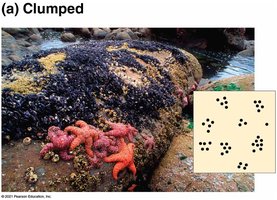
Clumped: Individuals aggregate in patches, often due to resource availability or social behavior.
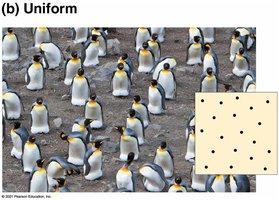
Uniform: Individuals are evenly spaced, often due to territoriality or competition.
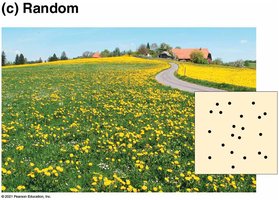
Random: Unpredictable spacing, occurs in the absence of strong attractions or repulsions.
Demographics
Demography: The study of birth, death, and migration rates and how they change over time.
Life Tables and Survivorship Curves
Life Table: Age-specific summary of survival and reproductive rates, often following a cohort from birth to death.
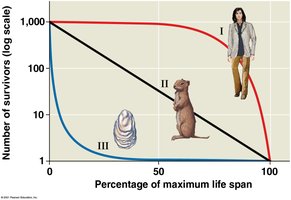
Survivorship Curve: Plot of the proportion or number of a cohort still alive at each age.
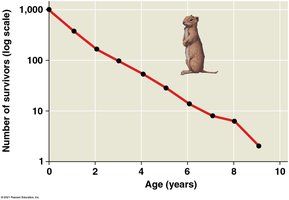
Three general types of survivorship curves:
Type I: Low death rates early and middle life, high death rates in older age (e.g., humans, elephants).
Type II: Constant death rate over the lifespan (e.g., rodents, lizards).
Type III: High death rates for young, lower for survivors (e.g., oysters, many fish).
Reproductive Rates
Measured as the average number of female offspring produced by females in an age group.
Varies by species (e.g., squirrels vs. oak trees).
Population Growth Models
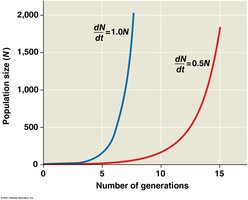
Exponential Growth Model
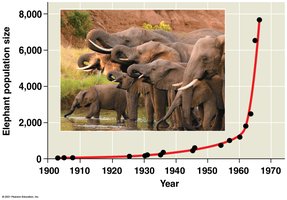
Describes population growth in an idealized, unlimited environment. Populations may increase by a constant proportion at each instant when resources are abundant.
Equation:
J-shaped curve: Characteristic of populations introduced to new environments or rebounding from drastic reductions.
Logistic Growth Model
Incorporates carrying capacity (K), the maximum population size an environment can sustain. Growth slows as population size approaches K.
Equation:
S-shaped (sigmoid) curve: Population growth rate decreases as N approaches K.
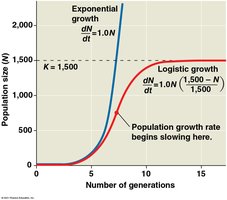
Laboratory populations (e.g., Paramecium, Daphnia) often fit the logistic model under controlled conditions.
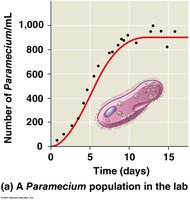
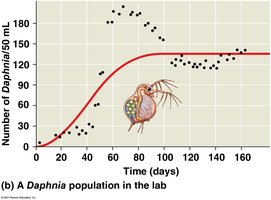
Some populations overshoot K before stabilizing; others fluctuate greatly, making K difficult to define.
Applications: Conservation biologists use the logistic model to predict recovery rates, estimate sustainable harvests, and assess extinction risk.
Life History Traits and Natural Selection
Life History Traits
Traits affecting an organism’s schedule of reproduction and survival, shaped by natural selection.
Key components: age at first reproduction, frequency of reproduction, number of offspring per event.
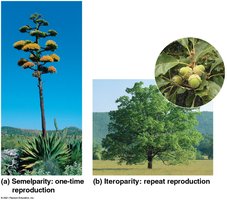
Semelparity: One-time, big-bang reproduction (e.g., agave plant).
Iteroparity: Repeated reproduction over lifetime (e.g., oak tree).
Trade-offs in Life Histories
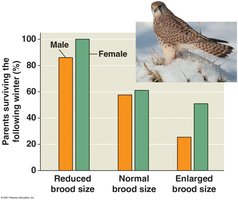
Limited resources lead to trade-offs between reproduction and survival.
Example: Larger broods reduce parental survival in Eurasian kestrels.
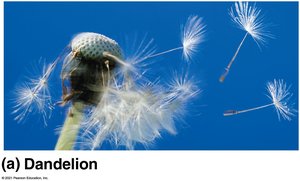
Species with low offspring survival produce many small offspring (e.g., dandelions).
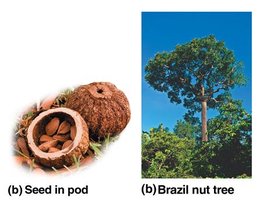
Species with high parental investment produce fewer, larger offspring (e.g., Brazil nut tree).
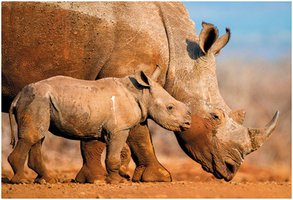
r-selection: Traits that maximize reproductive success at low density (e.g., rapid reproduction, many offspring).
K-selection: Traits favored at high density, near carrying capacity (e.g., competitive ability, fewer offspring).
Density-Dependent Regulation of Population Growth
Population Regulation
Density-independent factors: Affect birth/death rates regardless of population density (e.g., weather events).
Density-dependent factors: Birth/death rates change with population density, regulating population size via negative feedback.
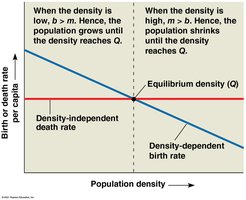
Mechanisms of Density-Dependent Regulation
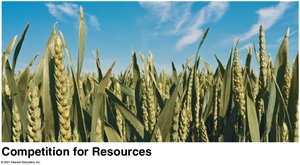
Competition for resources: Increased density intensifies competition, reducing birth rates.
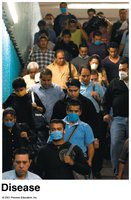
Disease: Transmission rates increase with density (e.g., influenza in cities).
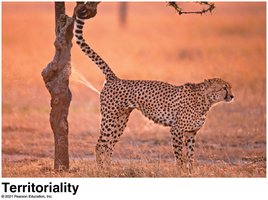
Territoriality: Limits density when individuals defend space (e.g., cheetahs marking territory).
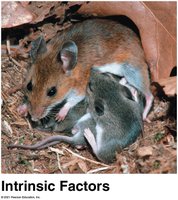
Intrinsic factors: Physiological changes (e.g., hormonal) can reduce reproduction at high density (e.g., white-footed mice).
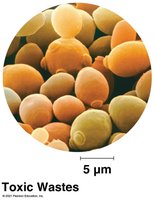
Toxic wastes: Accumulation at high density can limit population size (e.g., ethanol in yeast cultures).
Population Dynamics: Stability and Fluctuation
Population sizes can fluctuate due to complex interactions between biotic and abiotic factors.
Immigration and emigration also influence population size, especially when resources become limiting.
