 Back
BackPopulation Ecology: Structure, Dynamics, and Human Impact
Study Guide - Smart Notes
 Tailored notes based on your materials, expanded with key definitions, examples, and context.
Population Ecology
Introduction to Population Ecology
Population ecology is the study of populations in relation to their environment, including environmental influences on population density and distribution, age structure, and variations in population size. It is a key field for understanding how populations interact with their environment and how these interactions affect population growth and sustainability.
Population: A group of individuals of the same species living in the same area at the same time.
Key Areas of Study: Density, dispersion, and demographics.
Levels of Ecological Study
Organismal Ecology: Focuses on how an organism's structure, physiology, and behavior meet environmental challenges.
Population Ecology: Examines factors that affect population size and how and why it changes over time.
Community Ecology: Studies interactions between species and how they affect community structure and organization.
Ecosystem Ecology: Investigates energy flow and chemical cycling among the various biotic and abiotic components.
Landscape Ecology: Explores exchanges of energy, materials, and organisms across multiple ecosystems.
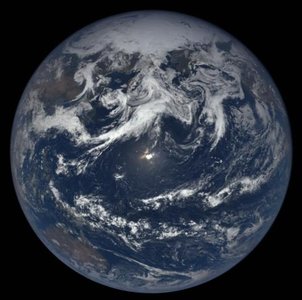
Global Ecology: Examines the influence of regional and global processes on the biosphere.
Population Structure
Density and Dispersion
Population density is the number of individuals per unit area or volume. Dispersion refers to the pattern of spacing among individuals within the boundaries of the population.
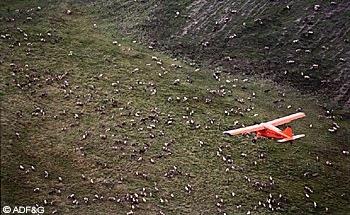
Density: Can be estimated by counting individuals, sampling plots, or using indicators such as nests, tracks, or feces.
Dispersion Patterns:
Clumped: Individuals aggregate in patches, often due to resource availability or social behavior.
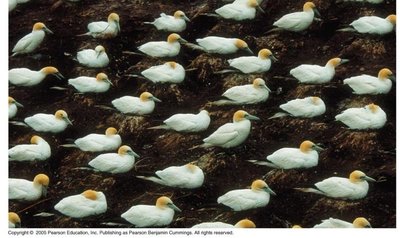
Uniform: Individuals are evenly spaced, often due to territoriality or competition.
Random: The position of each individual is independent of others, often in homogeneous environments.

Estimating Population Size
Direct counts are often impractical, so ecologists use sampling methods such as quadrats, mark-recapture, and indirect indicators.
Mark-Recapture Method: Involves capturing individuals, marking them, releasing them, and then recapturing to estimate population size.
Key Assumptions: Marked and unmarked individuals have equal capture probability, marked individuals mix randomly, and no significant births, deaths, immigration, or emigration occur between samplings.
Population Size Formula (Mark-Recapture):
N: Estimated population size
n1: Number marked and released in first sample
n2: Number captured in second sample
m2: Number of marked recaptures in second sample
Dispersion Patterns in Nature
Clumped: Seen in animals that group for protection or resource access (e.g., fish schools, herds).
Uniform: Often results from territorial behavior (e.g., nesting birds).
Random: Occurs where resources are consistent and individuals act independently (e.g., wind-dispersed plants).
Demographics and Life Tables
Demographics
Demography is the study of the vital statistics of populations and how they change over time, including birth rates, death rates, and age structure.
Life Table: Summarizes the survival and reproductive rates of individuals in specific age groups within a population.
Survivorship Curve: A graphical representation of the number of individuals in a cohort still alive at each age.
Types of Survivorship Curves:
Type I: Low death rates early and middle life, high death rates in older age (e.g., humans).
Type II: Constant death rate over the organism's life span (e.g., some birds).
Type III: High death rates for young, lower for survivors (e.g., oysters, many fish).
Population Growth Models
Population growth is influenced by birth, death, immigration, and emigration rates. Two primary models describe population growth:
Exponential Growth: Population increases under ideal, unlimited conditions.
Logistic Growth: Population growth slows as it approaches the carrying capacity (K) of the environment.
Exponential Growth Equation:
N: Population size
r: Per capita rate of increase (birth rate minus death rate)
Logistic Growth Equation:
K: Carrying capacity
Life History Strategies
Semelparity vs. Iteroparity
Semelparity: Organisms reproduce once and die (e.g., salmon, annual plants).
Iteroparity: Organisms reproduce multiple times over their lifespan (e.g., humans, perennial plants).
r-Selection vs. K-Selection
r-Selection: Favors high reproductive rates, often in unpredictable environments; many offspring, low parental care.
K-Selection: Favors traits that are advantageous at high densities; fewer offspring, high parental care, stable environments.
Human Population Growth and Impact
Human Population Trends
The human population has grown rapidly, especially since the 17th century, but the rate of growth has slowed in recent decades due to factors such as education, reproductive planning, war, and disease.
Demographic Transition: The shift from high birth and death rates to lower birth and death rates, often associated with industrialization and improved living conditions.
Regional Variation: Population growth and demographics vary widely across regions and income levels, affecting economies, healthcare, and resource use.
Ecological Footprint
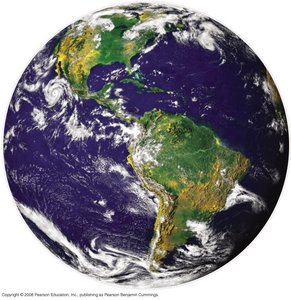
The ecological footprint measures the aggregate land and water area required to sustain a population's consumption of resources and absorption of wastes. It is a tool for estimating Earth's carrying capacity and comparing resource use among nations.
Factors Affecting Footprint: Energy use, consumption patterns, technology, and population size.
Global Variation: Countries differ greatly in their ecological footprint and available ecological capacity.
Summary Table: Population Ecology Concepts
Concept | Definition | Example |
|---|---|---|
Density | Number of individuals per unit area | Counting caribou by plane |
Dispersion | Pattern of spacing among individuals | Clumped, uniform, random |
Demography | Study of birth, death, and age structure | Life tables, survivorship curves |
Exponential Growth | Growth under ideal, unlimited conditions | Elephant population after hunting ban |
Logistic Growth | Growth slows as carrying capacity is reached | Population stabilizing at K |
Ecological Footprint | Land and water area needed to sustain a population | Comparing countries' resource use |
Additional info: This guide expands on the lecture outline by providing definitions, equations, and examples for each major concept in population ecology, as well as a summary table for quick review.
