 Back
Population Genetics, Selection, and Speciation: Study Notes
Study Guide - Smart Notes
 Tailored notes based on your materials, expanded with key definitions, examples, and context.
Population Genetics and Hardy-Weinberg Equilibrium
Genetic Variation in Populations
Population genetics studies the distribution and change of allele frequencies under the influence of evolutionary processes. The Hardy-Weinberg equilibrium (HWE) provides a null model to determine if evolution is occurring in a population.
Allele Frequency: The proportion of a specific allele among all alleles for a gene in a population.
Genotype Frequency: The proportion of a specific genotype among all individuals in a population.
Hardy-Weinberg Principle: In a large, randomly mating population with no mutation, migration, or selection, allele and genotype frequencies remain constant from generation to generation.
Equation: where and are the frequencies of two alleles.
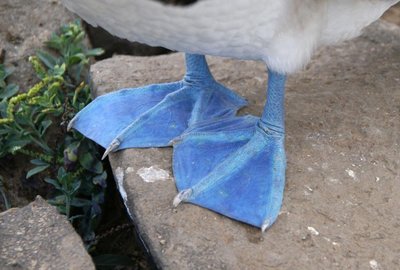
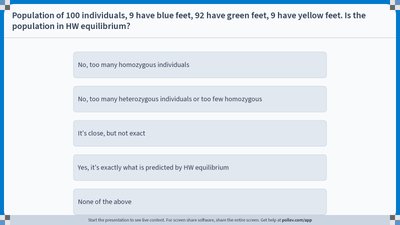
Example: In a population of 100 ducks, 9 have blue feet (homozygous dominant), 82 have green feet (heterozygous), and 9 have yellow feet (homozygous recessive). To test for HWE, compare observed and expected genotype frequencies.
Types of Selection
Balancing Selection
Balancing selection maintains genetic diversity in a population by keeping multiple alleles at higher frequencies than would be expected by chance or mutation alone.
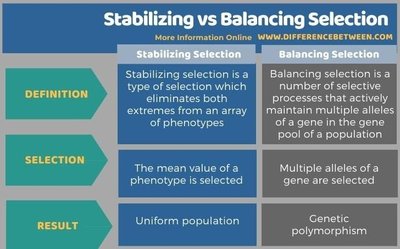
Definition: A selective process that maintains multiple alleles of a gene in a population.
Result: Genetic polymorphism, where multiple phenotypes persist.
Mechanisms: Includes heterozygote advantage and frequency-dependent selection.
Frequency-Dependent Selection
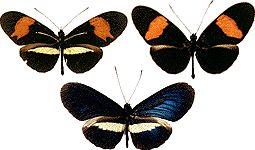
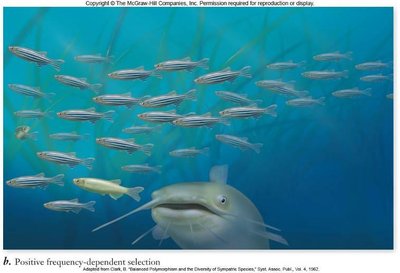
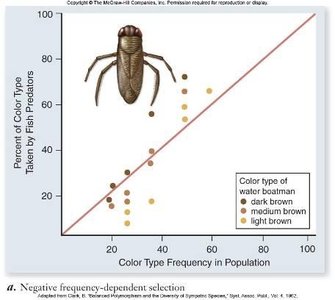
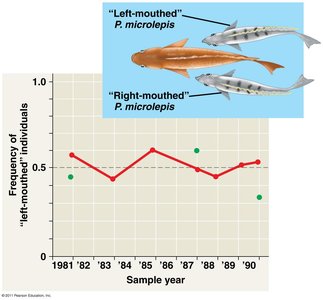
In frequency-dependent selection, the fitness of a phenotype depends on its frequency relative to other phenotypes in the population.
Positive Frequency-Dependent Selection: The fitness of a phenotype increases as it becomes more common. This can lead to the fixation of a single phenotype.
Negative Frequency-Dependent Selection: The fitness of a phenotype decreases as it becomes more common, maintaining diversity.
Sexual Selection
Concepts and Mechanisms
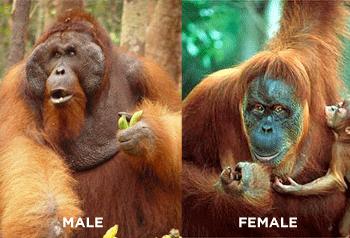
Sexual selection is a form of natural selection where individuals with certain inherited characteristics are more likely than others to obtain mates.
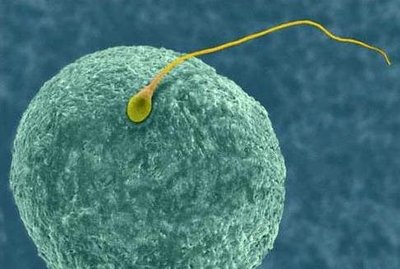
Anisogamy: The difference in gamete size and investment between males (small, numerous sperm) and females (large, costly eggs).
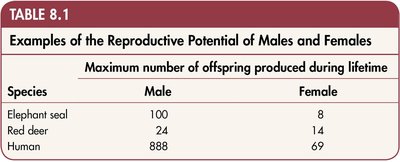
Investment Asymmetry: Females often invest more in offspring (e.g., pregnancy, lactation, parental care).
Selection Pressure: Males are often selected to maximize mating opportunities, while females are selected to be choosy to protect their investment.
Types of Sexual Selection
Intrasexual Selection: Competition among individuals of the same sex (usually males) for access to mates. Examples include male-male combat.
Intersexual Selection: Mate choice, often by females, based on traits that indicate good genes or resources.
Hypotheses for the Evolution of Male Ornaments
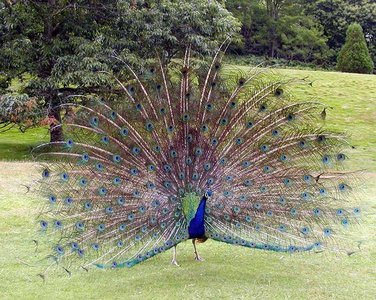
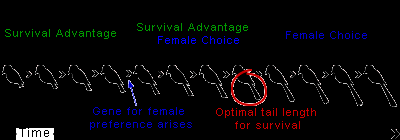
Fisher’s Runaway Hypothesis: Female preference for certain traits can lead to exaggerated male traits, even if they compromise survival.
Zahavi’s Handicap Hypothesis: Costly male traits are honest signals of genetic quality; only high-quality males can afford to produce them.
Empirical Examples
Barn Swallow Experiment: Males with elongated tails obtain mates more quickly and have greater reproductive success, but experience a cost in tail size the following year.
Marine Iguanas: Sexual selection favors large males, but natural selection during food scarcity (El Niño years) can oppose this by causing large males to starve.
Evolution and Speciation
Microevolution and Macroevolution
Microevolution refers to changes in allele frequencies within populations over time, while macroevolution involves broader patterns of evolutionary change above the species level, such as the origin of new groups.
Hardy-Weinberg Equilibrium: Used to test if a population is evolving.
Mechanisms of Evolution: Mutation, genetic drift, migration, selection, and nonrandom mating.
Species Concepts
Species are defined by several concepts, each with strengths and limitations.
Biological Species Concept (Ernst Mayr): Species are groups of actually or potentially interbreeding natural populations that are reproductively isolated from other such groups.
Morphological Species Concept: Species are defined by structural features; applies to both sexual and asexual organisms but can be subjective.
Ecological Species Concept: Species are defined by their ecological niche; emphasizes the role of disruptive selection.
Phylogenetic Species Concept: Species are the smallest group of individuals on a phylogenetic tree; uses genetic data to determine distinctness.
Reproductive Isolation and Speciation
Reproductive barriers prevent gene flow between species and are classified as prezygotic or postzygotic.
Prezygotic Barriers: Prevent mating or fertilization (e.g., habitat, temporal, behavioral, mechanical, gametic isolation).
Postzygotic Barriers: Prevent the development of viable, fertile offspring (e.g., reduced hybrid viability, reduced hybrid fertility, hybrid breakdown).
Allopatric Speciation
Allopatric speciation occurs when populations become geographically isolated, leading to genetic divergence and the formation of new species.
Process: A single population splits into two isolated populations. Over time, genetic differences accumulate, and reproductive isolation develops.
Outcome: Speciation is complete when the two populations can no longer produce viable, fertile offspring.
Summary Table: Stabilizing vs. Balancing Selection
Stabilizing Selection | Balancing Selection | |
|---|---|---|
Definition | Eliminates both extremes from an array of phenotypes | Maintains multiple alleles of a gene in the gene pool |
Selection | The mean value of a phenotype is selected | Multiple alleles of a gene are selected |
Result | Uniform population | Genetic polymorphism |
