 Back
BackPopulation Growth and Regulation in Ecology
Study Guide - Smart Notes
 Tailored notes based on your materials, expanded with key definitions, examples, and context.
Population Ecology
Population Growth Patterns
Population ecology studies how and why populations change in size and structure over time. Population growth is influenced by births, deaths, and migration, and can follow different patterns depending on environmental conditions and biological factors.
Exponential Growth (J-curve): When resources are unlimited, populations can grow rapidly, resulting in a J-shaped curve. The population size increases at a constant rate per individual.
Logistic Growth (S-curve): As resources become limited, population growth slows and stabilizes at the carrying capacity, producing an S-shaped curve.
Boom-Bust Cycles: Some populations experience rapid increases followed by sharp declines, often due to resource depletion or environmental changes.
Key Equation:
Exponential growth is described by the equation:
where is the population size at time , is the initial population size, is the intrinsic rate of increase, and is the base of the natural logarithm.
Logistic growth is described by:
where is the carrying capacity.

Carrying Capacity
Carrying capacity (K) is the maximum population size that an environment can sustain indefinitely, given the available resources such as food, habitat, water, and other necessities.
When a population exceeds its carrying capacity, resources become depleted, leading to increased mortality or decreased birth rates.
Carrying capacity can change over time due to environmental changes or human activities.
Population Regulation: Density-Dependent and Density-Independent Factors
Population size is regulated by various factors that can be classified as density-dependent or density-independent.
Density-Dependent Factors: These factors intensify as population density increases. Examples include competition for resources, predation, parasitism, and disease.
Density-Independent Factors: These affect populations regardless of their density. Examples include climate, weather events, natural disasters, and human activities.
Population Distribution in Space and Time
Populations can be distributed in different patterns within their habitats, affecting interactions and resource use.
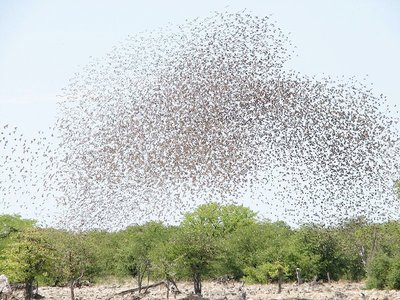
Clumped Distribution: Individuals are grouped in patches, often due to resource availability or social behavior.
Uniform Distribution: Individuals are evenly spaced, often due to territoriality or competition.
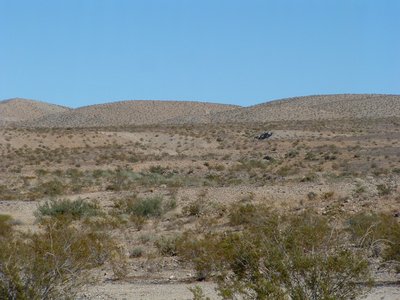
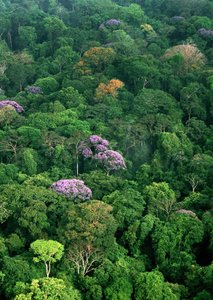
Random Distribution: Individuals are spread unpredictably, often where resources are consistently available.
Human Population Growth
Historical and Modern Trends
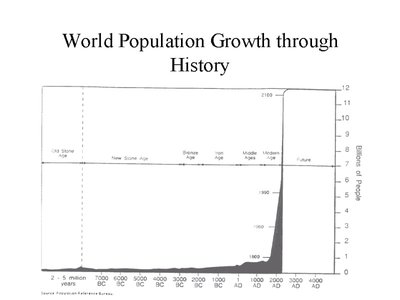
The human population has experienced rapid growth, especially in the last few centuries, due to advances in agriculture, medicine, and technology.
World population milestones: 1 billion (1804), 2.5 billion (1951), 3.7 billion (1968), 6.2 billion (2002), 7 billion (2012), 8 billion (recently).
Population growth rates vary by region and are influenced by birth rates, death rates, and migration.
Population Density and Distribution
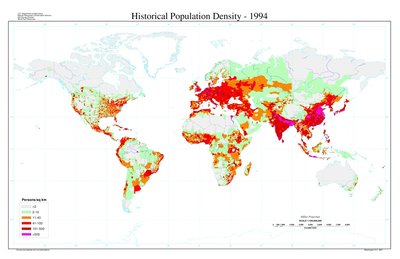
Population density refers to the number of individuals per unit area. Human populations are unevenly distributed across the globe, with higher densities in urban and fertile regions.
Population density maps help identify areas of high and low human concentration.
Urbanization and migration patterns influence population distribution.
Environmental Costs of Population Growth
Rapid human population growth places increasing demands on natural resources and ecosystems, leading to environmental challenges such as habitat loss, pollution, and climate change.
Resource depletion and waste generation increase with population size.
Sustainable development aims to balance human needs with environmental protection.
The Overview Effect
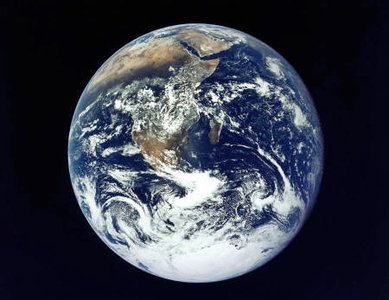
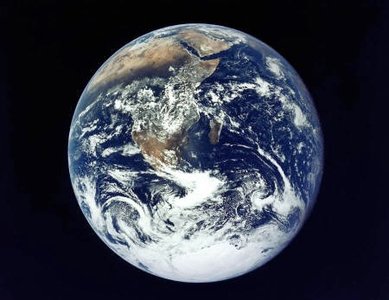
The "Overview Effect" refers to the cognitive shift in awareness reported by astronauts when viewing Earth from space, highlighting the planet's fragility and the interconnectedness of life.
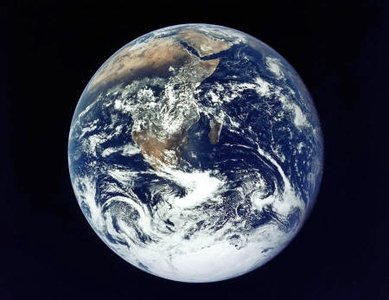 *Additional info: The Overview Effect is a concept from space exploration that has influenced environmental awareness and conservation efforts.*
