 Back
Post-Translational Modifications and Mutations: Impact on Proteome Complexity and Disease
Study Guide - Smart Notes
 Tailored notes based on your materials, expanded with key definitions, examples, and context.
Post-Translational Modifications (PTMs)
Overview of PTMs
Post-translational modifications are chemical changes that occur to proteins after they have been synthesized. These modifications are essential for regulating protein function, localization, stability, and interactions, thereby increasing the complexity of the proteome beyond the genetic code.
Definition: PTMs are covalent modifications to proteins that occur after translation.
Key Types: Phosphorylation, acetylation, methylation, glycosylation, ubiquitination, SUMOylation, lipidation, hydroxylation, and disulfide bond formation.
Impact: PTMs can alter protein activity, localization, interactions, and stability.
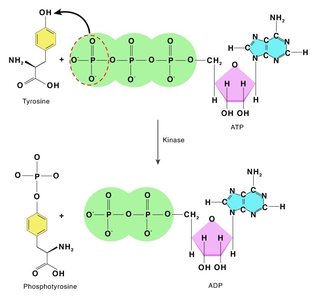
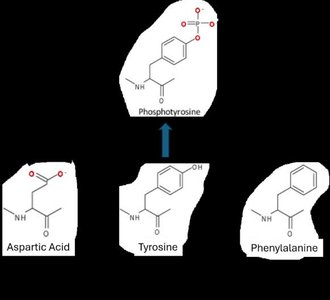
Example: Phosphorylation of tyrosine residues in receptor proteins is crucial for cell signaling. 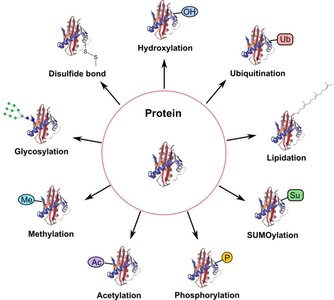
Examples of Common PTMs
Proteins can be modified in numerous ways, often at multiple sites, resulting in a vast array of functional forms.
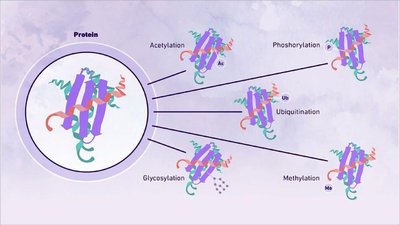
Phosphorylation: Addition of phosphate groups, often regulating activity.
Acetylation: Addition of acetyl groups, commonly affecting gene expression.
Methylation: Addition of methyl groups, influencing protein-protein interactions.
Glycosylation: Attachment of sugar moieties, affecting protein folding and stability.
Ubiquitination: Addition of ubiquitin, targeting proteins for degradation.
Proteome Complexity
The human genome contains approximately 20,000 protein-coding genes, but post-transcriptional and post-translational modifications allow cells to produce over a million distinct protein forms.
Alternative Splicing: Generates multiple mRNA transcripts from a single gene.
PTMs: Further diversify protein forms, contributing to functional complexity.
Example: A protein phosphorylated at three independent sites can exist in different forms. 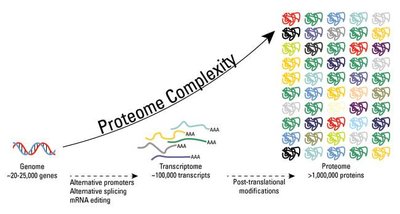
Mutations and Their Effects on Proteins
Types of Mutations
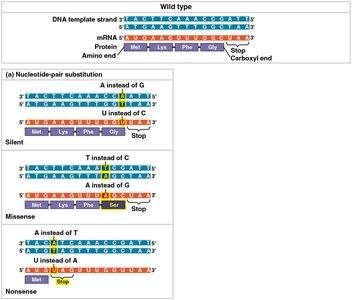
Mutations are changes in the genetic material that can affect protein structure and function.
Point Mutations: Changes in a single nucleotide pair.
Single Nucleotide-Pair Substitutions: Replace one nucleotide with another.
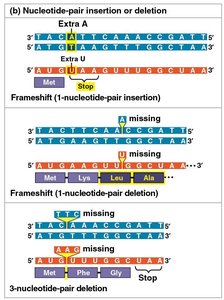
Insertions/Deletions: Add or remove nucleotides, potentially causing frameshifts.
Example: Sickle-cell disease is caused by a single nucleotide substitution in the β-globin gene. 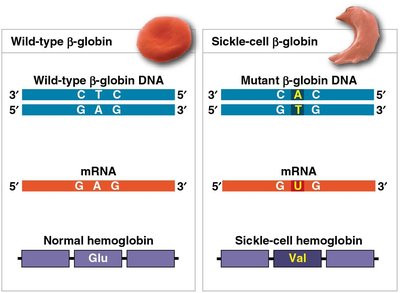
Mutation Classifications
Silent Mutation: Alters a nucleotide without changing the amino acid.
Missense Mutation: Changes one amino acid to another.
Nonsense Mutation: Converts a codon to a stop codon, truncating the protein.
Frameshift Mutation: Insertions or deletions that disrupt the reading frame.
Genetic Variation and Disease
There is no single "wild-type" genome for humans; instead, a reference genome is used. Natural genetic variation can influence susceptibility to diseases and the effects of mutations. 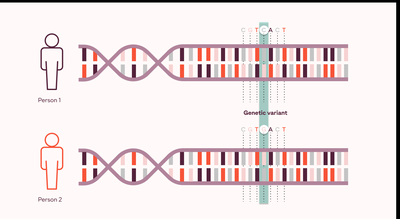
Case Study: FGFR Signaling and Cancer
FGF Receptor Phosphorylation
Fibroblast Growth Factor Receptors (FGFRs) are activated by phosphorylation, a post-translational modification essential for downstream signaling.
Normal Function: FGFR phosphorylation triggers cell growth and differentiation pathways.
Mutation Impact: Mutations that prevent phosphorylation can disrupt signaling, while mutations that mimic phosphorylation can lead to uncontrolled cell proliferation.

FGFR Mutations and Cancer Progression
Tyrosine to Aspartic Acid Mutation: Substituting tyrosine with aspartic acid (charged R group) mimics phosphorylation, causing constant activation of FGFR signaling.
Tyrosine to Phenylalanine Mutation: Phenylalanine lacks the hydroxyl group required for phosphorylation, so it does not mimic the charged state.
Example: The Tyr → Asp mutation leads to overactivation of growth factor signaling, contributing to cancer. 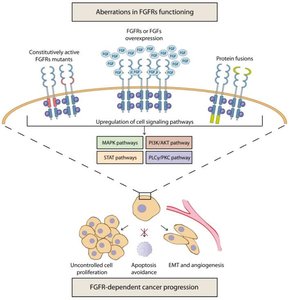

Summary Table: Types of Mutations and Their Effects
Mutation Type | Genetic Change | Protein Effect | Example |
|---|---|---|---|
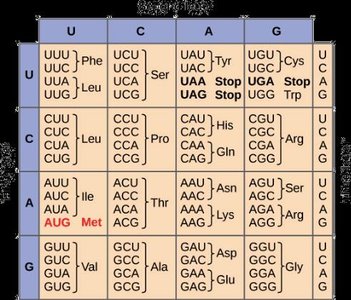
Silent | Single nucleotide substitution | No change in amino acid | GAA → GAG (both code for Glu) |
Missense | Single nucleotide substitution | Change in amino acid | GAA → GUA (Glu → Val) |
Nonsense | Single nucleotide substitution | Premature stop codon | GAA → UAA (stop) |
Frameshift | Insertion/deletion | Disrupts reading frame | Single-base insertion |
Key Equations and Concepts
Number of Protein Forms: If a protein can be modified at n independent sites, each with two states (modified/unmodified), the number of possible forms is .
Genetic Code: The relationship between codons and amino acids determines the effect of mutations.
Conclusion
Post-translational modifications and genetic mutations are fundamental to understanding proteome complexity and disease mechanisms. Mutations can have varying effects on protein function, from benign to highly detrimental, and PTMs are essential for proper cellular regulation. Applications: Understanding these processes is critical for fields such as molecular biology, genetics, and medical research. Additional info: PTMs are also targets for therapeutic intervention in diseases such as cancer, where abnormal signaling pathways are often driven by mutations or dysregulated modifications.
