 Back
Principles of Biology: Diversity, Evolution, and Scientific Inquiry – Study Guide
Study Guide - Smart Notes
 Tailored notes based on your materials, expanded with key definitions, examples, and context.
Course Overview: Principles of Biology – Diversity and Ecology
This course introduces foundational concepts in biology, focusing on the diversity of life, evolutionary theory, and scientific inquiry. It is designed for biology majors and minors, covering major groups of living organisms, their adaptations, and ecological roles. The course also emphasizes the scientific method and the process of scientific discovery.
Course Structure and Requirements
Lecture and Lab: In-person lectures and hands-on laboratory experiences.
Textbook: Biology by Campbell & Reece, 12th edition.
Assignments: Exams, Mastering Biology homework, lab assignments, and projects.
Grading: Weighted by exams (45%), final exam (20%), homework (20%), and lab (15%).
Learning Objectives
Describe properties and organizational levels of life, from molecules to ecosystems.
Distinguish major groups of living organisms (domains, kingdoms, phyla).
Understand anatomical and physiological adaptations and ecological roles of organisms.
Themes of Biology and Scientific Inquiry
Introduction to Biology
Biology is the scientific study of life. Biologists investigate how living things function, develop, interact, and evolve. The discipline is unified by several core themes:
Order: Living things exhibit complex but ordered organization.
Evolutionary Adaptation: Populations evolve over generations through adaptations.
Response to the Environment: Organisms respond to environmental stimuli.
Reproduction: Organisms reproduce their own kind.
Growth and Development: Inherited information controls growth and development.
Energy Processing: Organisms obtain and use energy to power activities.
Regulation: Organisms regulate internal conditions (homeostasis).
Biological Hierarchy
Biological systems are organized into a hierarchy, with new properties emerging at each level:
Biosphere
Ecosystems
Communities
Populations
Organisms
Organs and Organ Systems
Tissues
Cells
Organelles
Molecules and Atoms
Structure and Function
At every level of organization, structure and function are correlated. For example, the shape of a bird’s wing enables flight, and the structure of a leaf maximizes photosynthesis.
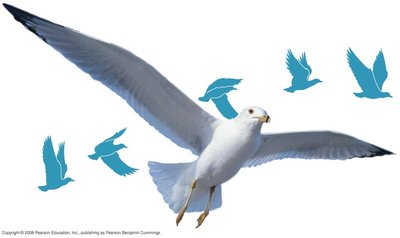
Energy and Matter in Ecosystems
Organisms interact with their environment, exchanging matter and energy. Energy flows through ecosystems (usually entering as sunlight and exiting as heat), while chemical nutrients cycle within ecosystems.
Scientific Inquiry and the Scientific Method
Nature of Science
Science is derived from the Latin scientia, meaning "knowledge." It is a way of knowing about the natural world through observation and experimentation.
Discovery Science: Describes natural structures and processes through observation and data analysis.
Hypothesis-Based Science: Involves proposing and testing hypotheses through experiments.
The Scientific Method
The scientific method is a systematic approach to inquiry:
Ask a Question
Do Background Research
Construct a Hypothesis
Test with Experiment
Analyze Results/Draw Conclusions
Report Results
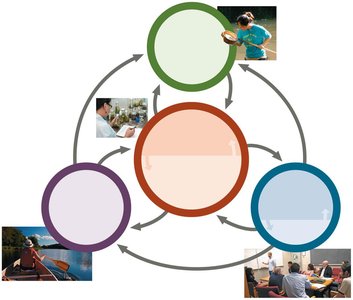
Hypotheses and Theories
A hypothesis is a tentative, testable, and falsifiable explanation for an observation.
A theory is broader in scope, supported by a large body of evidence, and can generate new hypotheses (e.g., cell theory, theory of evolution).
Limitations of Science
Science requires repeatable observations and experiments.
It cannot address supernatural explanations or untestable hypotheses.
Core Theme: Evolution – The Unity and Diversity of Life
Introduction to Evolution
Evolution is the process of change that has transformed life on Earth. It explains both the unity and diversity of life, with all organisms descended from common ancestors.
Charles Darwin and Natural Selection
Charles Darwin’s work established evolution by natural selection as the central mechanism of biological change:
Species show evidence of "descent with modification" from common ancestors.
Natural selection is the mechanism behind this process.
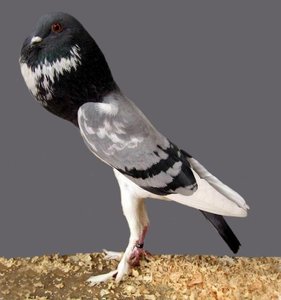
Darwin’s Observations and Inferences
Individuals in a population vary in traits, many of which are heritable.
More offspring are produced than survive, leading to competition.
Individuals best suited to their environment are more likely to survive and reproduce (fitness).
Over time, advantageous traits become more common in the population.
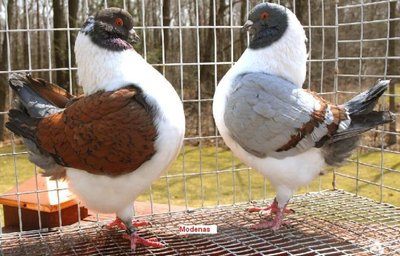
Speciation and Evolutionary Trees
Natural selection can lead to speciation, where one ancestral species gives rise to multiple descendant species. Evolutionary relationships are often depicted as tree-like diagrams showing common ancestry.
Sources of Genetic Variation
Genetic recombination through sexual reproduction.
Mutation: Most mutations are neutral or deleterious, but some can be beneficial and drive evolution.
Course Schedule (Sample)
Topic | Chapter | Dates |
|---|---|---|
Introduction/Themes in Biology | 1 | Aug 18, 20 |
Diversity of Life | 26 | Aug 25 |
Phylogeny & Taxonomy | 26 | Aug 27 |
Bacteria & Archaea | 27 | Sept 1, 3 |
Protists | 28 | Sept 8, 10 |
Photosynthesis | 10 | Sept 17, 22 |
Plant Diversity | 29, 30, 38 | Sept 24 – Oct 1 |
Fungi | 31 | Oct 15, 20 |
Animal Diversity | 32–34 | Oct 22 – Nov 19 |
Tips for Success in Biology
Read chapters before class and review figures/tables.
Take focused notes in class and review them after.
Use flashcards and write practice questions.
Test your recall without notes, then check your understanding.
Study regularly, not just before exams.
Academic Integrity and Policies
Exams are closed book; no electronic devices allowed.
Makeup exams are strictly regulated and require documentation.
AI tools are prohibited during exams and assessments unless explicitly permitted.
Proper citation and verification of AI-generated content are required for permitted uses.
Summary Table: Key Themes and Concepts
Theme | Description | Example |
|---|---|---|
Order | Highly ordered structure in living things | Cellular organization |
Evolution | Descent with modification; adaptation | Darwin’s finches |
Response to Environment | Reacting to stimuli | Plants growing toward light |
Reproduction | Producing offspring | Cell division, sexual reproduction |
Growth & Development | Inherited information guides growth | Embryonic development |
Energy Processing | Acquiring and using energy | Photosynthesis, cellular respiration |
Regulation | Maintaining internal balance | Homeostasis |
Additional info: This guide is based on the course syllabus and introductory lecture content for a General Biology course, focusing on foundational concepts, scientific inquiry, and evolutionary theory. It is suitable for exam preparation and as a reference for further study in biological sciences.
