 Back
Principles of Disease and Epidemiology – Study Notes
Study Guide - Smart Notes
 Tailored notes based on your materials, expanded with key definitions, examples, and context.
Principles of Disease and Epidemiology
Introduction to Pathology, Infection, and Disease
Understanding the principles of disease and epidemiology is essential for recognizing how diseases develop, spread, and are controlled within populations. This section introduces key concepts and terminology used in the study of infectious diseases.
Pathology: The scientific study of disease, including its causes, development, and effects on the body.
Etiology: The cause or origin of a disease.
Infection: The colonization of the body by pathogenic microorganisms.
Pathogenesis: The process by which disease develops in the host.
Disease: An abnormal state in which the body is not functioning normally.


Normal and Transient Microbiota
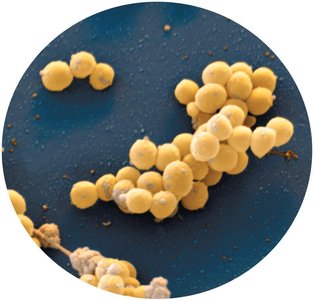
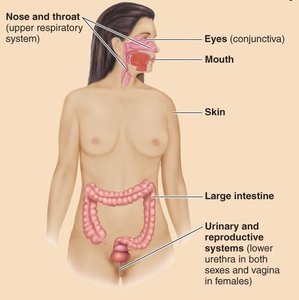
The human body is inhabited by a diverse community of microorganisms known as the microbiota. These microbes play crucial roles in health and disease.
Normal microbiota: Microorganisms that permanently colonize the host without causing disease under normal conditions.
Transient microbiota: Microbes that are present for a short period (days, weeks, or months) but do not persist.
Symbiosis: The relationship between normal microbiota and the host, which can be mutualistic, commensal, or parasitic.
Types of Symbiotic Relationships
Symbiosis describes the interactions between different biological species. In the context of microbiota, these relationships can be classified as follows:
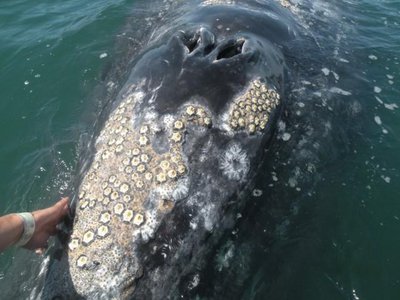
Mutualism: Both organisms benefit from the relationship.
Commensalism: One organism benefits, while the other is unaffected.
Parasitism: One organism benefits at the expense of the other.
Opportunistic pathogens: Normal microbiota that can cause disease under certain conditions (e.g., weakened immune system).


Microbial Antagonism and Host Protection
Normal microbiota protect the host by competing with pathogens, producing substances harmful to invaders, and modifying the environment.
Microbial antagonism: Competition between microbes for nutrients and space.
Protection mechanisms include:
Occupying niches that pathogens might otherwise occupy
Producing acids that inhibit pathogen growth
Producing bacteriocins (proteins that inhibit other bacteria)
Probiotics: Live microbes ingested or applied to the body to confer a health benefit.

Koch’s Postulates and Disease Causation
Koch’s postulates are a set of criteria used to establish a causative relationship between a microbe and a disease. However, there are limitations, such as pathogens that cannot be cultured or cause multiple diseases.
Some pathogens cause several disease conditions.
Some pathogens only cause disease in humans.
Classification of Diseases
Diseases are classified based on their characteristics, including symptoms, signs, and syndromes.
Symptom: A subjective change in body function felt by the patient (e.g., pain, fatigue).
Sign: An objective, measurable change observed by others (e.g., fever, rash).
Syndrome: A specific group of signs and symptoms that accompany a disease.

Communicability and Occurrence of Disease
Diseases can be classified by how they spread and their frequency in populations.
Communicable disease: Can be transmitted from one host to another.
Contagious disease: Easily spread from one host to another.
Noncommunicable disease: Not transmitted from host to host.
Incidence: Number of new cases in a population during a specific time period.
Prevalence: Total number of cases (new and existing) in a population at a given time.
Term | Definition |
|---|---|
Sporadic | Occurs occasionally in a population |
Endemic | Constantly present in a population |
Epidemic | Acquired by many hosts in a short time |
Pandemic | Worldwide epidemic |
Severity and Duration of Disease
Diseases are also classified by how quickly symptoms develop and how long they last.
Acute disease: Symptoms develop rapidly and last a short time.
Chronic disease: Symptoms develop slowly and persist for a long time.
Subacute disease: Symptoms are intermediate between acute and chronic.
Latent disease: Disease with a period of no symptoms when the pathogen is inactive.
Extent of Host Involvement
The extent to which a disease affects the host can vary:
Local infection: Pathogens are limited to a small area of the body.
Systemic infection: Infection spreads throughout the body.
Focal infection: Infection starts in one area and spreads to another.
Sepsis: Toxic inflammatory condition caused by the spread of microbes or their toxins.
Bacteremia: Bacteria in the blood.
Septicemia: Growth of bacteria in the blood.
Toxemia: Toxins in the blood.
Viremia: Viruses in the blood.
Types of Infections
Primary infection: Acute infection causing the initial illness.
Secondary infection: Opportunistic infection after a primary infection.
Subclinical disease: No noticeable signs or symptoms.
Predisposing Factors
Factors that make the body more susceptible to disease include:
Short urethra in females
Inherited traits (e.g., sickle cell gene)
Climate and weather
Fatigue
Age
Lifestyle
Chemotherapy
Reservoirs and Transmission of Infection
Reservoirs are continual sources of infection. Transmission can occur via contact, vehicles, or vectors.
Human reservoirs: Carriers may be asymptomatic but still infectious (e.g., HIV, Gonorrhea).
Animal reservoirs (Zoonoses): Diseases transmitted from animals to humans (e.g., Rabies, Lyme disease).
Nonliving reservoirs: Soil, water, or objects (e.g., Botulism, Tetanus).
Transmission Type | Example |
|---|---|
Contact | Direct, indirect (fomite), droplet |
Vehicle | Air, food, water |
Vector | Mechanical (arthropod feet), biological (reproduction in vector) |
Nosocomial (Hospital-Acquired) Infections
Nosocomial infections are acquired during hospital stays and affect 5–15% of patients. Many causative organisms are resistant to antibiotics.
Organism | % of Total Infections | % Resistant to Antibiotics |
|---|---|---|
Coagulase-negative staphylococci | 25% | 89% |
S. aureus | 16% | 80% |
Enterococcus | 10% | 29% |
Gram-negative rods | 23% | 5–32% |
C. difficile | 13% | None |
Emerging Infectious Diseases
Emerging infectious diseases are those whose incidence has increased or may increase in the future. Contributing factors include genetic recombination, evolution of new strains, misuse of antibiotics/pesticides, changes in weather, modern transportation, human encroachment, animal control measures, and public health failures.
Epidemiology and Public Health
Epidemiology is the study of where and when diseases occur. The Centers for Disease Control and Prevention (CDC) collects and analyzes epidemiological data and publishes the Morbidity and Mortality Weekly Report (MMWR). Case reporting by healthcare workers is essential for tracking and preventing disease outbreaks.
Descriptive epidemiology: Collection and analysis of data regarding the occurrence of disease.
Analytical epidemiology: Comparison of affected and unaffected groups to determine cause.
Experimental epidemiology: Use of controlled experiments to test hypotheses about disease causation.
Historical Cases in Epidemiology
Several historical cases illustrate the development of epidemiology:
London Cholera Outbreak (1854): John Snow used descriptive epidemiology to trace the source of cholera to contaminated water.
Puerperal Fever (1840s): Ignaz Semmelweis used experimental epidemiology to show that hand-washing reduced childbed fever.
Crimean War (1850s): Florence Nightingale used analytical epidemiology to demonstrate that improved sanitation reduced typhus and other infectious diseases among soldiers.
