 Back
Prokaryotes, Domains of Life, and Viruses: Structure, Diversity, and Disease
Study Guide - Smart Notes
 Tailored notes based on your materials, expanded with key definitions, examples, and context.
Prokaryotes and Eukaryotes: Cellular Structure and Diversity
Cell Types and Their Characteristics
Prokaryotes and eukaryotes represent two fundamental cell types in biology, differing in structure, complexity, and evolutionary history. Understanding these differences is essential for grasping the diversity of life.
Prokaryotes: Include Bacteria and Archaea. They lack a nuclear envelope, possess circular DNA, and are generally unicellular. They may contain plasmids—small, accessory DNA rings.
Eukaryotes: Include protists, plants, fungi, and animals. Their cells have a nuclear envelope, linear chromosomes, and membrane-bound organelles such as mitochondria and chloroplasts (which originated from prokaryotes via endosymbiosis).
Key Differences: Eukaryotes are typically larger, more complex, and can be multicellular, while prokaryotes are smaller and simpler.
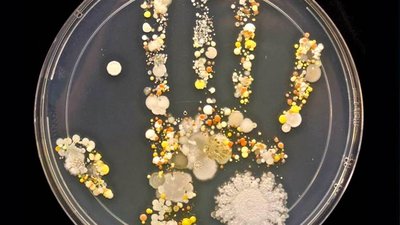
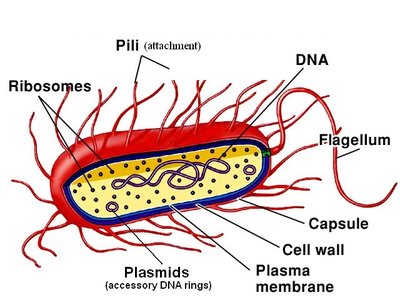
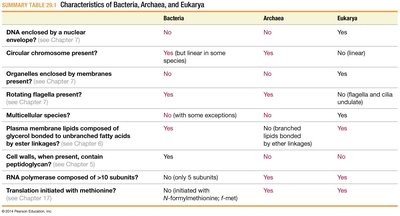
Summary Table: Characteristics of Bacteria, Archaea, and Eukarya
The following table summarizes the distinguishing features of the three domains:
Characteristic | Bacteria | Archaea | Eukarya |
|---|---|---|---|
DNA enclosed by nuclear envelope? | No | No | Yes |
Circular chromosome present? | Yes | Yes (but linear in some) | No (linear) |
Organelles enclosed by membranes? | No | No | Yes |
Rotating flagella present? | Yes | Yes | No (flagella and cilia undulate) |
Multicellular species? | No | No (with some exceptions) | Yes |
Plasma membrane lipids | Unbranched fatty acids | Branched hydrocarbons | Unbranched fatty acids |
Cell wall, when present, contains peptidoglycan? | Yes | No | No |
RNA polymerases composed of >10 subunits? | No (only 5 subunits) | Yes | Yes |
Translation initiated with methionine? | No (N-formylmethionine) | Yes | Yes |
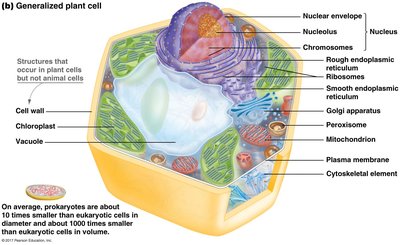
Phylogenetic Relationships and the Three Domains of Life
Origins and Divergence
The three domains of life—Bacteria, Archaea, and Eukarya—share a common ancestor known as the Last Universal Common Ancestor (LUCA). Their divergence is a central theme in evolutionary biology.
Bacteria: Earliest domain, includes most prokaryotes.
Archaea: Diverged from bacteria, often inhabit extreme environments.
Eukarya: Includes all eukaryotic organisms; evolved later, with complex cellular structures.
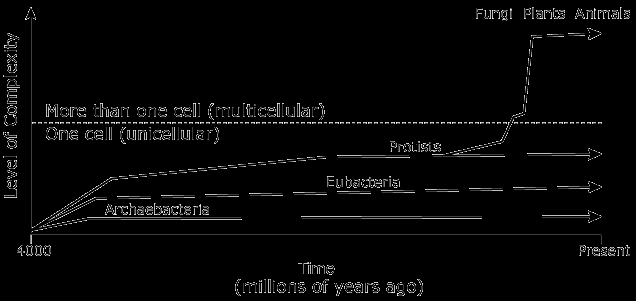
Major Evolutionary Events
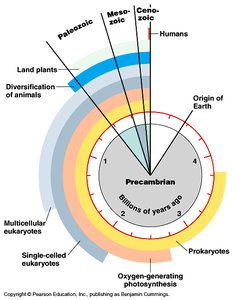
Key events in evolutionary history include the origin of Earth, the appearance of prokaryotes, oxygen-generating photosynthesis, and the rise of multicellular eukaryotes.
Earth formed ~4.5 billion years ago; oldest fossils of microorganisms date to ~3.5 billion years ago.
Prokaryotes dominated from 3.5 to 2 billion years ago.
Cyanobacteria enabled oxygenic photosynthesis, paving the way for aerobic respiration.
Bacterial Cell Wall Types and Their Implications
Gram-Positive vs. Gram-Negative Cell Walls
Bacteria are classified by their cell wall structure, which affects their susceptibility to antibiotics and their pathogenicity.
Gram-Positive: Thick peptidoglycan layer; stains more in Gram test; more susceptible to antibiotics.
Gram-Negative: Thin peptidoglycan layer with an additional outer membrane; stains less; more resistant to antibiotics due to extra membrane.
Prokaryotic Biodiversity and Metabolic Diversity
Estimating Microbial Diversity
The diversity of bacteria, archaea, and other microorganisms is vast and historically underestimated due to limitations in culturing and detection methods. Recent advances in molecular techniques (e.g., DNA sequencing) have greatly improved our understanding.
Only ~5,000 species named, but millions likely exist.
Microbial biodiversity is 'beyond practical calculation' (E.O. Wilson).
Metabolic diversity is extensive, with many autotrophic variations and resource utilization strategies.
Metabolic Diversity and Adaptations
Prokaryotes exhibit a wide range of metabolic strategies, including:
Autotrophy: Using inorganic sources for energy and carbon.
Heterotrophy: Using organic sources.
Endospore Formation: Some bacteria form tough capsules to survive environmental stress.
Oxygen Requirement: Can be aerobic (require oxygen) or anaerobic (do not require oxygen).
Genetic Diversity and Reproduction
Prokaryotes reproduce asexually via binary fission, but genetic diversity arises from:
Mutations: Passed down during cell division (vertical gene transfer).
Horizontal Gene Transfer: Includes transformation (uptake of environmental DNA), conjugation (plasmid transfer), and transduction (virus-mediated DNA transfer).
Major Groups of Bacteria and Archaea
Bacteria
Actinobacteria: Gram-positive, soil decomposers, source of most antibiotics; cause tuberculosis and leprosy.
Cyanobacteria: Abundant in marine and freshwater environments; origin of eukaryotic chloroplasts; responsible for oxygenic photosynthesis.
Proteobacteria: Largest and most diverse group; origin of mitochondria; includes pathogens like E. coli, plague, cholera, and Salmonella; important in nitrogen fixation.
Archaea
Crenarchaeota: Thermophilic and acidophilic; found in hot sulfur springs.
Euryarchaeota: Methanogens; live in animal guts and deep sea vents.
Thaumarchaeota: Grow at moderate temperatures; significant biomass in oceans.
No known disease-causing archaea.
Viruses: Structure, Diversity, and Disease
What is a Virus?
Viruses are infectious agents composed of genetic material (DNA or RNA) and a protein coat, sometimes with a lipid envelope. They lack cellular structure and cannot survive or reproduce without a host, so they are not considered living organisms.
Structure: Genetic material, protein coat, sometimes lipid envelope.
Replication: Enter host cells and use host machinery for reproduction.
Diversity: Classified by nucleic acid type, replication mechanisms, and protein synthesis.
Viruses and Disease
All viruses cause disease by entering and killing host cells.
Emerging diseases arise from new viral strains via genomic rearrangement, lateral gene transfer, and mutations (e.g., HIV, SARS, Ebola, Zika, influenza).
Viruses impact the evolution of organisms through horizontal gene transfer and selective pressures.
Origins of Viruses
Hypotheses include:
Escaped genes: Similar to plasmids and transposable elements.
Degenerated prokaryotes: Reduced or lost functions of endosymbiotic bacteria.
RNA world: Virus-like entities as early precursors of cells.
Pathogens, Disease, and Immunity
Bacteria vs. Viruses as Infectious Agents
Bacteria: Only some cause disease; survive and reproduce independently; release toxins; treated with antibiotics or vaccines.
Viruses: All cause disease; require host for reproduction; kill host cells; treated with antiviral medicines or vaccines.
Bacterial Toxins
Exotoxins: Secreted by living cells; include neurotoxins, cardiotoxins, enterotoxins.
Endotoxins: Released when cells die; cause systemic reactions like inflammation and sepsis.
Immune System Responses
Innate Immunity: Rapid, non-specific response; barriers to entry; phagocyte cells.
Acquired (Adaptive) Immunity: Specific response; T cells and B cells; memory cells produce antibodies; vaccination induces immunity without disease.
Antibiotics and Resistance
Antibiotics: Inhibit bacterial survival or growth; target DNA polymerase, ribosomes, cell wall.
Resistance: Heritable trait; evolves via mutation and horizontal gene transfer; antibiotics act as selective pressure.
Prevention: Reduce infections, limit antibiotic use, follow prescriptions, decrease use in food production.
Summary
Prokaryotes and eukaryotes differ fundamentally in cell structure and complexity.
The three domains of life—Bacteria, Archaea, and Eukarya—have distinct evolutionary origins and traits.
Bacterial cell wall types influence pathology and antibiotic resistance.
Microbial diversity is vast and increasingly understood through modern techniques.
Viruses are not living organisms but play a major role in disease and evolution.
Understanding pathogens, immunity, and antibiotic resistance is crucial for public health.
