 Back
Prokaryotes, Protists, and the Evolution of Land Plants and Animals
Study Guide - Smart Notes
 Tailored notes based on your materials, expanded with key definitions, examples, and context.
Introduction to Prokaryotes
Prokaryotic and Eukaryotic Cells
Cells are the fundamental units of life and are classified into two broad categories: prokaryotic and eukaryotic cells. Prokaryotic cells lack a membrane-bound nucleus and other organelles, while eukaryotic cells possess these structures.
Prokaryotic Cells: Do not have a nucleus; DNA is found in a region called the nucleoid. Includes Bacteria and Archaea.
Eukaryotic Cells: Have a true nucleus and other membrane-bound organelles (e.g., mitochondria, endoplasmic reticulum).
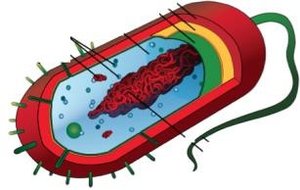
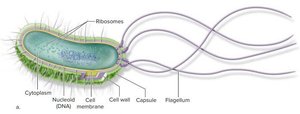
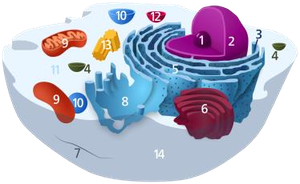
Key Differences:
Size: Prokaryotes are generally smaller.
Nucleus: Absent in prokaryotes, present in eukaryotes.
Organelles: Absent in prokaryotes, present in eukaryotes.
Ribosome size: 70S in prokaryotes, 80S in eukaryotes.
Motility: Flagella structure differs between groups.
Features of Bacterial Cells
Bacteria are the most abundant and diverse organisms on Earth. Their DNA is circular and located in the nucleoid region. They possess small (70S) ribosomes and reproduce by binary fission.
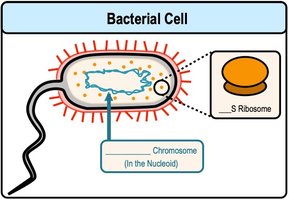
Cell Wall: Provides structural support and shape.
Capsule: Protective outer layer in some bacteria.
Flagella: Used for movement.
Introduction to Archaea
Archaea are prokaryotic organisms distinct from bacteria. They have unique ribosomal RNA sequences and cell walls that lack peptidoglycan. Many archaea are extremophiles, thriving in environments such as hot springs, salt lakes, and acidic habitats.
Extremophiles: Organisms that live in extreme conditions (e.g., thermophiles, halophiles, acidophiles).
Nutritional Diversity in Microbes
Classification by Nutritional Factors
Microbes are classified based on three key nutritional factors:
Energy Source: Phototrophs (light) vs. Chemotrophs (chemical compounds).
Electron Source: Lithotrophs (inorganic molecules) vs. Organotrophs (organic molecules).
Carbon Source: Autotrophs (CO2) vs. Heterotrophs (organic carbon).
Energy Source
Phototrophs: Obtain energy from sunlight.
Chemotrophs: Obtain energy from chemical compounds.
Electron Source
Lithotrophs: Use reduced inorganic molecules (e.g., H2O, Fe2+).
Organotrophs: Use organic molecules (e.g., glucose).
Carbon Source
Autotrophs: Use carbon fixation to make their own food from CO2.
Heterotrophs: Obtain carbon from organic molecules.
Introduction to Protists
What is a Protist?
Protists are a diverse, paraphyletic group of eukaryotic organisms that are not classified as plants, animals, or fungi. They are mostly unicellular, but some are multicellular or colonial. Protists are found in moist or aquatic environments and exhibit a wide range of structural and functional diversity.
All protists have a membrane-bound nucleus.
Some are photosynthetic, some are heterotrophic, and some are mixotrophic.
Evolution of Protists: Endosymbiosis
The origin of eukaryotic cells is explained by the endosymbiotic theory:
Primary Endosymbiosis: A host cell engulfs a prokaryotic cell, which becomes an organelle (e.g., mitochondria, chloroplasts).
Secondary Endosymbiosis: A eukaryotic host engulfs another eukaryotic cell, leading to organelles with multiple membranes.
Protist Life Cycles
Protists exhibit diverse life cycles, including sexual and asexual reproduction, alternation between haploid and diploid forms, and sometimes requiring multiple hosts.
Evolution of Land Plants
Transition from Aquatic to Terrestrial Life
Land plants evolved from green algae and developed adaptations for terrestrial life, such as cuticles, stomata, and vascular tissues. The evolution of lignin allowed for vertical growth and the development of extensive vascular networks.
Nonvascular Plants (Bryophytes): Gametophyte-dominant life cycle, lack lignified vascular tissue.
Seedless Vascular Plants: Sporophyte-dominant, possess vascular tissue, reproduce via spores.
Seed Plants: Include gymnosperms (naked seeds) and angiosperms (seeds in fruit).
Alternation of Generations
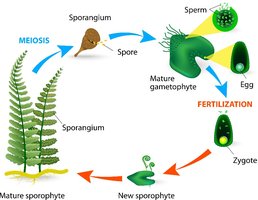
Land plants exhibit alternation of generations, alternating between multicellular haploid (gametophyte) and multicellular diploid (sporophyte) stages.
Sporophyte (2n): Produces haploid spores by meiosis.
Gametophyte (n): Produces gametes by mitosis.
Fertilization: Fusion of gametes forms a diploid zygote, which grows into a new sporophyte.
Vascular Tissue and Plant Organs
Xylem: Transports water and minerals; contains tracheids with lignin for support.
Phloem: Transports sugars and nutrients.
Roots: Absorb water and nutrients.
Leaves: Specialized for photosynthesis; can be microphylls or megaphylls.
Reproductive Adaptations
Homosporous Plants: Produce one type of spore.
Heterosporous Plants: Produce microspores (male) and megaspores (female).
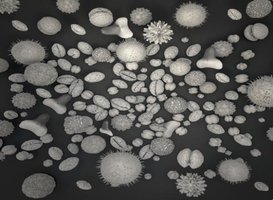
Pollen: Male gametophyte surrounded by a protective coating.
Seeds: Embryo and food supply within a protective coat.
Introduction to Animals
Animal Characteristics
Animals are multicellular, heterotrophic eukaryotes that ingest their food. They lack cell walls and have specialized tissues, including nervous and muscle tissue. Most animals reproduce sexually and undergo embryonic development.
Body Symmetry: Radial or bilateral.
Developmental Patterns: Protostome (mouth develops first) or deuterostome (anus develops first).
Body Cavities: Coelomate, pseudocoelomate, or acoelomate.
Major Animal Groups
Lophotrochozoans: Bilateral, protostome animals, often with a coelom and hydrostatic skeleton.
Ecdysozoans: Protostomes that grow by molting (ecdysis), including arthropods and nematodes.
Deuterostomes: Include echinoderms and chordates.
Chordates and Vertebrates
Chordates: Defined by a dorsal hollow nerve cord, notochord, post-anal tail, and pharyngeal slits.
Vertebrates: Chordates with a vertebral column and cranium.
Key Evolutionary Innovations
Jaws: Allowed for diversification of feeding strategies.
Limbs: Enabled movement on land (tetrapods).
Amniotic Egg: Allowed reproduction away from water.
Endothermy: Regulation of body temperature by metabolic means (birds and mammals).
Summary Table: Key Differences Between Prokaryotic and Eukaryotic Cells
Feature | Prokaryotic Cells | Eukaryotic Cells |
|---|---|---|
Nucleus | Absent | Present |
Organelles | Absent | Present |
Cell Size | Small (1-10 μm) | Larger (10-100 μm) |
DNA Structure | Circular, in nucleoid | Linear, in nucleus |
Ribosome Size | 70S | 80S |
Cell Division | Binary fission | Mitosis/meiosis |
Additional info: This guide covers foundational concepts in cell biology, microbial diversity, the evolution of plants and animals, and key innovations that enabled life to diversify on land and in water. For more detailed study, refer to the relevant chapters in your biology textbook.
