Back
BackProkaryotic and Eukaryotic Cells: Classification and Characteristics
Study Guide - Smart Notes
 Tailored notes based on your materials, expanded with key definitions, examples, and context.
Prokaryotic Cells
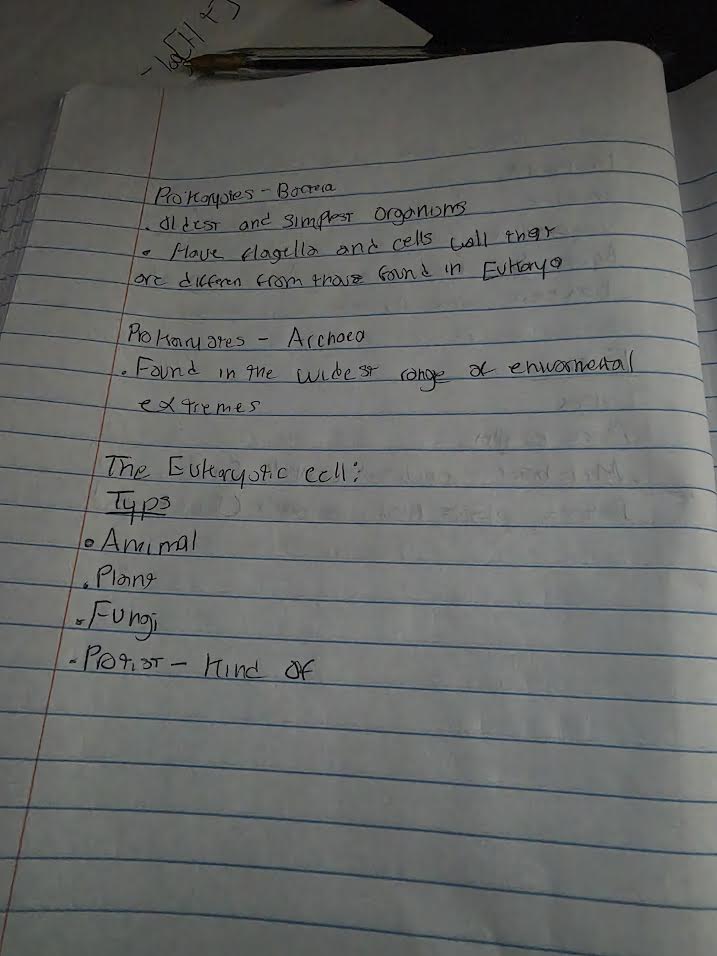
Bacteria
Prokaryotes are among the oldest and simplest forms of life. They lack a nucleus and membrane-bound organelles, and their genetic material is found in a single circular chromosome.
Oldest and simplest organisms: Bacteria are considered some of the earliest life forms on Earth.
Flagella and cell walls: Many bacteria possess flagella for movement and have cell walls composed of peptidoglycan, which is distinct from the cell walls found in eukaryotes.
Difference from eukaryotes: The structure of bacterial flagella and cell walls is fundamentally different from those in eukaryotic cells.
Archaea
Archaea are another group of prokaryotes that are genetically distinct from bacteria. They are known for their ability to survive in extreme environments.
Wide range of environments: Archaea are found in some of the most extreme environments on Earth, such as hot springs, salt lakes, and deep-sea hydrothermal vents.
Unique adaptations: Their cell membranes and metabolic pathways are adapted to withstand extreme conditions.
Eukaryotic Cells
Types of Eukaryotic Cells
Eukaryotic cells are more complex than prokaryotic cells, containing a nucleus and various membrane-bound organelles. They are classified into several major groups:
Animal cells: Lack cell walls and chloroplasts; specialized for a wide range of functions in multicellular organisms.
Plant cells: Have cell walls made of cellulose, contain chloroplasts for photosynthesis, and have large central vacuoles.
Fungi: Possess cell walls made of chitin and obtain nutrients through absorption.
Protists: A diverse group of mostly unicellular eukaryotes; can have characteristics similar to animals, plants, or fungi.
Example: Escherichia coli is a well-known bacterium (prokaryote), while Saccharomyces cerevisiae (yeast) is a eukaryotic fungus.
Additional info: The distinction between prokaryotic and eukaryotic cells is fundamental to understanding the diversity of life and the evolutionary relationships among organisms.