 Back
Prokaryotic Diversity and Evolution: Bacteria & Archaea
Study Guide - Smart Notes
 Tailored notes based on your materials, expanded with key definitions, examples, and context.
Classification Schemes and the Tree of Life
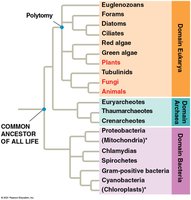
Cladograms and Domains of Life
The classification of life is based on evolutionary relationships, often depicted as cladograms. Molecular data, such as rRNA gene sequences, reveal that eukaryotes and archaea are more closely related to each other than either is to bacteria. This relationship forms the basis for the three-domain system: Bacteria, Archaea, and Eukarya.
The Role of Horizontal Gene Transfer (HGT)
Mechanisms and Evolutionary Impact
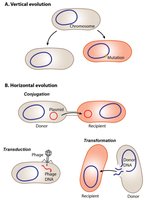
Horizontal gene transfer (HGT) is the movement of genetic material between organisms other than by descent from parent to offspring (vertical transmission). HGT can occur via:
Exchange of transposable elements and plasmids
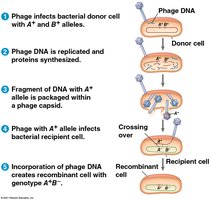
Viral infection (transduction)
Fusion of different organisms
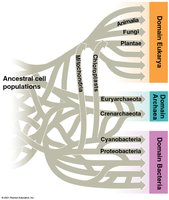
HGT has played a crucial role in the evolution of both prokaryotes and eukaryotes, leading to genetic mosaics and complicating the reconstruction of evolutionary trees. Some biologists propose that the base of the tree of life is better represented as a tangled network rather than a simple branching tree.
Prokaryotic Diversity: Bacteria & Archaea
Habitats and Adaptations
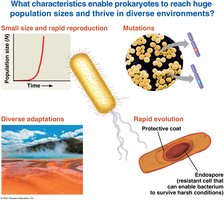
Prokaryotes are single-celled organisms that thrive in a wide range of environments, including extreme conditions. They are the most abundant organisms on Earth, with enormous population sizes and remarkable adaptability.
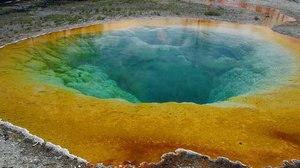
Thermophiles: Thrive in hot environments (e.g., hot springs)
Halophiles: Thrive in high-salinity environments (e.g., salt lakes)
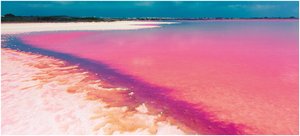
Examples of Prokaryotes
Clostridium botulinum: Causes botulism
Borrelia burgdorferi: Causes Lyme disease
Streptococcus: Includes many pathogenic species
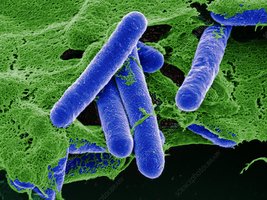
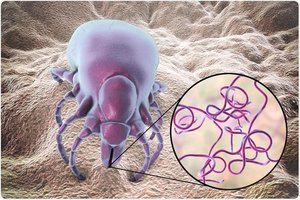
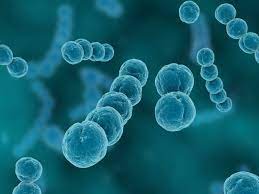
General Features of Prokaryotes
Prokaryotes are typically very small (0.5–5 µm) and lack membrane-bound organelles. They possess a variety of adaptations that allow them to survive in diverse environments.
Cell Wall Structure
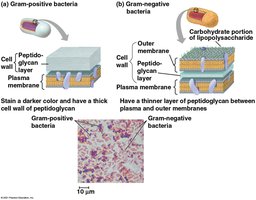
The cell wall is a key feature of prokaryotes, providing structural support and protection. There are significant differences between bacterial and archaeal cell walls:
Bacteria: Cell wall contains peptidoglycan (modified sugars cross-linked by short polypeptides). Many antibiotics target peptidoglycan synthesis.
Archaea: Cell wall composed of polysaccharides and proteins, but lacks peptidoglycan.
Capsules and Slime Layers
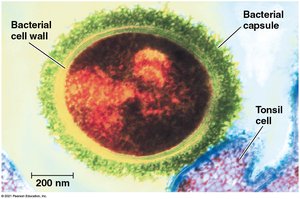
Many prokaryotes have a capsule—a sticky layer of polysaccharide or protein that enables adherence to surfaces, protects against dehydration, and may shield pathogens from the host immune system. If not well organized, this layer is called a slime layer.
Endospores
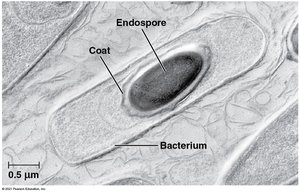
Some prokaryotes can form endospores, which are metabolically inactive structures that can withstand extreme conditions and remain viable for centuries. For example, Bacillus anthracis endospores can survive in soil for years.
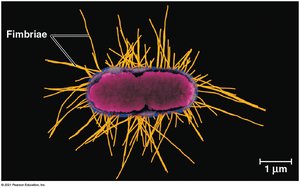
Fimbriae
Fimbriae are protein-containing appendages that allow prokaryotes to adhere to surfaces or other cells.
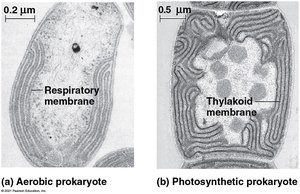
Internal Organization
Prokaryotes lack compartmentalization but may have specialized membranes for specific functions, such as respiration or photosynthesis.
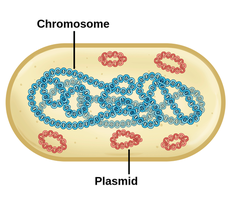
Genetic Material: Chromosomes and Plasmids
Prokaryotic DNA is typically organized as a single circular chromosome, not enclosed by a membrane. They may also contain smaller rings of DNA called plasmids, which replicate independently. Differences in DNA replication, transcription, and translation between prokaryotes and eukaryotes are exploited by antibiotics.
Reproduction and Genetic Diversity
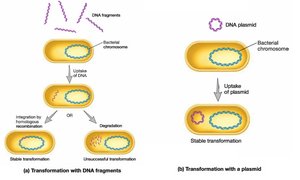
Prokaryotes reproduce asexually by binary fission, leading to rapid population growth. Genetic diversity is generated by mutations and genetic recombination mechanisms:
Transformation: Uptake of foreign DNA from the environment
Transduction: Transfer of DNA by bacteriophages (viruses)
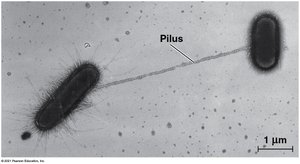
Conjugation: Direct transfer of DNA between two cells via a pilus
Prokaryotic Metabolism and Nutrition
Energy and Carbon Sources
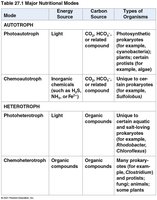
Prokaryotes display a wide range of metabolic adaptations, classified by their energy and carbon sources:
Phototrophs: Obtain energy from light
Chemotrophs: Obtain energy from chemicals
Autotrophs: Use inorganic carbon (e.g., CO2) as a carbon source
Heterotrophs: Require at least one organic nutrient as a carbon source
Mode | Energy Source | Carbon Source | Examples |
|---|---|---|---|
Photoautotroph | Light | CO2 or HCO3- | Cyanobacteria, plants |
Chemoautotroph | Inorganic chemicals | CO2 or HCO3- | Unique to certain prokaryotes |
Photoheterotroph | Light | Organic compounds | Some prokaryotes |
Chemoheterotroph | Organic compounds | Organic compounds | Many prokaryotes, fungi, animals |
Oxygen and Nitrogen Metabolism
Obligate aerobes: Require O2 for cellular respiration
Obligate anaerobes: Poisoned by O2; use fermentation or anaerobic respiration
Facultative anaerobes: Can use O2 if present or switch to anaerobic metabolism
Prokaryotes are also crucial for nitrogen fixation, converting atmospheric N2 to ammonia (NH3), making nitrogen available to living organisms.
Major Groups of Bacteria
Proteobacteria
Gram-negative bacteria with diverse metabolic pathways, including photoautotrophs, chemoautotrophs, and heterotrophs. Includes important pathogens such as Vibrio cholerae and Neisseria gonorrhoeae.
Chlamydias
Gram-negative bacteria lacking peptidoglycan in their cell walls. All are obligate intracellular parasites of animal cells. Chlamydia trachomatis is a major cause of blindness and sexually transmitted disease.
Spirochaetes
Helical, gram-negative heterotrophs, many of which are free-living or pathogenic. Includes Treponema pallidum (syphilis) and Borrelia burgdorferi (Lyme disease).
Cyanobacteria
Gram-negative photoautotrophs, likely ancestors of chloroplasts via endosymbiosis. Abundant in aquatic environments and important for oxygen production.
Gram-Positive Bacteria
A diverse group including soil-dwelling decomposers (Streptomyces), and pathogens such as Staphylococcus aureus and Bacillus anthracis.
Archaea: Extremophiles and Methanogens
Extremophiles
Many archaea are extremophiles, thriving in environments uninhabitable for most life forms:
Extreme thermophiles: Live in very hot environments, such as hydrothermal vents and hot springs.
Extreme halophiles: Thrive in highly saline environments, such as salt lakes.
Methanogens
Methanogens are obligate anaerobes that produce methane as a metabolic by-product. They are found in diverse environments, including swamps, marshes, the guts of herbivores, and under ice sheets.
Additional info: The study of prokaryotic diversity is rapidly advancing due to genomics and metagenomics, revealing a vast, previously unrecognized diversity of species and metabolic capabilities. Horizontal gene transfer continues to shape the evolutionary history of prokaryotes, blurring the boundaries between traditional taxonomic groups.
