 Back
BackProkaryotic Diversity, Evolution, and the Tree of Life
Study Guide - Smart Notes
 Tailored notes based on your materials, expanded with key definitions, examples, and context.
Prokaryotic Diversity and the Tree of Life
Overview of the Three Domains of Life
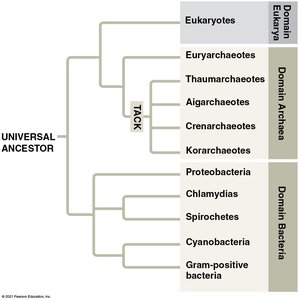
The diversity of life is organized into three domains: Bacteria, Archaea, and Eukarya. These domains are distinguished by differences in cellular structure, genetics, and biochemistry. Phylogenetic trees based on rRNA genes reveal that eukaryotes and archaea are more closely related to each other than either is to bacteria.
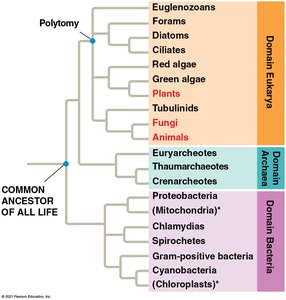
Horizontal Gene Transfer and Evolutionary Relationships
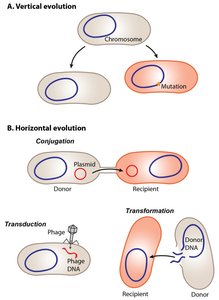
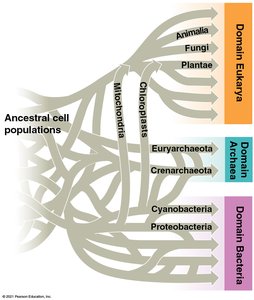
Traditional phylogenetic trees depict evolutionary relationships as branching patterns. However, horizontal gene transfer (HGT)—the movement of genetic material between organisms other than by descent—has played a significant role in the evolution of both prokaryotes and eukaryotes. HGT can occur via transformation, transduction, and conjugation, complicating the reconstruction of evolutionary history.
Key Points:
Transformation: Uptake of foreign DNA from the environment.
Transduction: Transfer of DNA by bacteriophages (viruses that infect bacteria).
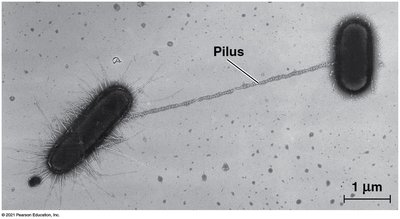
Conjugation: Direct transfer of DNA between two cells via a pilus.
Example: In a study of 329 bacterial genomes, an average of 75% of the genes in each genome had been horizontally transferred at some point.
Prokaryotic Structure and Function
Cellular Organization
Prokaryotes are single-celled organisms that lack membrane-bound organelles. They are the most abundant and diverse organisms on Earth, thriving in a wide range of environments, including extreme conditions.
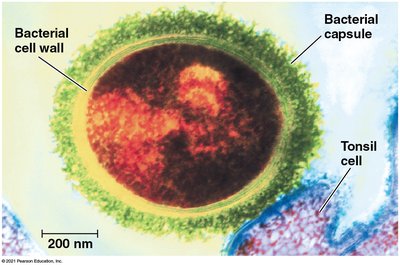
Cell Wall: Provides structural support and protection. In bacteria, the cell wall contains peptidoglycan; in archaea, it is composed of polysaccharides and proteins (no peptidoglycan).
Capsule: A sticky layer outside the cell wall that aids in adherence and protection.
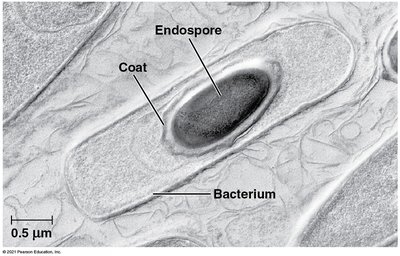
Endospores: Metabolically inactive structures that allow survival in harsh conditions.
Fimbriae: Protein appendages for attachment to surfaces.
Flagella: Structures used for motility.
Genetic Organization
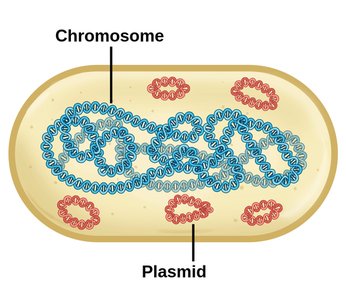
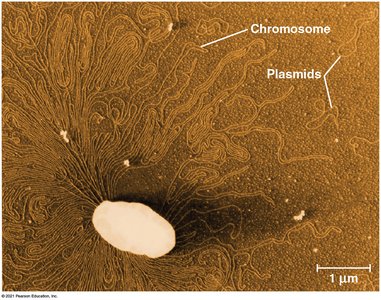
Prokaryotic DNA is typically organized as a single circular chromosome, with additional small DNA molecules called plasmids that replicate independently. Prokaryotes lack a nuclear envelope, and their DNA is not associated with histone proteins as in eukaryotes.
Reproduction and Genetic Diversity
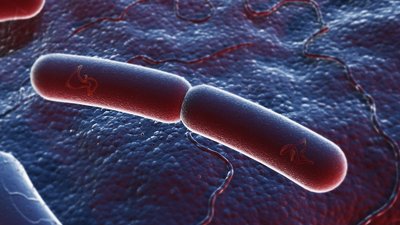
Prokaryotes reproduce asexually by binary fission, resulting in rapid population growth. Genetic diversity arises from mutations and genetic recombination through transformation, transduction, and conjugation.
Prokaryotic Metabolism and Nutrition
Energy and Carbon Sources
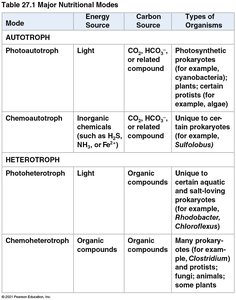
Prokaryotes exhibit a wide range of metabolic adaptations, classified by their energy and carbon sources:
Phototrophs: Obtain energy from light.
Chemotrophs: Obtain energy from chemicals.
Autotrophs: Use inorganic carbon (e.g., CO2) as a carbon source.
Heterotrophs: Require organic compounds as a carbon source.
Mode | Energy Source | Carbon Source | Types of Organisms |
|---|---|---|---|
Photoautotroph | Light | CO2, HCO3-, or related compound | Photosynthetic prokaryotes (e.g., cyanobacteria); plants; certain protists (algae) |
Chemoautotroph | Inorganic chemicals (e.g., H2S, NH3, Fe2+) | CO2, HCO3-, or related compound | Unique to certain prokaryotes (e.g., Sulfolobus) |
Photoheterotroph | Light | Organic compounds | Unique to certain aquatic and salt-loving prokaryotes |
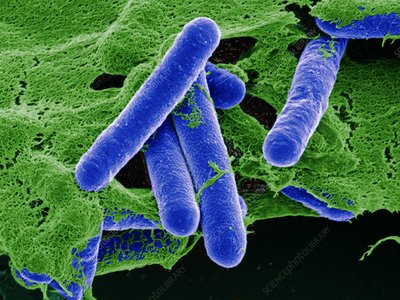
Chemoheterotroph | Organic compounds | Organic compounds | Many prokaryotes (e.g., Clostridium); protists; fungi; animals; some plants |
Oxygen and Nitrogen Metabolism
Prokaryotes vary in their requirements for oxygen:
Obligate aerobes: Require O2 for cellular respiration.
Obligate anaerobes: Poisoned by O2; use fermentation or anaerobic respiration.
Facultative anaerobes: Can use O2 if present or switch to anaerobic metabolism if not.
Nitrogen metabolism is also diverse. Some prokaryotes perform nitrogen fixation, converting atmospheric N2 to ammonia (NH3), making nitrogen available to other organisms.
Major Groups of Bacteria and Archaea
Bacteria
Proteobacteria: Gram-negative; includes photoautotrophs, chemoautotrophs, and heterotrophs. Some are pathogens (e.g., Vibrio cholerae).
Chlamydias: Gram-negative; lack peptidoglycan; all are animal parasites (e.g., Chlamydia trachomatis).
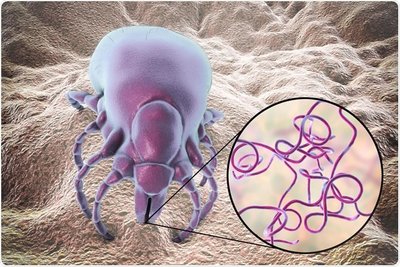
Spirochetes: Helical, gram-negative heterotrophs; some are pathogens (e.g., Borrelia burgdorferi).
Cyanobacteria: Gram-negative photoautotrophs; likely ancestors of chloroplasts via endosymbiosis.
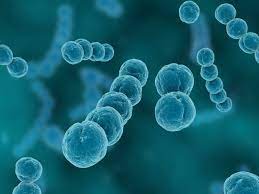
Gram-positive bacteria: Diverse group; includes soil decomposers (Streptomyces) and pathogens (Staphylococcus aureus, Bacillus anthracis).
Archaea
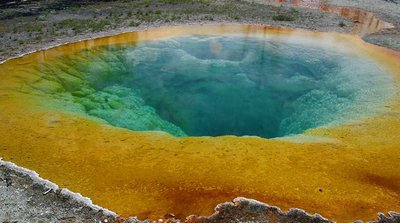
Extreme thermophiles: Thrive in very hot environments, such as hydrothermal vents.
Extreme halophiles: Thrive in highly saline environments.
Methanogens: Obligate anaerobes that produce methane as a metabolic by-product; found in diverse environments, including swamps and animal guts.
Prokaryotic Evolution and Genomics
Genomic Diversity and Metagenomics
Prokaryotes originated approximately 3.5 billion years ago and have radiated into a vast array of lineages. Advances in genomics, including metagenomics, allow scientists to analyze entire prokaryotic genomes from environmental samples, revealing extensive diversity and the importance of horizontal gene transfer in prokaryotic evolution.
Summary Table: Major Prokaryotic Groups
Group | Key Features | Examples |
|---|---|---|
Proteobacteria | Gram-negative, diverse metabolism | Vibrio cholerae, Helicobacter pylori |
Chlamydias | Gram-negative, animal parasites, lack peptidoglycan | Chlamydia trachomatis |
Spirochetes | Helical, gram-negative, some pathogens | Borrelia burgdorferi |
Cyanobacteria | Gram-negative, photoautotrophs | Anabaena, Cylindrospermum |
Gram-positive bacteria | Thick cell wall, diverse, many pathogens | Streptomyces, Bacillus anthracis |
Extreme thermophiles (Archaea) | Live in high temperatures | Pyrolobus fumarii |
Extreme halophiles (Archaea) | Live in high salinity | Halobacterium |
Methanogens (Archaea) | Produce methane, obligate anaerobes | Methanobacterium |
