 Back
BackProkaryotic Diversity: Structure, Metabolism, and Ecological Roles of Bacteria and Archaea
Study Guide - Smart Notes
 Tailored notes based on your materials, expanded with key definitions, examples, and context.
Prokaryotic Diversity
Introduction to Prokaryotes
Prokaryotes are single-celled organisms that lack a membrane-bound nucleus and most organelles. The two domains of prokaryotes are Bacteria and Archaea. They are the most abundant and diverse forms of life on Earth, occupying nearly every habitat imaginable.
Prokaryotes include both Bacteria and Archaea.
They are unicellular and have a simple cell structure compared to eukaryotes.
All prokaryotes have genetic material, a plasma membrane, and ribosomes.
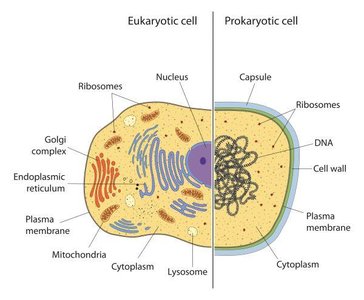
Prokaryotes vs. Eukaryotes
Prokaryotes and eukaryotes differ significantly in their cellular structure and complexity.
Prokaryotic cells lack a membrane-bound nucleus; their DNA is found in the cytoplasm.
Eukaryotic cells have a nucleus and various membrane-bound organelles (e.g., mitochondria, Golgi apparatus).
Eukaryotes can be unicellular or multicellular (e.g., plants, animals, fungi, protists).
Phylogenetic Relationships
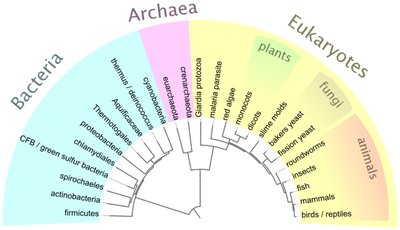
Bacteria, Archaea, and Eukaryotes represent the three domains of life. Archaea are more closely related to Eukaryotes than to Bacteria, despite sharing many traits with Bacteria.
Phylogenetic trees show evolutionary relationships among these domains.
Diversity of Prokaryotic Metabolism and Ecology
Metabolic Diversity
Prokaryotes exhibit remarkable metabolic diversity, allowing them to thrive in a wide range of environments.
Autotrophs: Generate their own energy from inorganic sources.
Photoautotrophs: Use sunlight to drive photosynthesis (e.g., cyanobacteria).
Chemoautotrophs: Obtain energy from chemical compounds (organic or inorganic).
Heterotrophs: Obtain energy by consuming organic molecules produced by other organisms.
Many prokaryotes are symbiotic, forming mutualistic or parasitic relationships (e.g., nitrogen-fixing bacteria in plant roots, gut microbiome).
Ecological Roles and Habitats
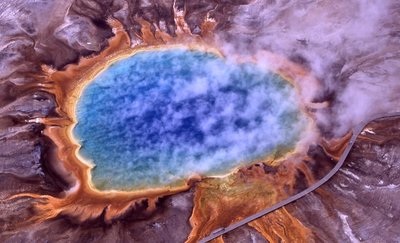
Bacteria and Archaea are found in nearly every environment on Earth, including extreme habitats.
Extremophiles: Prokaryotes that live in extreme conditions (high temperature, high salinity, high pressure, or low temperature).
They are crucial for nutrient cycling, such as nitrogen fixation, and are dominant life forms by abundance and diversity.

Bacteria vs. Archaea: Key Differences
Structural and Molecular Differences
Although both are prokaryotes, Bacteria and Archaea differ in several fundamental ways:
Bacteria have peptidoglycan in their cell walls; Archaea do not.
The molecular machinery for DNA replication, transcription, and translation in Archaea is more similar to Eukaryotes than to Bacteria.
Bacteria are often pathogenic, while Archaea are not known to cause disease in humans.
Pathogenicity and Virulence
Some bacteria are pathogenic, meaning they can cause disease. The degree to which a pathogen causes disease is called virulence, which is a heritable trait often linked to replication rate.
Rapidly replicating bacterial strains may increase virulence but risk killing the host before transmission.
Antibiotics, often produced by soil bacteria and fungi, target bacterial cell walls (especially peptidoglycan synthesis).
Bacterial Cell Wall Types and Gram Staining
Gram-Positive vs. Gram-Negative Bacteria
Bacteria can be classified based on their cell wall structure using the Gram stain:
Gram-positive bacteria: Thick peptidoglycan layer; stain purple.
Gram-negative bacteria: Thin peptidoglycan layer and an outer membrane; stain pink.
Penicillin and similar antibiotics are more effective against Gram-positive bacteria because they target peptidoglycan synthesis.
Morphological Diversity of Prokaryotes
Shapes and Structures
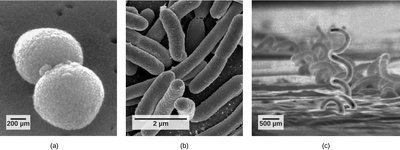
Bacteria and Archaea display a variety of cell shapes and arrangements, including cocci (spherical), bacilli (rod-shaped), and spirilla (spiral-shaped).
These shapes can be observed under the microscope and are used for classification.
Ecological Importance of Prokaryotes
Microbiomes and Symbiosis
The microbiome refers to the community of microbes that naturally inhabit a particular area, such as the human gut, soil, or aquatic environments. Prokaryotes play essential roles in nutrient cycling, health, and disease.
Examples include nitrogen-fixing bacteria in plant roots and beneficial bacteria in the human gut.
Summary Table: Key Differences Between Bacteria and Archaea
Feature | Bacteria | Archaea |
|---|---|---|
Cell Wall | Contains peptidoglycan | No peptidoglycan |
Pathogenicity | Often pathogenic | Not known to be pathogenic |
Central Dogma Machinery | Distinct from eukaryotes | More similar to eukaryotes |
Habitat | Wide range, including moderate environments | Many are extremophiles |
