 Back
Properties of Life and Major Themes in Biology: Study Guide
Study Guide - Smart Notes
 Tailored notes based on your materials, expanded with key definitions, examples, and context.
Properties of Life & Major Themes in Biology
Introduction to Biology
Biology is the scientific study of life, encompassing a wide range of living organisms and their interactions. The discipline seeks to understand the fundamental properties that define life and the major themes that unify biological knowledge.
Order: Living things exhibit complex but ordered organization.
Cells: All life is composed of cells, the basic unit of structure and function.
Growth and Development: Organisms grow and develop according to inherited instructions.
Energy Processing: Life requires energy, which is obtained and transformed through metabolic processes.
Regulation: Organisms regulate their internal environment to maintain stability (homeostasis).
Response to the Environment: Living things respond to environmental stimuli.
Reproduction: Life reproduces, passing genetic information to offspring.
Evolution: Populations evolve over generations through changes in genetic composition.
An object is considered alive if it displays all these characteristics simultaneously. Nonliving objects may exhibit some, but not all, of these properties.
Major Themes in Biology
Biology is unified by several major themes that recur throughout the study of life:
Structure and Function: The form of biological structures is closely related to their function.
Information Flow: Life depends on the transmission and use of information, primarily through DNA.
Pathways That Transform Energy and Matter: Biological systems transform energy and cycle matter to sustain life.
Interactions Within Biological Systems: Organisms interact with each other and their environment, forming complex systems.
Evolution: The diversity and unity of life are explained by evolutionary processes.
An Overview of the Process of Science
Scientific Method and Hypothesis Testing
The process of science involves making observations, forming hypotheses, and testing them through experiments or further observations. A hypothesis is a proposed explanation for a set of observations and must be testable and falsifiable.
Experimentation: Some hypotheses can be tested by controlled experiments, while others require observational studies.
Results: Experimental outcomes either support or do not support the hypothesis.
Communication and Peer Review
Scientists communicate their findings through seminars, meetings, and publications. Peer review, the evaluation of research by impartial experts, ensures quality and reliability in scientific literature.
Scientific Outcomes and Societal Impact
The ultimate aim of scientific investigation is to benefit society. Science connects biology to everyday life and broader societal issues.
Hypotheses, Theories, and Facts
Hypothesis: A testable, falsifiable explanation for observations.
Theory: A comprehensive, well-substantiated explanation supported by extensive evidence. Theories can generate new hypotheses and are refined or abandoned if contradicted by new evidence.
Fact: An objectively true piece of information, verified by evidence. Science focuses on explanations rather than mere accumulation of facts.
Controlled Experiments
Controlled experiments compare groups that differ only in one variable. Variables are factors that change in an experiment:
Independent Variable: The factor manipulated by researchers (e.g., object under investigation).
Dependent Variable: The response or effect measured (e.g., speed of movement).
Control Group: Lacks or does not receive the factor being tested.
Experimental Group: Receives the factor being tested.
Evaluating Scientific Claims
Science vs. Pseudoscience
Pseudoscience is falsely presented as scientific and often relies on anecdotal evidence. Recognizing pseudoscience is crucial for critical thinking.
Indicators of Pseudoscience: Lack of peer review, reliance on anecdotes, absence of reproducible results.
Reliable Sources: Peer-reviewed journals and impartial expert evaluation.
The Properties of Life
Diversity and Universal Properties
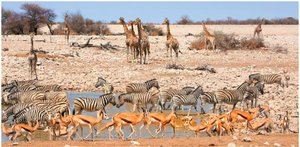
Life exists in tremendous diversity, but all living things share universal properties. These properties may help identify extraterrestrial life.
Major Themes in Biology
Structure and Function
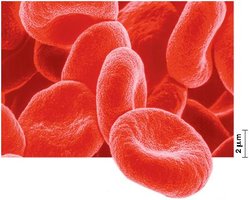
The relationship between structure and function is evident at all levels of biological organization. For example, the branched structure of lungs increases surface area for gas exchange, and the indentations in red blood cells enhance oxygen diffusion.
Information Flow
Information flow is essential for life. Cells receive, transmit, and use information, often encoded in DNA. Genes are hereditary units consisting of specific DNA sequences, and their meaning is determined by the sequence of four chemical "letters": A, G, C, and T.
Genes: Encode instructions for protein synthesis, controlling body processes.
Example: The pancreas regulates blood glucose by releasing hormones based on information received.
Pathways That Transform Energy and Matter
Life requires energy, primarily from the sun. Plants capture sunlight and convert it into chemical energy, which is used by other organisms. Energy flows through ecosystems, entering as light and exiting as heat.
Metabolism: The network of chemical reactions in cells that converts energy and recycles matter.
Disruption Example: Cyanide blocks a metabolic pathway, preventing energy harvest from glucose.
Interactions Within Biological Systems
Biological systems interact at multiple levels, from molecules to the biosphere. Emergent properties arise from the arrangement and interaction of parts in complex systems.
Evolution
Unity and Diversity of Life
Evolution explains both the unity and diversity of life. Similarities among organisms, common cellular processes, and universal DNA structure provide evidence for evolution.
Theory of Evolution by Natural Selection
Charles Darwin's theory of evolution by natural selection is the core principle of biology. Species arise from ancestors through "descent with modification," and natural selection drives evolutionary change.
Natural Selection: Individuals with traits best suited to their environment are more likely to survive and reproduce.
Mutations: Random changes in DNA provide variation; natural selection "edits" these changes.
Evolutionary Adaptations: Inherited traits that enhance survival in specific environments.
Natural Selection in Action
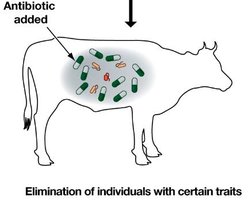
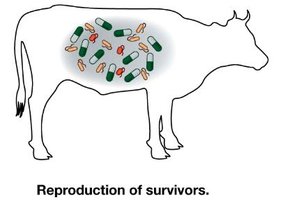
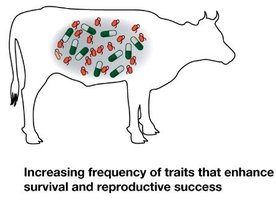
Natural selection operates through the elimination of individuals with certain traits, reproduction of survivors, and increasing frequency of advantageous traits.
Step | Description |
|---|---|
1 | Antibiotic added; elimination of individuals with certain traits |
2 | Reproduction of survivors |
3 | Increasing frequency of traits that enhance survival and reproductive success |
Evolutionary Relationships
Each species represents a twig on the tree of life, tracing back through ancestral species. DNA sequence comparisons provide evidence for evolutionary relationships; closely related species share a recent common ancestor.
Applying Major Themes to the Green Sea Turtle
The green sea turtle exemplifies the major themes of biology, including structure-function relationships, information flow, energy transformation, interactions within systems, and evolution.
----------------------------------------
