 Back
Protein Structure and Function: Foundations of Biomolecular Diversity
Study Guide - Smart Notes
 Tailored notes based on your materials, expanded with key definitions, examples, and context.
Protein Structure and Function
Introduction to Organic Molecules and Biomolecules
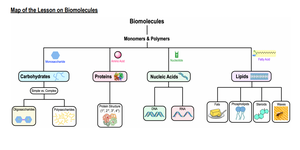
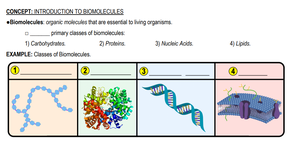
Organic molecules are the chemical foundation of life, characterized by the presence of both carbon and hydrogen atoms. Four major classes of biomolecules—carbohydrates, lipids, proteins, and nucleic acids—are essential for cellular structure and function. These molecules are typically polymers, composed of repeating monomeric units, except for lipids, which are assembled from two different types of subunits.
Carbohydrates: Energy storage and structural support
Lipids: Membrane structure, energy storage, signaling
Proteins: Catalysis, structure, transport, signaling, defense
Nucleic acids: Information storage and transfer
The Unique Properties of Carbon
Carbon atoms are small, with four electrons in their outer shell, allowing them to form up to four covalent bonds with other atoms such as hydrogen, oxygen, nitrogen, phosphorus, and sulfur. This versatility enables the formation of stable chains, rings, and complex branched structures, making carbon the backbone of organic molecules.
Covalent bonding: Enables diversity in molecular architecture
Stability: C–C bonds are strong, allowing for long chains and rings
Functional groups: Specific clusters of atoms that confer chemical reactivity and polarity to organic molecules
Functional Groups in Organic Molecules
Functional groups are specific groups of atoms within molecules that are responsible for the characteristic chemical reactions of those molecules. They determine the reactivity, polarity, and interactions of organic compounds.
Group | Structure | Compound | Significance |
|---|---|---|---|
Hydroxyl | –OH | Alcohols | Polar, forms hydrogen bonds |
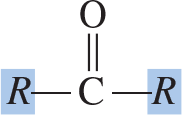
Carbonyl |
| Aldehydes, Ketones | Polar, reactive in energy-releasing reactions |
Carboxyl |
| Carboxylic acids | Acidic, donates H+ |
Amino |
| Amines | Basic, accepts H+ |
Phosphate |
| Organic phosphates | Energy transfer, acidic |
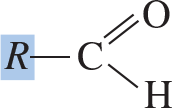 or
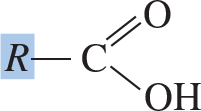
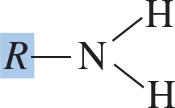
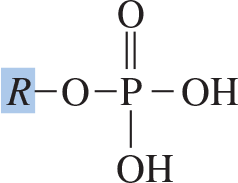
Additional info: Functional groups are often the site of chemical reactivity and are critical for the function of biomolecules such as amino acids and nucleotides.
Monomers and Polymers: Synthesis and Degradation
Biomolecules are often polymers, constructed from repeating monomeric units. The process of joining monomers to form polymers is called dehydration synthesis (or condensation), while the breakdown of polymers into monomers occurs via hydrolysis.
Dehydration synthesis: Removal of water to form a covalent bond between monomers
Hydrolysis: Addition of water to break a covalent bond, releasing monomers
Amino Acids: Structure and Properties
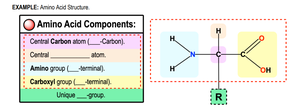
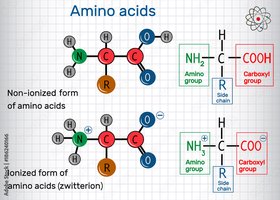
Amino acids are the monomers of proteins. Each amino acid has a central (alpha) carbon atom bonded to a hydrogen atom, an amino group (–NH2), a carboxyl group (–COOH), and a unique side chain (R group) that determines its properties.
Core structure: Central carbon, amino group, carboxyl group, hydrogen, R group
Ionization: In aqueous solution, amino and carboxyl groups can ionize, affecting solubility and reactivity
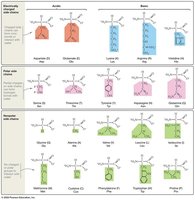
R group diversity: 20 different amino acids, each with a unique R group, classified as nonpolar, polar, acidic, or basic
Peptide Bond Formation and Protein Polymerization
Amino acids are linked by peptide bonds, which form between the carboxyl group of one amino acid and the amino group of another through a dehydration reaction. This process creates a polypeptide chain with directionality (N-terminus to C-terminus).
Peptide bond: Covalent bond joining amino acids in a protein
Directionality: N-terminus (amino end) to C-terminus (carboxyl end)
Flexibility: Peptide bond is rigid, but single bonds adjacent to it allow rotation
Levels of Protein Structure
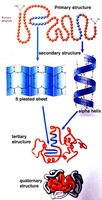
Proteins have four levels of structural organization, each contributing to the molecule's final shape and function:
Primary structure: Linear sequence of amino acids
Secondary structure: Local folding into alpha helices and beta-pleated sheets, stabilized by hydrogen bonds
Tertiary structure: Overall three-dimensional shape formed by interactions among R groups (hydrogen bonds, ionic bonds, hydrophobic interactions, disulfide bridges)
Quaternary structure: Association of multiple polypeptide chains into a functional protein complex
Protein Folding and Function
Proper protein folding is essential for biological activity. Folding is driven by chemical interactions and often assisted by molecular chaperones. Misfolded proteins can lead to diseases such as cystic fibrosis and prion diseases. Protein structure is dynamic, and some proteins require binding to other molecules to achieve their functional conformation.
Molecular chaperones: Assist in proper folding and prevent aggregation
Denaturation: Loss of structure leads to loss of function
Prions: Infectious misfolded proteins that induce misfolding in normal proteins
Functions of Proteins in Living Systems
Proteins are the most functionally diverse biomolecules, performing a wide range of tasks essential for life:
Catalysis: Enzymes accelerate biochemical reactions
Structure: Provide support and shape to cells and tissues (e.g., collagen, keratin)
Transport: Move molecules across membranes and throughout the body (e.g., hemoglobin)
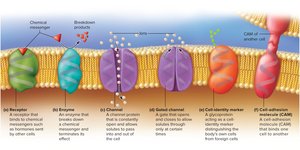
Signaling: Transmit signals within and between cells (e.g., hormones, receptors)
Defense: Antibodies protect against pathogens
Movement: Motor proteins enable cellular and organismal movement
Summary Table: Levels of Protein Structure
Level | Description | Stabilizing Bonds |
|---|---|---|
Primary | Sequence of amino acids | Peptide bonds |
Secondary | Alpha helix, beta sheet | Hydrogen bonds |
Tertiary | 3D folding of polypeptide | Hydrogen, ionic, hydrophobic, disulfide |
Quaternary | Multiple polypeptides | Same as tertiary, between subunits |
