 Back
BackProtein Synthesis: Transcription and Translation Study Guide
Study Guide - Smart Notes
 Tailored notes based on your materials, expanded with key definitions, examples, and context.
Protein Synthesis
Overview of Protein Synthesis
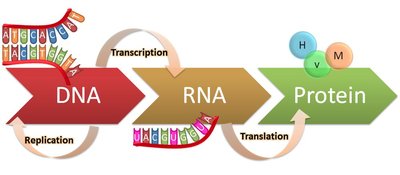
Protein synthesis is the cellular process by which proteins are created from genetic information encoded in DNA. This process is fundamental to all living organisms and consists of two main stages: transcription and translation. The flow of genetic information follows the Central Dogma of molecular biology: DNA → RNA → Protein.
Transcription: DNA is used as a template to synthesize messenger RNA (mRNA).
Translation: mRNA is decoded by ribosomes to assemble amino acids into a polypeptide (protein).
Types of RNA
Messenger RNA (mRNA)
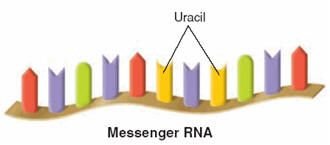
mRNA carries genetic information from DNA in the nucleus to the ribosome, where it is translated into protein.
Made during transcription.
Contains codons, each specifying an amino acid.
Transfer RNA (tRNA)
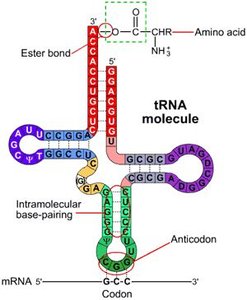
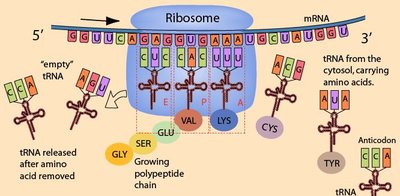
tRNA is responsible for bringing specific amino acids to the ribosome during translation. Each tRNA has an anticodon that pairs with the corresponding mRNA codon.
Bound to a specific amino acid.
Matches with mRNA codons via its anticodon.
Ribosomal RNA (rRNA)
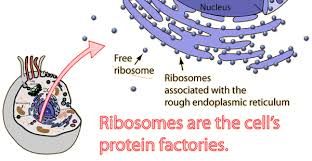
rRNA is a structural and functional component of ribosomes, which are the sites of protein synthesis.
Ribosomes are composed of rRNA and proteins.
rRNA helps catalyze peptide bond formation.
DNA vs. RNA
Structural Differences
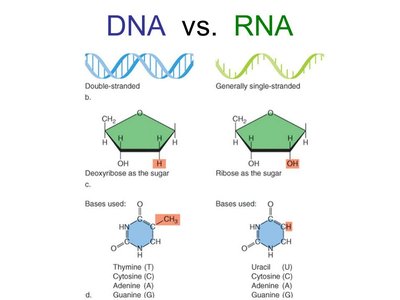
DNA and RNA are both nucleic acids but differ in structure and function.
DNA: Double-stranded, contains deoxyribose sugar, uses thymine (T).
RNA: Single-stranded, contains ribose sugar, uses uracil (U) instead of thymine.
Transcription
Stages of Transcription
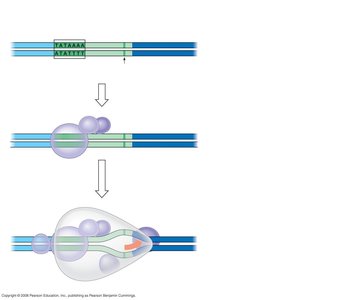
Transcription occurs in the nucleus of eukaryotic cells and involves three main steps:
Initiation: RNA polymerase binds to the promoter region (often containing a TATA box) with the help of transcription factors.
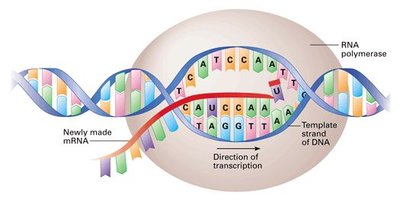
Elongation: RNA polymerase synthesizes the mRNA strand by adding nucleotides complementary to the DNA template strand.
Termination: The mRNA transcript is released, and RNA polymerase detaches from the DNA.
RNA Processing (Eukaryotes)
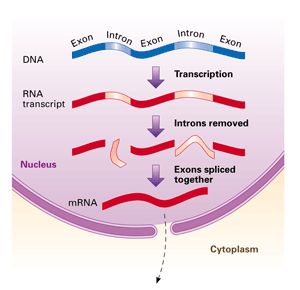
After transcription, the pre-mRNA undergoes several modifications:
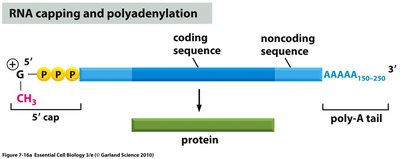
5' Cap: Added to the beginning of the mRNA for stability and export.
3' Poly-A Tail: Added to the end of the mRNA to protect from degradation.
Splicing: Introns (non-coding regions) are removed, and exons (coding regions) are joined together by a spliceosome.
Alternative Splicing
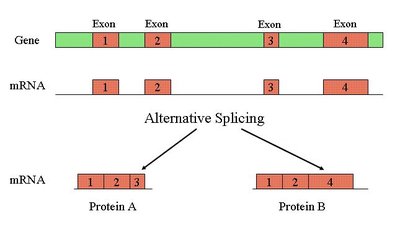
Alternative splicing allows a single gene to code for multiple proteins by varying which exons are included in the final mRNA.
Regulates gene expression.
Increases protein diversity.
Translation
Stages of Translation
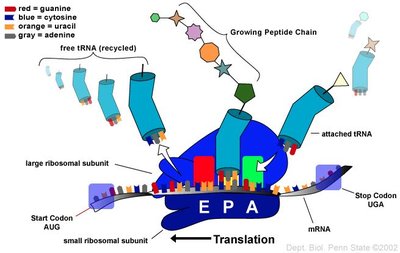
Translation occurs in the cytoplasm at the ribosome and consists of three steps:
Initiation: The small ribosomal subunit binds to the mRNA and scans for the start codon (AUG). The initiator tRNA carrying methionine binds, and the large ribosomal subunit joins.
Elongation: Amino acids are added one at a time, determined by the mRNA codons. Peptide bonds form between amino acids.
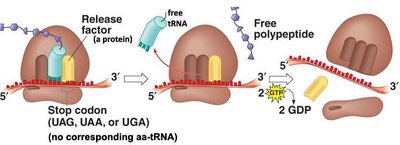
Termination: When a stop codon is reached, a release factor binds, and the completed polypeptide is released.
Codons and the Genetic Code
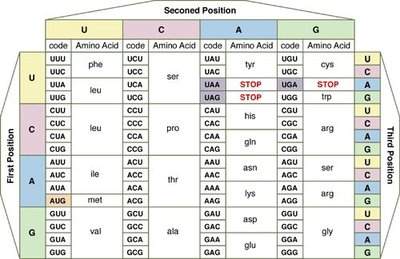
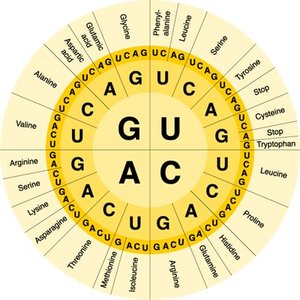
The genetic code is composed of three-nucleotide sequences called codons, each specifying an amino acid.
Start codon: AUG (methionine)
Stop codons: UAA, UAG, UGA
Codon tables and wheels are used to determine which amino acid corresponds to each codon.
Summary Table: Key Steps in Protein Synthesis
Step | Location | Main Molecules | Key Events |
|---|---|---|---|
Transcription | Nucleus | DNA, RNA polymerase, mRNA | DNA template used to synthesize mRNA |
RNA Processing | Nucleus | pre-mRNA, spliceosome | 5' cap, poly-A tail added; introns removed, exons joined |
Translation | Cytoplasm (ribosome) | mRNA, tRNA, rRNA, ribosome | mRNA codons translated into amino acid sequence |
Review and Applications
Protein synthesis is essential for cell structure, function, and regulation.
Mutations in DNA can affect protein synthesis, leading to genetic disorders.
Understanding transcription and translation is fundamental for biotechnology and genetic engineering.
 Additional info: Alternative splicing and post-translational modifications further increase protein diversity and regulation in eukaryotic cells.
