 Back
Proteins and Nucleic Acids: Structure and Function
Study Guide - Smart Notes
 Tailored notes based on your materials, expanded with key definitions, examples, and context.
Biological Macromolecules
Overview of the Four Classes
All living organisms are composed of four major classes of large biological molecules, also known as macromolecules. These include carbohydrates, lipids, proteins, and nucleic acids. Macromolecules are polymers built from monomers, and their structure is closely linked to their function in cells.
Carbohydrates: Serve as fuel and building material.
Lipids: Important for energy storage, membrane structure, and signaling.
Proteins: Perform a vast array of functions including catalysis, structure, transport, and defense.
Nucleic Acids: Store and transmit hereditary information.
Molecular structure and function are inseparable: The specific arrangement of atoms in a macromolecule determines its properties and biological role.
Proteins
Protein Diversity and Functions
Proteins are the most structurally and functionally diverse macromolecules, accounting for more than 50% of the dry mass of most cells. Their functions include:
Enzymatic: Catalyze biochemical reactions.
Storage: Store amino acids for later use.
Hormonal: Coordinate organismal activities (e.g., insulin).
Defensive: Protect against disease (e.g., antibodies).
Transport: Move substances (e.g., hemoglobin, membrane proteins).
Receptor: Respond to chemical stimuli.
Structural: Provide support (e.g., collagen, keratin).
Examples of Protein Functions
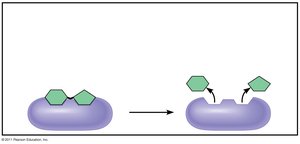
Enzymatic proteins: Digestive enzymes accelerate the hydrolysis of food molecules.
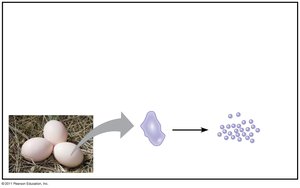
Storage proteins: Ovalbumin in egg white stores amino acids for embryos.
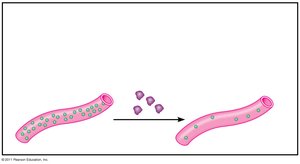
Hormonal proteins: Insulin regulates blood sugar by signaling cells to take up glucose.
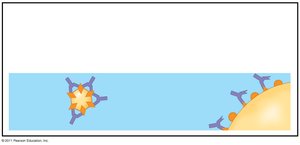
Defensive proteins: Antibodies inactivate and help destroy pathogens.
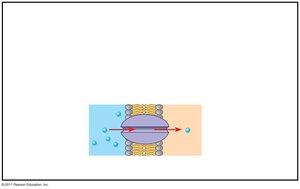
Transport proteins: Hemoglobin transports oxygen; membrane proteins move molecules across membranes.
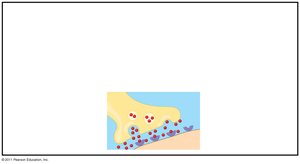
Receptor proteins: Membrane receptors detect signaling molecules.
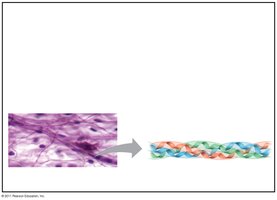
Structural proteins: Collagen provides connective tissue strength.
Enzymes: Biological Catalysts
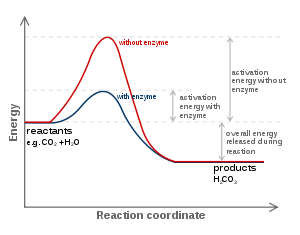
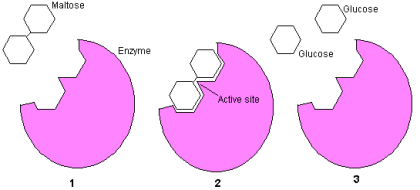
Enzymes are proteins that act as catalysts, speeding up chemical reactions without being consumed. They lower the activation energy required for reactions and can be used repeatedly.
Example: Digestive enzymes break down food molecules for absorption.
Amino Acids: The Monomers of Proteins
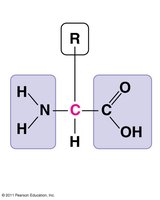
Amino acids are organic molecules with both an amino group and a carboxyl group. They differ in their side chains, or R groups, which determine their properties and roles in proteins.
General structure: Central (alpha) carbon, amino group, carboxyl group, hydrogen atom, and R group.
Classification of Amino Acids
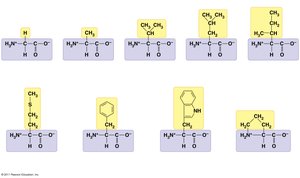
Nonpolar (hydrophobic): Side chains do not interact with water.
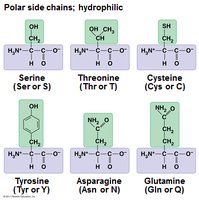
Polar (hydrophilic): Side chains form hydrogen bonds with water.
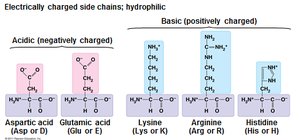
Electrically charged (hydrophilic): Acidic (negatively charged) or basic (positively charged) side chains.
Polypeptides and Peptide Bonds
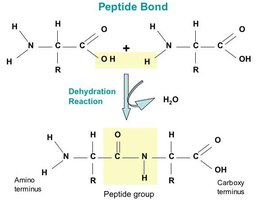
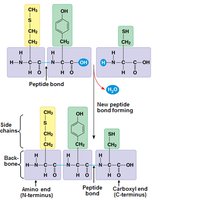
Amino acids are linked by peptide bonds through dehydration synthesis, forming polypeptides. Each polypeptide has a unique sequence and directionality (N-terminus to C-terminus).
Protein Structure: Four Levels
The function of a protein is determined by its structure, which is organized into four levels:
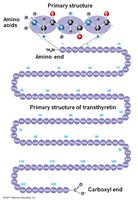
Primary structure: Unique sequence of amino acids.
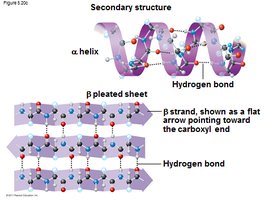
Secondary structure: Coils (α-helix) and folds (β-pleated sheet) stabilized by hydrogen bonds.
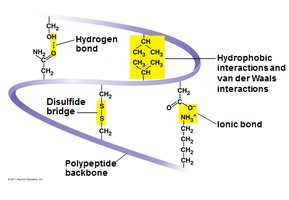
Tertiary structure: Overall 3D shape stabilized by interactions among R groups (hydrogen bonds, ionic bonds, hydrophobic interactions, disulfide bridges).
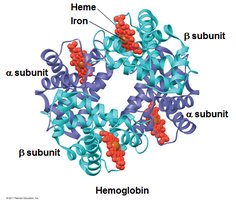
Quaternary structure: Association of multiple polypeptide chains (e.g., collagen, hemoglobin).
Protein Structure and Disease
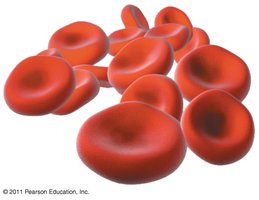
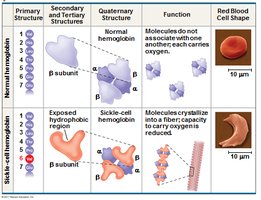
A single amino acid change in the primary structure can have dramatic effects. For example, sickle-cell disease is caused by a single substitution in the hemoglobin protein, altering its structure and function.
Protein Denaturation
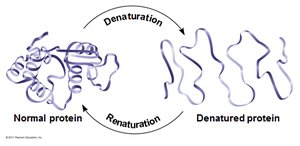
Proteins can lose their structure (and function) due to changes in pH, temperature, or other environmental factors. This process is called denaturation. Denatured proteins are biologically inactive but may sometimes refold if conditions normalize.
Nucleic Acids
Functions and Types
Nucleic acids store, transmit, and help express hereditary information. The two main types are:
Deoxyribonucleic acid (DNA): Stores genetic information and directs its own replication.
Ribonucleic acid (RNA): Functions in gene expression, including carrying instructions from DNA to ribosomes for protein synthesis.
Structure of DNA and RNA
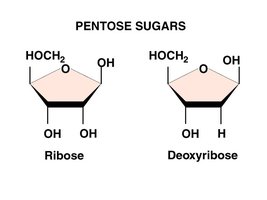
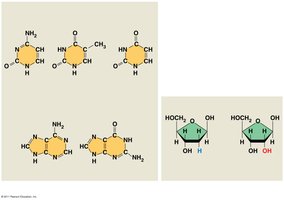
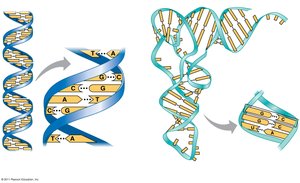
DNA: Double-stranded, contains deoxyribose sugar, uses thymine (T).
RNA: Single-stranded, contains ribose sugar, uses uracil (U) instead of thymine.
Comparison Table: DNA vs RNA
Feature | DNA | RNA |
|---|---|---|
Strands | Double | Single |
Sugar | Deoxyribose | Ribose |
Bases | A, T, C, G | A, U, C, G |
Location | Nucleus, organelles | Nucleus, cytoplasm |
Function | Genetic template | Protein synthesis, regulation |
Nucleotides: The Monomers of Nucleic Acids
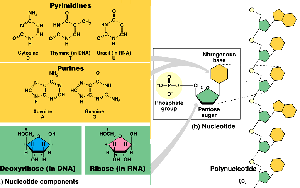
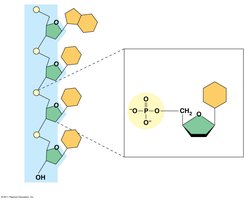
Each nucleotide consists of three components:
Nitrogenous base: Purines (adenine, guanine) or pyrimidines (cytosine, thymine, uracil).
Pentose sugar: Ribose (RNA) or deoxyribose (DNA).
Phosphate group
Formation of Nucleic Acid Polymers
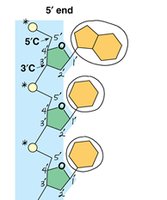
Nucleotides are joined by phosphodiester bonds between the 3' hydroxyl of one sugar and the 5' phosphate of the next, forming a sugar-phosphate backbone with nitrogenous bases as appendages.
DNA Double Helix and Base Pairing
DNA consists of two antiparallel strands forming a double helix. The strands are held together by hydrogen bonds between complementary bases: adenine pairs with thymine, and guanine pairs with cytosine. In RNA, uracil replaces thymine.
Nucleic Acids and Evolution
The sequence of nucleotides in DNA is inherited from one generation to the next. Closely related species have more similar DNA sequences, allowing molecular biology to be used in evolutionary studies.
Summary Table: Macromolecules
Class | Monomer | Polymer | Type of Linkage |
|---|---|---|---|
Carbohydrates | Monosaccharides | Polysaccharides | Glycosidic linkages |
Lipids | Fatty acids | Triacylglycerols | Ester linkages |
Proteins | Amino acids | Polypeptides | Peptide bonds |
Nucleic acids | Nucleotides | Polynucleotides | Phosphodiester linkages |
