 Back
Proteins and Nucleic Acids: Structure, Function, and Biological Importance
Study Guide - Smart Notes
 Tailored notes based on your materials, expanded with key definitions, examples, and context.
Proteins and Nucleic Acids
Overview of Biomolecules
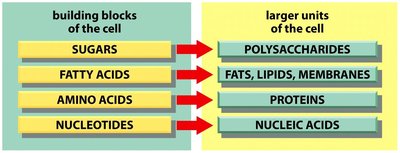
Cells are composed of four major classes of organic molecules: carbohydrates, lipids, proteins, and nucleic acids. Each class is built from specific building blocks and serves distinct biological functions.
Proteins
Amino Acids: The Building Blocks of Proteins
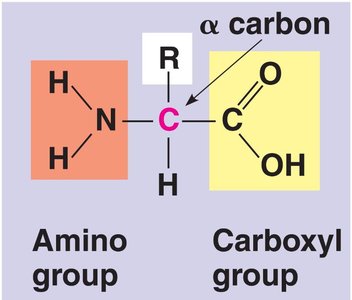
Amino acids are organic molecules containing carbon (C), hydrogen (H), oxygen (O), nitrogen (N), and sometimes sulfur (S). They are the monomers that polymerize to form proteins.
Structure: Each amino acid has a central (α) carbon atom bonded to an amino group (-NH2), a carboxyl group (-COOH), a hydrogen atom, and a variable R group (side chain) that determines its chemical properties.
Isoforms: All amino acids except glycine exist as D- and L- isomers; only L-isomers are found in proteins.
Ionization: At physiological pH (~7.4), the amino group is protonated (-NH3+) and the carboxyl group is deprotonated (-COO-).
Peptide Bonds and Polypeptides
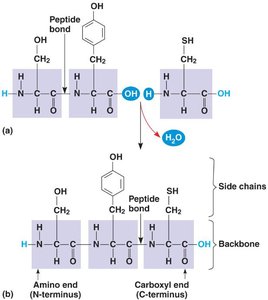
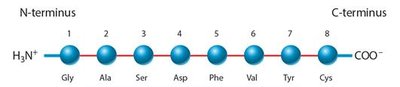
Amino acids are linked by peptide bonds, which are covalent bonds formed through a dehydration reaction between the carboxyl group of one amino acid and the amino group of another. The resulting chain is called a polypeptide.
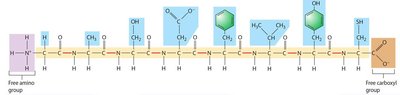
Directionality: Polypeptides have an N-terminus (amino end) and a C-terminus (carboxyl end). Amino acids are always numbered from the N-terminus to the C-terminus.
Definition: A polypeptide is a linear sequence of amino acids; a protein is one or more polypeptides folded into a functional shape.
Hierarchy of Protein Structure
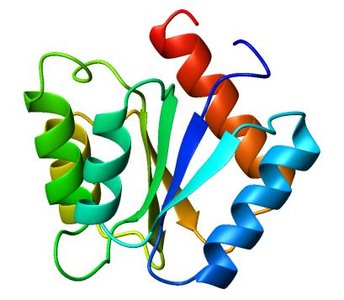
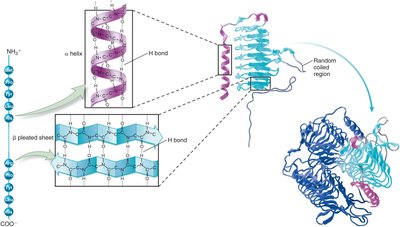
Proteins have four levels of structural organization, each critical for their function:
Primary Structure: The unique linear sequence of amino acids in a polypeptide, determined by genetic information.
Secondary Structure: Local folding patterns such as α-helices and β-pleated sheets, stabilized by hydrogen bonds.
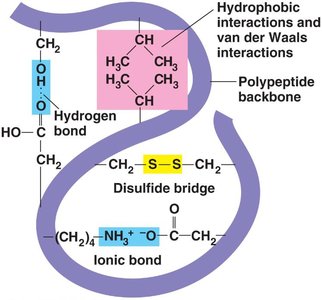
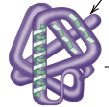
Tertiary Structure: The overall three-dimensional shape of a single polypeptide, resulting from interactions among R groups (side chains), including hydrogen bonds, ionic bonds, hydrophobic interactions, van der Waals forces, and disulfide bridges.
Quaternary Structure: The association of two or more polypeptide subunits to form a functional protein complex.
Protein Function and Importance
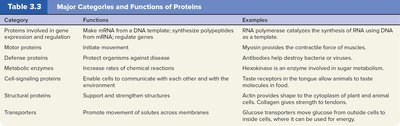
Proteins account for about 50% of the organic material in animal bodies and perform a vast array of functions, including catalysis, structure, transport, signaling, and defense.
Category | Function | Examples |
|---|---|---|
Gene expression/regulation | Synthesize RNA, regulate genes | RNA polymerase |
Motor proteins | Initiate movement | Myosin |
Defense proteins | Protect against disease | Antibodies |
Metabolic enzymes | Increase reaction rates | Hexokinase |
Cell-signaling proteins | Enable cell communication | Insulin |
Structural proteins | Support structures | Actin, collagen |
Transporters | Move solutes across membranes | Glucose transporter |
Protein Folding and Denaturation
The specific three-dimensional conformation of a protein is essential for its function. Environmental factors such as temperature, pH, and salt concentration can disrupt the bonds stabilizing protein structure, leading to denaturation (loss of structure and function). Some proteins can refold (renature) with the help of chaperone proteins.
Protein Domains
Domains are modular units within proteins that have distinct structures and functions. Different proteins may share similar domains, contributing to similar functions across diverse proteins.
Nucleic Acids
Nucleotides: The Building Blocks of Nucleic Acids
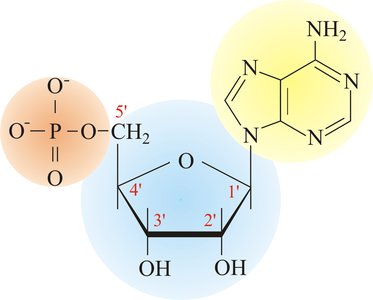
Nucleic acids are polymers of nucleotides, which are composed of three parts:
Phosphate group
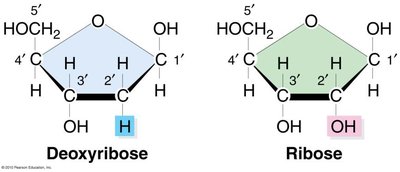
Pentose sugar (deoxyribose in DNA, ribose in RNA)
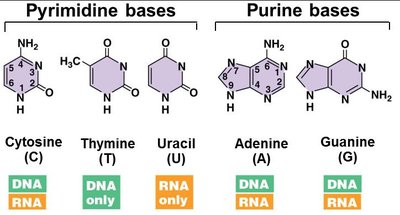
Nitrogenous base (adenine, guanine, cytosine, thymine in DNA; uracil replaces thymine in RNA)
Types of Nucleic Acids: DNA and RNA
There are two main types of nucleic acids:
Deoxyribonucleic acid (DNA): Stores genetic information; double-stranded helix.
Ribonucleic acid (RNA): Transcribed from DNA; single-stranded; involved in protein synthesis and gene regulation.
Nitrogenous Bases and Base Pairing
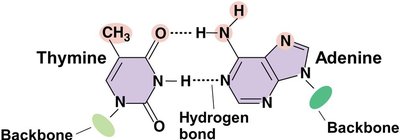
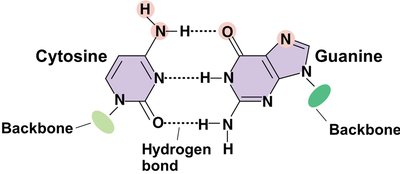
Nitrogenous bases are classified as purines (adenine, guanine) and pyrimidines (cytosine, thymine, uracil). In DNA, adenine pairs with thymine (A=T) and guanine pairs with cytosine (G≡C) via hydrogen bonds. In RNA, uracil replaces thymine.
Structure of DNA and RNA
DNA is a double-stranded molecule with antiparallel strands held together by hydrogen bonds between complementary bases. The backbone of each strand is formed by phosphodiester bonds between the phosphate group of one nucleotide and the sugar of the next.
Phosphodiester bonds: Link nucleotides in a single strand.
Hydrogen bonds: Hold the two DNA strands together.
Antiparallel orientation: The two strands run in opposite directions (5' to 3' and 3' to 5').
Comparison of Proteins and Nucleic Acids
Type | Structure | Key Functions | Examples |
|---|---|---|---|
Proteins | Polymers of amino acids; folded into complex 3D shapes | Catalysis, structure, transport, signaling, defense | Enzymes, antibodies, collagen |
Nucleic Acids | Polymers of nucleotides; DNA is double-stranded, RNA is single-stranded | Genetic information storage and transfer | DNA, RNA |
Bonds in Macromolecules
Different types of covalent bonds link the monomers of biological macromolecules:
Glycosidic bonds: Link monosaccharides in carbohydrates.
Peptide bonds: Link amino acids in proteins.
Ester bonds: Link fatty acids to glycerol in lipids.
Phosphodiester bonds: Link nucleotides in nucleic acids.
