 Back
Proteins and Nucleic Acids: Structure, Function, and Diversity
Study Guide - Smart Notes
 Tailored notes based on your materials, expanded with key definitions, examples, and context.
Proteins
Protein Diversity
Proteins are essential macromolecules in living organisms, exhibiting a wide range of functions due to their structural diversity. Each protein's function is determined by its unique sequence and structure.
Enzymatic Proteins: Catalyze biochemical reactions (e.g., amylase, DNA polymerase).
Defensive Proteins: Protect against disease (e.g., antibodies).
Storage Proteins: Store amino acids (e.g., ovalbumin in egg whites).
Transport Proteins: Move substances across membranes or throughout the body (e.g., hemoglobin).
Hormonal Proteins: Coordinate organismal activities (e.g., insulin).
Receptor Proteins: Respond to chemical signals (e.g., neurotransmitter receptors).
Contractile and Motor Proteins: Enable movement (e.g., actin, myosin).
Structural Proteins: Provide support (e.g., collagen, keratin).
Amino Acids: The Building Blocks of Proteins
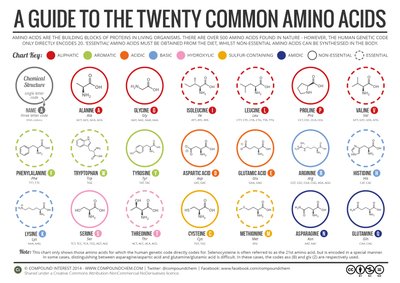
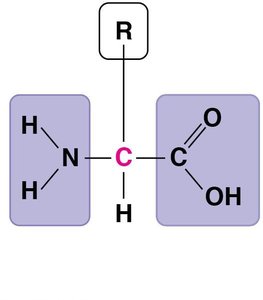
Proteins are constructed from a set of 20 common amino acids. Each amino acid consists of a central (α) carbon atom bonded to an amino group, a carboxyl group, a hydrogen atom, and a unique side chain (R group) that determines its properties.
Monomer: Amino acid
Polymer: Polypeptide
Protein: One or more polypeptides folded into a functional shape
R group: Variable side chain that imparts specific chemical properties
Peptide Bonds and Protein Formation
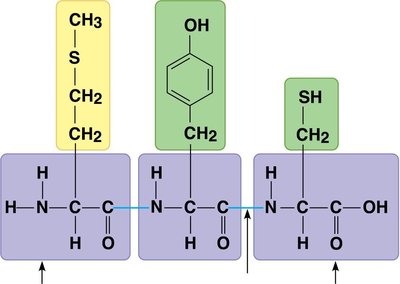
Amino acids are linked together by covalent bonds known as peptide bonds, forming polypeptide chains. The peptide bond is formed through a dehydration (condensation) reaction, where a molecule of water is released.
Peptide Bond: Covalent bond between the carboxyl group of one amino acid and the amino group of another
Dehydration Reaction: Chemical reaction that removes water to form a bond
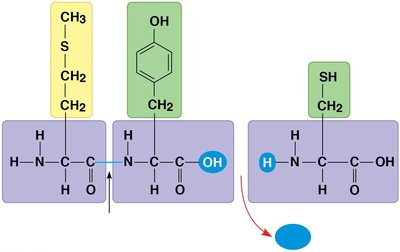
Example: The formation of a dipeptide from two amino acids involves the removal of a water molecule.
Equation:
Levels of Protein Structure
Proteins have four levels of structure, each contributing to their overall shape and function.
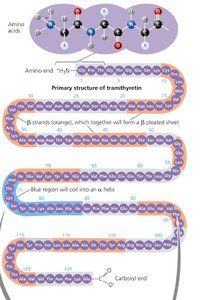
Primary Structure: Linear sequence of amino acids in a polypeptide chain
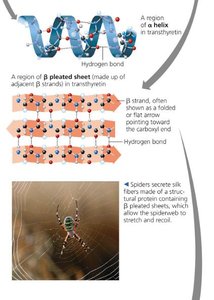
Secondary Structure: Local folding into α-helices and β-pleated sheets stabilized by hydrogen bonds
Tertiary Structure: Overall three-dimensional shape formed by interactions among R groups
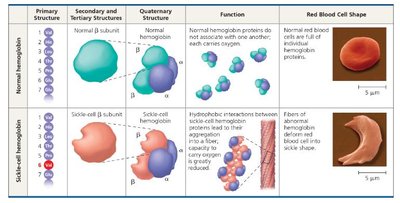
Quaternary Structure: Association of multiple polypeptide chains
Protein Folding and Misfolding
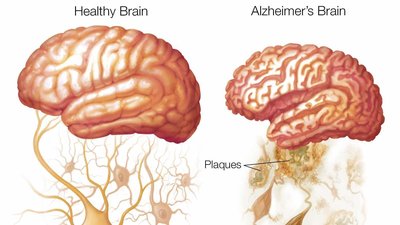
Proteins fold into specific shapes to become functional. Misfolding can lead to diseases such as cystic fibrosis, Alzheimer's, dementia, Parkinson's, and mad cow disease. Prion diseases are also associated with misfolded proteins.
Protein Folding: Process by which a polypeptide attains its functional three-dimensional structure
Misfolding: Incorrect folding can result in loss of function or disease
Nucleic Acids
Types and Functions of Nucleic Acids
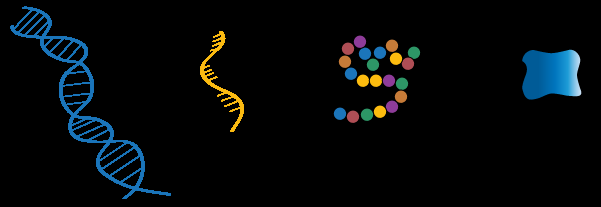
Nucleic acids are polymers essential for the storage and expression of genetic information. The two main types are DNA and RNA.
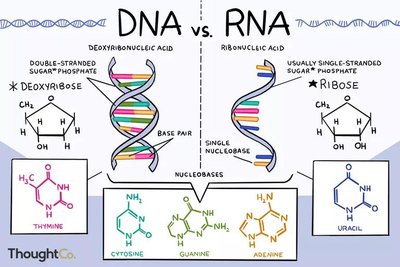
DNA (Deoxyribonucleic Acid): Stores genetic information; composed of deoxyribonucleotide monomers
RNA (Ribonucleic Acid): Various forms; involved in gene expression and regulation; composed of ribonucleotide monomers
Structure of Nucleotides
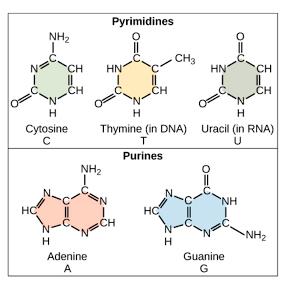
Nucleotides are the monomers of nucleic acids, consisting of a phosphate group, a five-carbon sugar (deoxyribose or ribose), and a nitrogenous base.
Pyrimidines: Cytosine, Thymine (DNA), Uracil (RNA)
Purines: Adenine, Guanine
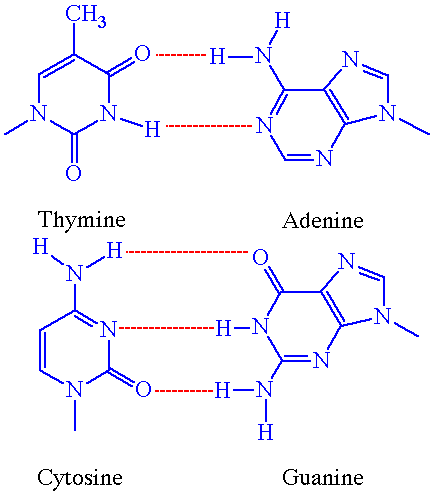
Base Pairing: Complementary pairing via hydrogen bonds (A-T/U, G-C)
Equation:
Organization of Genetic Material
In cells, DNA is organized into chromosomes, which are packaged with histone proteins into a double helix structure. The nucleus houses chromosomes and is the site of genetic regulation.
Chromosome: DNA molecule with associated proteins
Histones: Proteins that help package DNA
Double Helix: The structural form of DNA
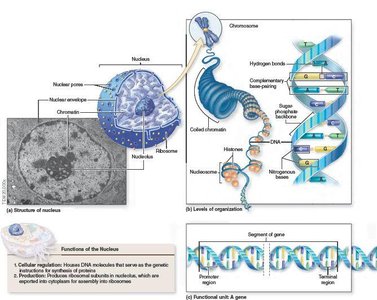
Genomics and Proteomics
Genomics is the study of the entire genome of an organism, while proteomics focuses on the complete set of proteins produced. These fields are crucial for understanding biological complexity and disease.
Genomics: Analysis of DNA sequences, gene function, and genetic variation
Proteomics: Study of protein structure, function, and interactions
Example: Genomic studies can identify mutations responsible for genetic diseases, while proteomic analysis can reveal changes in protein expression associated with disease states.
