 Back
Proteins, Nucleic Acids, and Gene Expression: Study Guide for General Biology
Study Guide - Smart Notes
 Tailored notes based on your materials, expanded with key definitions, examples, and context.
Proteins and Sickle Cell Anemia
Protein Structure and Function
Proteins are essential macromolecules composed of amino acids, which fold into specific structures to perform biological functions. The structure of a protein determines its function, and even a single amino acid change can have significant effects.
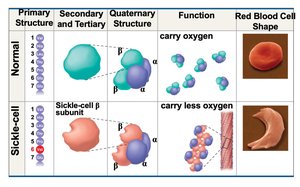
Primary Structure: Sequence of amino acids in a polypeptide chain.
Secondary and Tertiary Structure: Local folding (e.g., alpha helices, beta sheets) and overall 3D shape.
Quaternary Structure: Association of multiple polypeptide subunits.
Function: Proteins carry out diverse roles, including oxygen transport (hemoglobin).
Sickle Cell Anemia: Molecular Basis
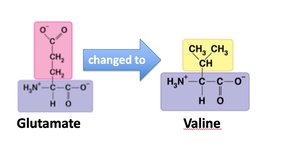
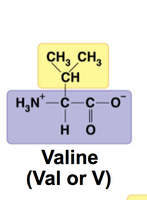
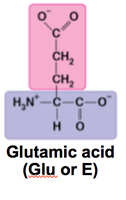
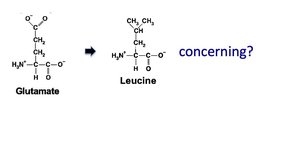
Sickle cell anemia is caused by a mutation in the hemoglobin protein, specifically in the β-globin subunit. This mutation changes the sixth amino acid from glutamate (hydrophilic) to valine (hydrophobic), altering the protein's properties and causing red blood cells to adopt a sickle shape.
Normal Hemoglobin: Contains glutamate at position 6; red blood cells are round and flexible.
Sickle Cell Hemoglobin: Contains valine at position 6; red blood cells become rigid and sickle-shaped, carrying less oxygen.
Impact: Sickle-shaped cells can block blood vessels, leading to pain and organ damage.
Example: The change from glutamate to valine is a classic example of how a single amino acid substitution can cause disease. 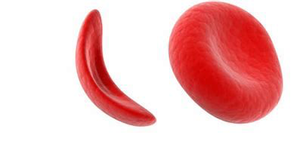
Gene Therapy for Sickle Cell Disease
Current Treatments and Advances
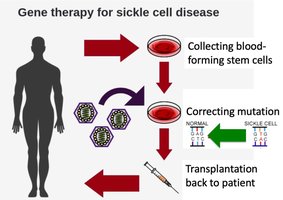
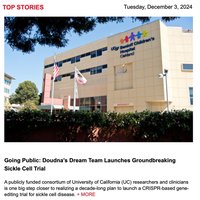
Sickle cell treatments are intensive, costly, and often harsh for patients. Recent advances in gene therapy, including CRISPR-based approaches, offer hope for more effective and less burdensome treatments.
Gene Therapy: Involves correcting the genetic mutation in blood-forming stem cells and transplanting them back into the patient.
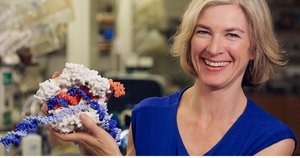
CRISPR: A gene-editing technology used in ongoing clinical trials to treat sickle cell disease.
Impact: Gene therapy has the potential to cure sickle cell disease by addressing the root cause.
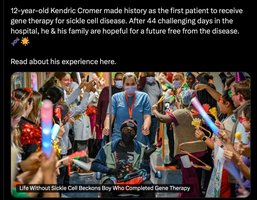
Example: The first patient to receive newly approved sickle cell gene therapy marks a milestone in medical research. 
Nucleic Acids: DNA and RNA
Types and Functions
Nucleic acids are polymers of nucleotides and serve as the genetic material in all living organisms. There are two main types:
Deoxyribonucleic Acid (DNA): Stores genetic information; double-stranded.
Ribonucleic Acid (RNA): Transfers genetic information and participates in protein synthesis; single-stranded.
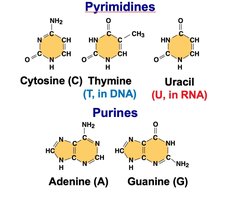
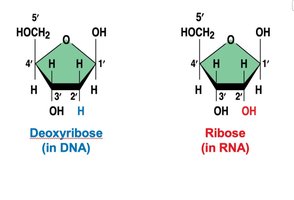
Example: DNA and RNA differ in their sugar components and nitrogenous bases.
Gene Expression
Gene expression is the process by which information from a gene is used to synthesize a functional product, typically a protein. It involves two main steps:
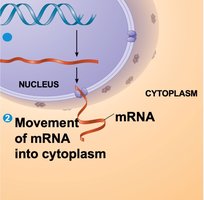
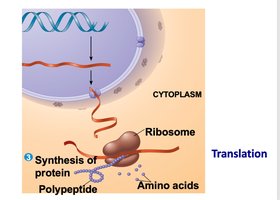
Transcription: DNA is transcribed into messenger RNA (mRNA) in the nucleus.
Translation: mRNA is translated into a polypeptide (protein) at the ribosome in the cytoplasm.
Example: The central dogma of molecular biology: DNA → RNA → Protein. 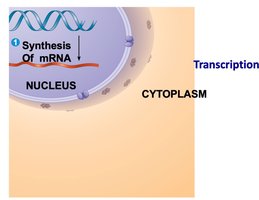
Structure of Nucleic Acids
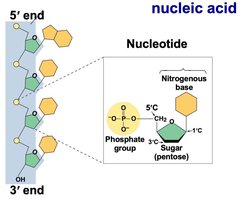
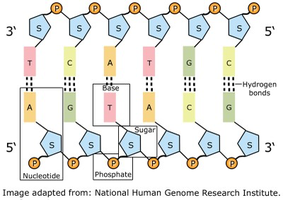
Nucleic acids are composed of nucleotides, each containing a phosphate group, a five-carbon sugar (pentose), and a nitrogenous base.
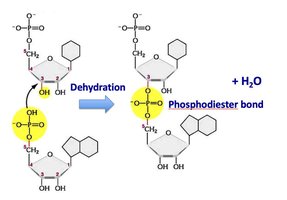
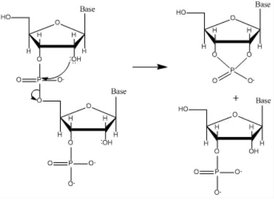
Sugar-Phosphate Backbone: Nucleotides are linked by phosphodiester bonds, forming a backbone.
Antiparallel Strands: In DNA, the two strands run in opposite directions (5' to 3' and 3' to 5').
Nitrogenous Bases: Adenine (A), Thymine (T), Cytosine (C), Guanine (G) in DNA; Uracil (U) replaces Thymine in RNA.
Example: The double helix structure of DNA is stabilized by hydrogen bonds between complementary bases. 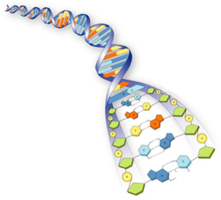
Cells: The Fundamental Units of Life
Cell Types and Common Features
All living organisms are composed of cells, which are the simplest units of life. Cells can vary greatly but share several common features:
DNA: Genetic material found in all cells.
Cell Membrane: Surrounds the cell, controlling the movement of substances.
Ribosomes: Sites of protein synthesis.
Cytoplasm: Gel-like substance inside the cell.
Example: Prokaryotic cells (bacteria and archaea) lack a nucleus, while eukaryotic cells (plants, animals, fungi, protists) have a nucleus.
Microscopy and Cell Size
Microscopy is essential for studying cells, which are typically too small to be seen with the naked eye. Cell size varies, but most cells are between 1 and 100 micrometers in diameter.
Light Microscopy: Used to observe cell structure.
Electron Microscopy: Provides higher resolution images of cell components.
Example: Prokaryotic cells are generally smaller than eukaryotic cells.
Summary Table: Comparison of DNA and RNA
Feature | DNA | RNA |
|---|---|---|
Sugar | Deoxyribose | Ribose |
Strands | Double-stranded | Single-stranded |
Nitrogenous Bases | A, T, C, G | A, U, C, G |
Stability | More stable | Less stable |
Function | Genetic storage | Protein synthesis, regulation |
Summary Table: Amino Acid Properties
Amino Acid | Property | Effect in Hemoglobin |
|---|---|---|
Glutamate | Polar, charged, hydrophilic | Normal hemoglobin function |
Valine | Non-polar, hydrophobic | Sickle cell hemoglobin, sticks to other hydrophobic groups |
Leucine | Non-polar, hydrophobic | Potentially concerning mutation |
Key Equations and Concepts
Phosphodiester Bond Formation: Nucleotides are joined by dehydration synthesis, forming phosphodiester bonds.
Central Dogma:
Additional info:
Gene expression involves multiple macromolecules: DNA, RNA, and proteins. Their building blocks are nucleotides (for DNA/RNA) and amino acids (for proteins).
Gene therapy is a rapidly advancing field, with CRISPR technology enabling precise genetic corrections.
