 Back
Proteins: Structure, Function, and Diversity (ch 5)
Study Guide - Smart Notes
 Tailored notes based on your materials, expanded with key definitions, examples, and context.
Proteins: Structure, Function, and Diversity
Introduction to Proteins
Proteins are essential macromolecules that account for more than 50% of the dry mass of most cells. They are involved in nearly every cellular process, displaying a remarkable diversity of structures and functions. Each protein is a polymer of amino acids, and its specific sequence and structure determine its function in the cell.
Diversity of Protein Function
Proteins perform a wide variety of functions in biological systems. The diversity of protein function arises from the vast array of possible amino acid sequences and resulting structures.
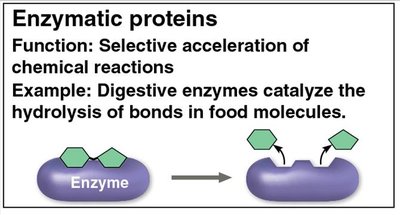
Enzymatic proteins: Catalyze biochemical reactions, increasing reaction rates without being consumed.
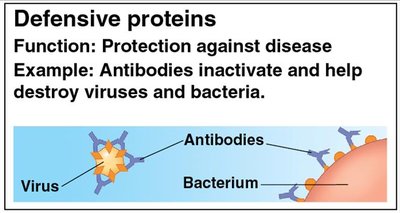
Defensive proteins: Protect organisms from disease (e.g., antibodies).
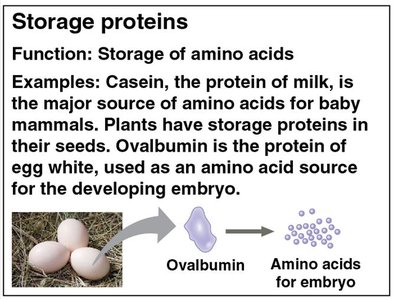
Storage proteins: Store amino acids for later use.
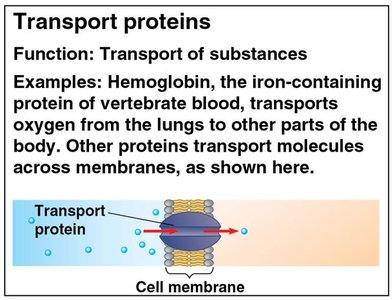
Transport proteins: Move substances across cell membranes or throughout the body.
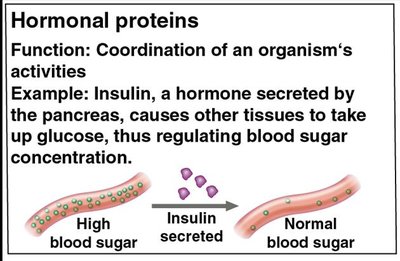
Hormonal proteins: Coordinate organismal activities (e.g., insulin).
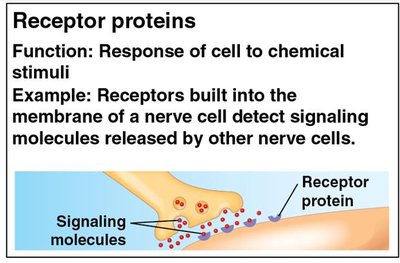
Receptor proteins: Detect and respond to chemical signals.
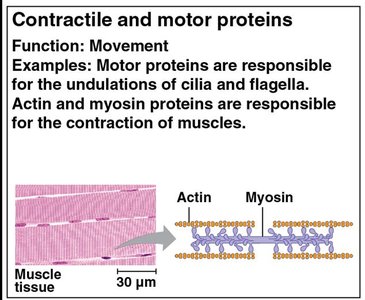
Motor proteins: Enable movement within cells and of the organism.
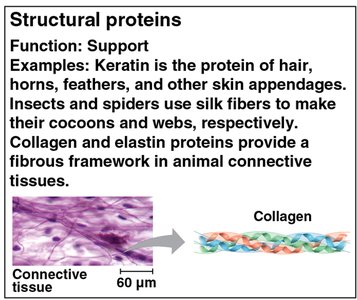
Structural proteins: Provide support and shape to cells and tissues.
Polypeptides and Amino Acids
Amino Acids: The Building Blocks of Proteins
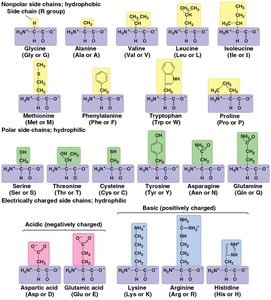
Amino acids are organic molecules containing both amino and carboxyl functional groups. They differ in their side chains, known as R groups, which determine their chemical properties. There are 20 standard amino acids found in proteins.
Polypeptide Formation
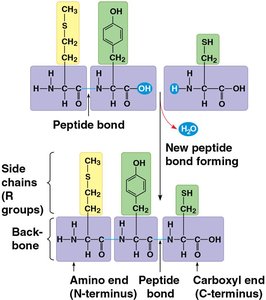
Amino acids are linked by covalent peptide bonds to form polypeptides. Each polypeptide has a unique linear sequence of amino acids, with an amino (N-) terminus and a carboxyl (C-) terminus. The sequence of amino acids determines the protein's structure and function.
Protein Structure
The function of a protein is determined by its three-dimensional structure, which is organized into four hierarchical levels:
Primary Structure
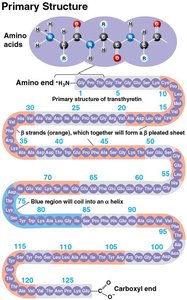
The primary structure is the unique sequence of amino acids in a polypeptide chain. This sequence is determined by genetic information and dictates all higher levels of protein structure.
Secondary Structure
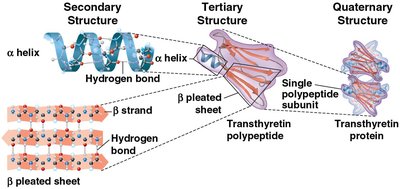
The secondary structure refers to local folding patterns within a polypeptide, stabilized by hydrogen bonds between backbone atoms. The two most common secondary structures are the α helix (a coiled structure) and the β pleated sheet (a folded, sheet-like structure).
Tertiary Structure
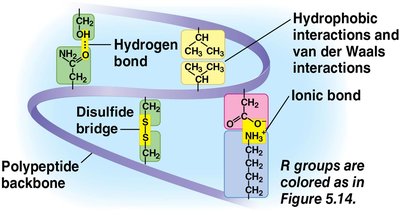
The tertiary structure is the overall three-dimensional shape of a single polypeptide, resulting from interactions among R groups, including hydrogen bonds, ionic bonds, hydrophobic interactions, van der Waals forces, and disulfide bridges.
Quaternary Structure
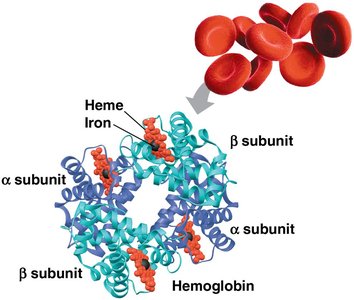
Some proteins consist of more than one polypeptide chain. The quaternary structure describes the arrangement and interaction of these multiple subunits to form a functional protein complex. Examples include collagen (three polypeptides coiled together) and hemoglobin (four subunits: two α and two β).

Protein Structure and Function Relationship
The specific shape of a protein enables it to recognize and bind to other molecules with high specificity. Even a single amino acid change can drastically affect protein function, as seen in sickle-cell disease, where a single substitution in hemoglobin leads to abnormal cell shape and function.
Factors Affecting Protein Structure
Protein structure can be influenced by extrinsic factors such as pH, salt concentration, temperature, and other environmental conditions. When these factors disrupt the weak interactions stabilizing a protein's structure, the protein may denature, losing its functional shape. Denaturation is often irreversible, but in some cases, proteins can refold if the denaturing agent is removed.
Protein Folding and Misfolding
Proteins typically fold into their functional conformations through a series of intermediate states. Misfolded proteins are associated with diseases such as Alzheimer's, Parkinson's, and mad cow disease. Determining protein structure is crucial for understanding function and is achieved through methods like X-ray crystallography, NMR spectroscopy, and cryo-electron microscopy. Recent advances in bioinformatics, such as AlphaFold, have improved structure prediction from amino acid sequences.
Summary Table: Protein Functions and Examples
Sub-type | Components | Functions |
|---|---|---|
Enzymes | Digestive enzymes | Catalyze chemical reactions |
Defensive proteins | Antibodies | Protect against disease |
Storage proteins | Casein, ovalbumin | Store amino acids |
Transport proteins | Hemoglobin, membrane transporters | Transport substances |
Hormones | Insulin | Coordinate organismal responses |
Receptor proteins | Cell membrane receptors | Receive signals from outside cell |
Motor proteins | Actin, myosin | Function in cell movement |
Structural proteins | Keratin, collagen | Provide structural support |
Key Terms and Concepts
Protein: A biologically functional molecule composed of one or more polypeptides folded into a specific structure.
Amino acid: The monomer unit of proteins, containing an amino group, carboxyl group, hydrogen atom, and variable R group.
Peptide bond: The covalent bond linking amino acids in a polypeptide chain.
Denaturation: The loss of a protein's native structure due to environmental changes, resulting in loss of function.
Enzyme: A protein that acts as a biological catalyst.
Additional info: Protein structure is a central concept in biochemistry and molecular biology, as the function of all proteins depends on their specific three-dimensional conformation. Understanding protein folding and misfolding is critical for biomedical research and drug design.
