 Back
Protist Diversity and Eukaryotic Evolution: Supergroups, Metabolism, and Ecological Roles
Study Guide - Smart Notes
 Tailored notes based on your materials, expanded with key definitions, examples, and context.
Protist Diversity and Eukaryotic Evolution
Introduction to Eukaryotic Diversity
The domain Eukarya encompasses a vast diversity of life forms, including protists, plants, fungi, and animals. Protists are a paraphyletic group of mostly unicellular eukaryotes that exhibit a wide range of morphologies, metabolic strategies, and ecological roles. Understanding their diversity and evolutionary relationships is essential for grasping the origins of complex life.

Origin and Evolution of Eukaryotes
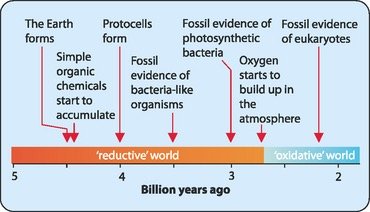
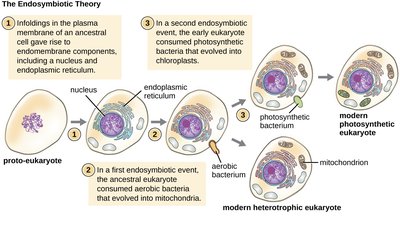
The evolution of eukaryotes marks a major transition in the history of life. Fossil and molecular evidence suggest that eukaryotes originated through a series of endosymbiotic events, where ancestral prokaryotes were engulfed and became organelles within a host cell. This process led to the development of mitochondria and, in photosynthetic lineages, chloroplasts.
Endosymbiotic Theory: Proposes that mitochondria and chloroplasts originated as free-living bacteria that were engulfed by ancestral eukaryotic cells.
Key Steps:
Engulfment of an aerobic bacterium led to mitochondria.
Engulfment of a photosynthetic bacterium (cyanobacterium) led to chloroplasts in some lineages.
Evidence: Mitochondria and chloroplasts have their own DNA, double membranes, and replicate independently of the host cell.
Eukaryotic Supergroups
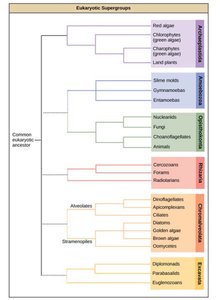
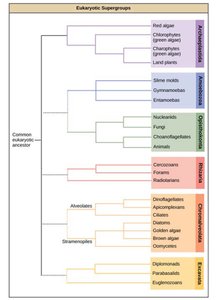
Eukaryotes are classified into several supergroups based on molecular and morphological evidence. These supergroups reflect evolutionary relationships and help organize the diversity of protists and other eukaryotes.
Major Supergroups: Excavata, SAR (Stramenopiles, Alveolates, Rhizaria), Archaeplastida, Amoebozoa, and Opisthokonta.
Phylogenetic Trees: Illustrate the evolutionary relationships among these groups, showing common ancestry and divergence.
Supergroup Excavata: Flagellated Protozoa
Overview of Excavata
Excavata is a supergroup of protists characterized by a feeding groove and, often, one or more flagella. Members include important free-living and parasitic species.
Key Genera: Euglena (euglenids), Trichonympha (termite gut symbiont), Giardia intestinalis (intestinal parasite).
Metabolic Diversity: Includes autotrophs, heterotrophs, mixotrophs, and parasites.
Euglenids (Euglena)
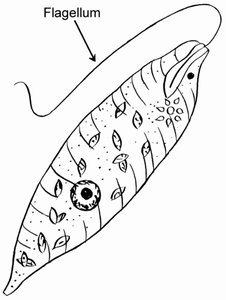
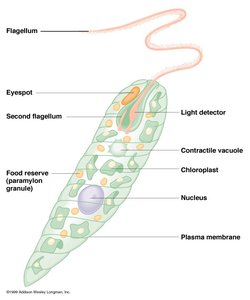
Euglenids are flagellated protists that can be autotrophic, heterotrophic, or mixotrophic. They possess chloroplasts for photosynthesis and an eyespot for detecting light.
Structure: Elongated cell with one or two flagella, chloroplasts, eyespot, and contractile vacuole.
Mixotrophy: Ability to switch between photosynthesis and heterotrophy depending on environmental conditions.
Trichonympha collaris
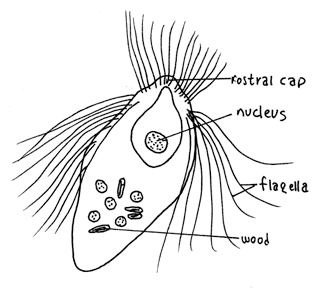
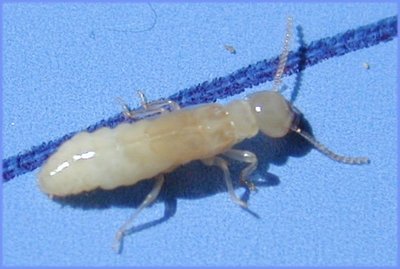
Trichonympha collaris is a flagellated protozoan that lives symbiotically in the gut of termites, aiding in the digestion of cellulose from wood.
Symbiosis: Mutualistic relationship with termites; the protozoan digests cellulose, providing nutrients for the host.
Structure: Numerous flagella and specialized organelles for wood digestion.
Giardia intestinalis
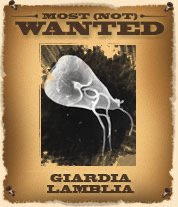
Giardia intestinalis is a parasitic protist that causes giardiasis, a diarrheal disease in humans. It is transmitted through contaminated water.
Structure: Pear-shaped cell with multiple flagella and two nuclei.
Pathogenicity: Infects the small intestine, leading to gastrointestinal symptoms.
Prevention: Avoid drinking untreated water in areas where Giardia is present.
Metabolic Strategies in Protists
Types of Metabolism
Protists exhibit a variety of metabolic strategies, allowing them to occupy diverse ecological niches.
Autotrophs: Organisms that produce their own food via photosynthesis (e.g., many algae).
Heterotrophs: Organisms that obtain food by consuming other organisms.
Mixotrophs: Organisms capable of both autotrophy and heterotrophy, depending on environmental conditions.
Parasites: Organisms that live on or in a host, causing harm (e.g., Giardia).
Supergroup Chromalveolata: Dinoflagellates and Diatoms
Dinoflagellates
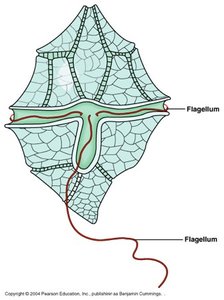
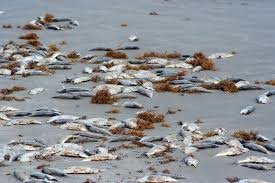
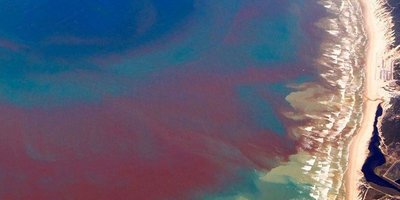
Dinoflagellates are a group of mostly marine protists with two flagella and complex cell coverings. They play important roles in marine ecosystems and can cause harmful algal blooms (red tides).
Metabolism: Includes photoautotrophs, heterotrophs, and mixotrophs.
Red Tides: Population explosions of dinoflagellates can produce toxins harmful to marine life and humans.

Diatoms
Diatoms are unicellular algae with silica cell walls, forming intricate and beautiful patterns. They are major primary producers in aquatic ecosystems.
Cell Wall: Composed of silica, forming a two-part shell called a frustule.
Ecological Role: Responsible for a significant portion of global photosynthesis and oxygen production.
Supergroup Archaeplastida: Red and Green Algae
Overview of Archaeplastida
Archaeplastida is a supergroup that includes red algae, green algae, and land plants. These organisms are united by their evolutionary origin from a primary endosymbiotic event with a cyanobacterium, leading to the development of chloroplasts.
Red Algae: Mostly multicellular, found in marine environments, and important for reef building.
Green Algae: Includes both unicellular and multicellular forms; closely related to land plants.
Summary Table: Major Protist Supergroups and Examples
Supergroup | Representative Organisms | Key Features |
|---|---|---|
Excavata | Euglena, Giardia, Trichonympha | Flagellated, diverse metabolism, some parasitic |
SAR (Stramenopiles, Alveolates, Rhizaria) | Diatoms, Dinoflagellates, Ciliates | Photosynthetic and heterotrophic, complex cell coverings |
Archaeplastida | Red algae, Green algae, Land plants | Primary plastids, photosynthetic |
Amoebozoa | Amoebas, Slime molds | Amoeboid movement, phagocytosis |
Opisthokonta | Fungi, Animals, Choanoflagellates | Posterior flagellum, multicellularity in some lineages |
Conclusion
Protists represent a foundational group in the tree of life, exhibiting remarkable diversity in form, function, and ecology. Their study provides insights into the evolution of eukaryotes, the origins of multicellularity, and the complex interactions that shape ecosystems.
