 Back
BackProtist Diversity and Evolution: Structure, Function, and Classification
Study Guide - Smart Notes
 Tailored notes based on your materials, expanded with key definitions, examples, and context.
Protist Diversity and Evolution
Introduction to Protists
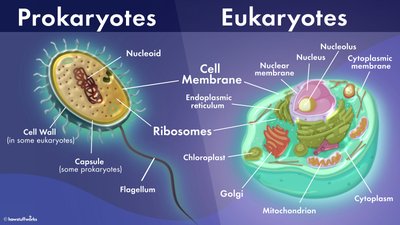
Protists are a diverse group of mostly unicellular eukaryotes that are not classified as plants, animals, or fungi. Their cellular complexity and evolutionary origins make them a central topic in understanding eukaryotic diversity.
Definition: Protists are eukaryotic organisms with a nucleus and membrane-bound organelles.
Cellular Complexity: Eukaryotic cells possess a well-developed cytoskeleton, allowing for asymmetric shapes and dynamic changes.
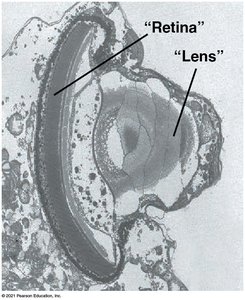
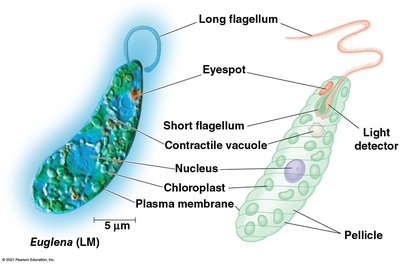
Organelles: Protists may have unique organelles not found in other eukaryotes, such as ocelloids (eye-like structures).
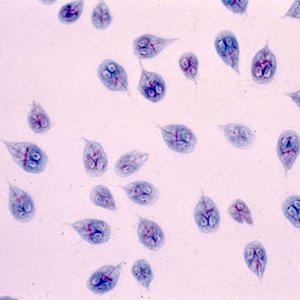
Example: Giardia intestinalis is a protist responsible for intestinal infections.
Origins of Protist Diversity: Endosymbiosis
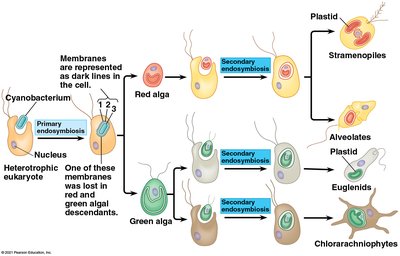
Much of protistan diversity is attributed to endosymbiosis, a process where one cell engulfs another, leading to complex organelles and new lineages.
Primary Endosymbiosis: The origin of mitochondria (from alpha proteobacteria) and chloroplasts (from cyanobacteria) occurred only once in eukaryotic evolution.
Secondary Endosymbiosis: Other eukaryotes ingested red and green algae, leading to further diversification.
Result: Formation of major protist lineages such as red and green algae.
Structural and Functional Diversity
Protists exhibit greater structural and functional diversity than any other group of eukaryotes. Most are unicellular, but some are colonial or multicellular.
Unicellular Complexity: Each cell must carry out all functions of life, making them highly complex.
Unique Organelles: Some protists possess specialized organelles, such as the ocelloid in dinoflagellates.
Nutritional Diversity
Protists display a wide range of nutritional modes, including photoautotrophy, heterotrophy, and mixotrophy.
Photoautotrophs: Use light to synthesize organic molecules (e.g., Volvox).
Heterotrophs: Ingest or absorb organic material (e.g., Amoeba, Trichonympha).
Mixotrophs: Combine photosynthesis and heterotrophic nutrition (e.g., Euglena).
Reproductive Diversity
Protists reproduce through a variety of mechanisms, including asexual and sexual reproduction.
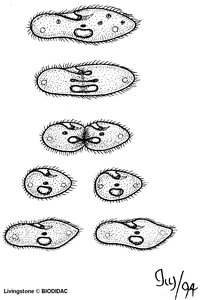
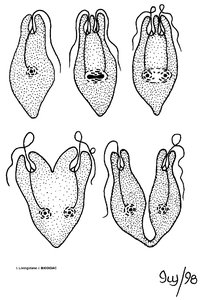
Asexual Reproduction: Binary fission is common among many protists.
Sexual Reproduction: Some species alternate between asexual and sexual phases.
Major Protist Supergroups
Excavata
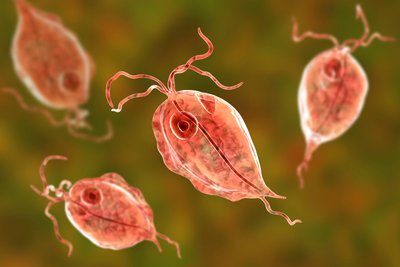
Excavata is a supergroup characterized by a feeding groove, modified mitochondria, and flagella. It includes three monophyletic groups: Diplomonads, Parabasalids, and Euglenozoans.
Diplomonads: Possess mitosomes (reduced mitochondria), lack electron transport chains, have two nuclei, and multiple flagella. Many are parasitic (e.g., Giardia intestinalis).
Parabasalids: Have hydrogenosomes (reduced mitochondria), anaerobic metabolism, and release hydrogen gas. Includes mutualists and parasites (e.g., Trichomonas vaginalis).
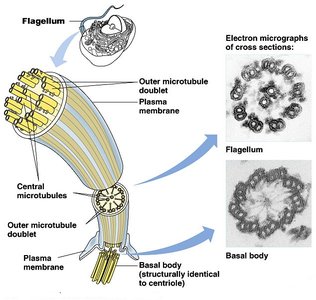
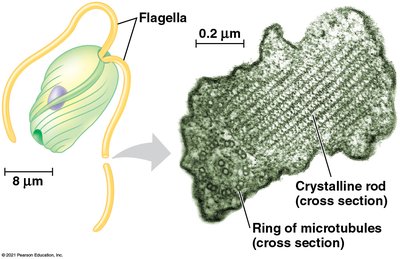
Euglenozoans: Exhibit diverse nutritional modes, have a spiral or crystalline rod inside each flagellum, and include kinetoplastids and euglenids.

SAR Clade: Stramenopiles, Alveolates, Rhizarians
The SAR clade is a supergroup defined by DNA similarities and includes Stramenopiles, Alveolates, and Rhizarians.
Stramenopiles: Important photosynthetic organisms with two flagella (one hairy, one smooth). Includes diatoms, brown algae, and oomycetes.
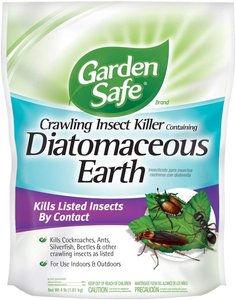
Diatoms: Have glass-like walls of silicon dioxide, are major phytoplankton, and are used in products like pesticides and toothpaste.
Brown Algae: Largest and most complex multicellular algae, marine "seaweed," used in foods and cosmetics.
Oomycetes: Water molds and plant parasites, cell walls of cellulose, cause diseases like potato late blight.
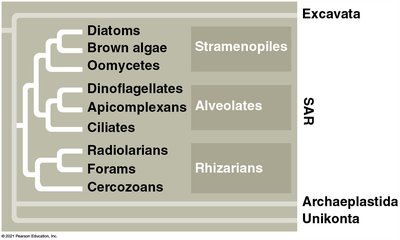
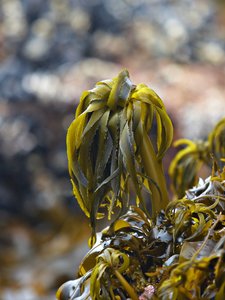
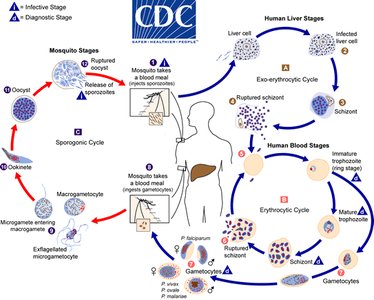
Alveolates: Distinguished by membrane-enclosed sacs beneath the cell membrane. Includes dinoflagellates, apicomplexans, and ciliates.
Dinoflagellates: Cause red tides, have two flagella in grooves of cellulose plates.
Apicomplexans: Animal parasites with complex organelles for host penetration (e.g., Plasmodium, cause of malaria).
Ciliates: Possess two types of nuclei, reproduce by binary fission and conjugation, move via cilia.

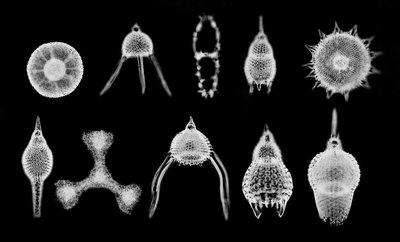
Rhizarians: Mostly amoebae with threadlike pseudopodia. Includes radiolarians, foraminifera, and cercozoans.
Radiolarians: Have symmetrical silica skeletons, pseudopodia reinforced by microtubules.
Foraminifera: Possess porous calcium carbonate shells (tests), used as indicator fossils.
Archaeplastida and Unikonta
Archaeplastida includes red and green algae, while Unikonta encompasses amoebozoans and opisthokonts (fungi, animals, and their relatives).
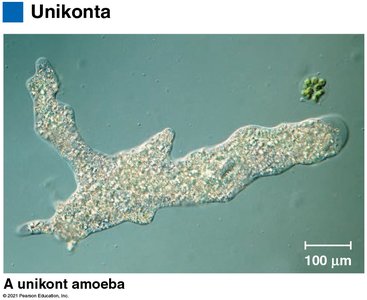
Amoebozoans: Characterized by lobe- or tube-shaped pseudopodia. Includes tubulinids, slime molds, and entamoebas.
Tubulinids: Heterotrophic, found in marine, freshwater, and soil environments.
Summary Table: Major Protist Groups
Supergroup | Key Features | Examples |
|---|---|---|
Excavata | Feeding groove, modified mitochondria, flagella | Giardia, Trichomonas, Euglena |
Stramenopiles | Two flagella (hairy & smooth), photosynthetic | Diatoms, Brown algae, Oomycetes |
Alveolates | Membrane sacs under cell membrane | Dinoflagellates, Apicomplexans, Ciliates |
Rhizarians | Threadlike pseudopodia, silica/calcium shells | Radiolarians, Foraminifera, Cercozoans |
Archaeplastida | Red & green algae, photosynthetic | Chlorophytes, Rhodophytes |
Unikonta | Lobe-shaped pseudopodia, heterotrophic | Amoebozoans, Opisthokonts |
Conclusion
Protists represent a super diverse collection of eukaryotes, with complex evolutionary origins, structural and functional diversity, and varied nutritional and reproductive strategies. Their study is essential for understanding the tree of life and the evolution of eukaryotic cells.
