 Back
Protists: Diversity, Classification, and Evolutionary Biology
Study Guide - Smart Notes
 Tailored notes based on your materials, expanded with key definitions, examples, and context.
Protists: Overview and Classification
Definition and Diversity
Protists are a diverse group of eukaryotic organisms, historically classified in the obsolete Kingdom Protista. They are primarily defined by their cellular complexity (mostly unicellular, eukaryotic) and by exclusion from plants, fungi, or animals. However, modern classification recognizes protists as a polyphyletic group, with members more closely related to plants, animals, or fungi than to each other.
Structural Diversity: Protists range from unicellular to colonial and multicellular forms.
Functional Diversity: Single-celled protists carry out all biological functions within one cell.
Ecological Diversity: Protists are found in aquatic environments, moist soil, and leaf litter.
Modes of Nutrition
Protists exhibit the most nutritional diversity among eukaryotes.
Photoautotrophs: Contain chloroplasts and perform photosynthesis.
Chemoheterotrophs: Absorb organic molecules or ingest food particles.
Mixotrophs: Combine photosynthesis and heterotrophic nutrition.
Ecological Categories
Protists are divided into three main ecological categories:
Protozoa: Ingestive, animal-like protists.
Fungus-like: Absorptive protists.
Algae: Photosynthetic, plant-like protists.
Reproductive Diversity in Protists
Life Cycles
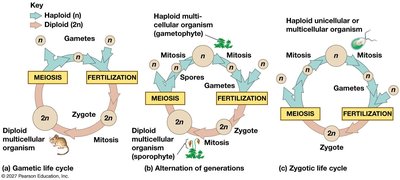
Protists display a variety of reproductive strategies, including both asexual and sexual reproduction. Many form resistant cysts to survive harsh conditions.
Haploid Stage: Vegetative stage in most protists.
Zygote: Only diploid cell in many protists.
Endosymbiosis and Protist Evolution
Primary and Secondary Endosymbiosis
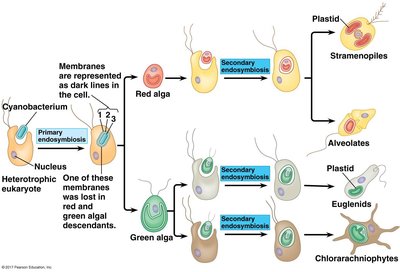
The diversity of protists is largely attributed to endosymbiotic events.
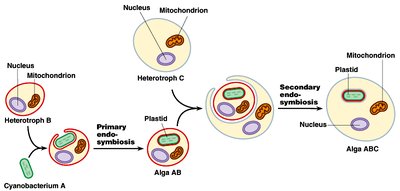
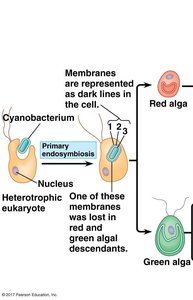
Primary Endosymbiosis: Mitochondria and plastids originated from the engulfment of an aerobic prokaryote and a cyanobacterium, respectively.
Secondary Endosymbiosis: Red and green algae were ingested by heterotrophic eukaryotes, leading to additional membranes around plastids.
Classification: Supergroups of Eukaryotes
Major Supergroups
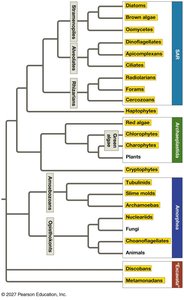
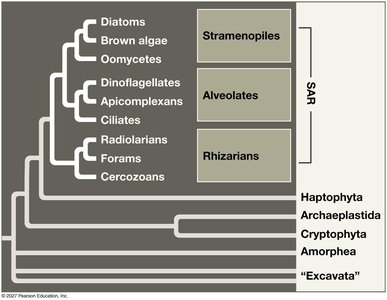
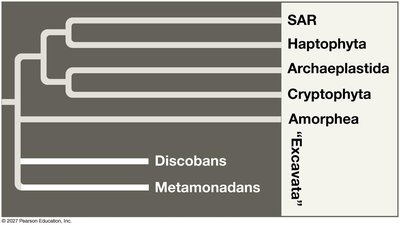
Modern classification divides eukaryotes into several supergroups, including:
SAR Clade: Stramenopiles, Alveolates, Rhizarians
Archaeplastida: Red algae, green algae, plants
Amorphea: Amoebozoans, opisthokonts (animals, fungi)
Excavata: Metamonads, Discobans
SAR Clade
Stramenopiles
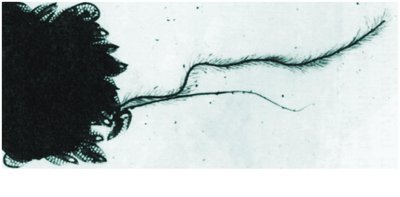
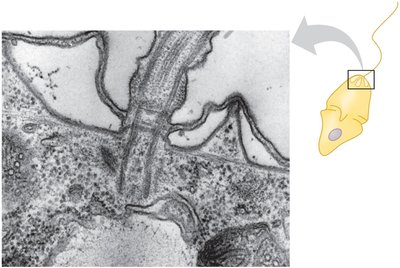
Stramenopiles include both chemoheterotrophs and algae, characterized by a "hairy" flagellum paired with a "smooth" flagellum.
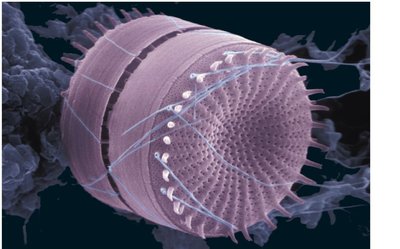
Diatoms: Unicellular algae with glass-like walls of silicon dioxide; major component of phytoplankton.
Oomycetes: Fungus-like protists, decomposers or parasites.
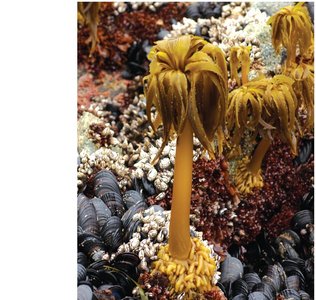
Brown Algae: Largest and most complex multicellular algae; includes kelps.
Alternation of Generations
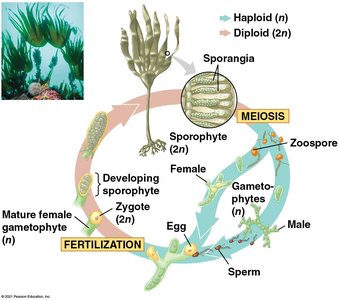
Multicellular algae often exhibit alternation of generations, alternating between haploid (gametophyte) and diploid (sporophyte) forms.
Sporophyte: Diploid, produces haploid spores by meiosis.
Gametophyte: Haploid, produces gametes that fuse to form a diploid zygote.
Alveolates
Alveolates possess membrane-bounded sacs (alveoli) under the plasma membrane.
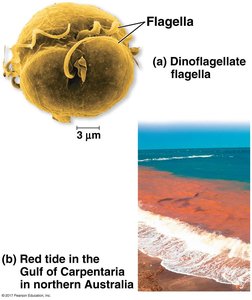
Dinoflagellates: Aquatic mixotrophs and chemoheterotrophs; cause "red tides".
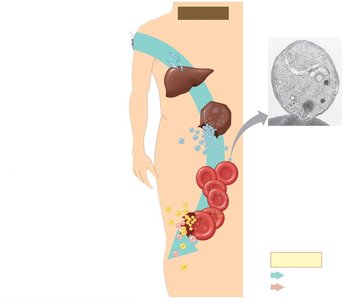
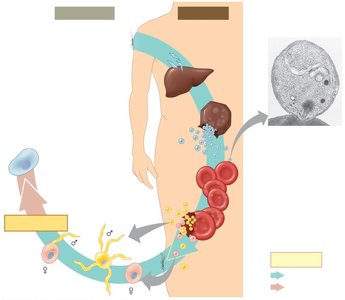
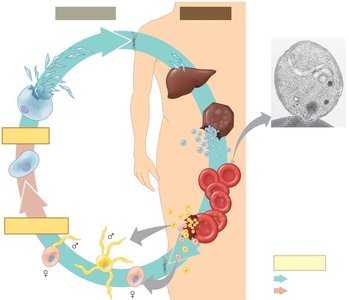
Apicomplexans: Animal parasites, including Plasmodium (malaria).
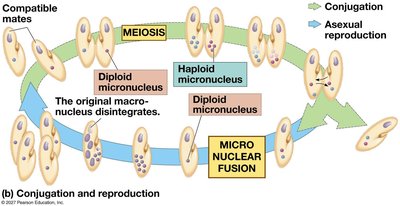
Ciliates: Use cilia for movement and feeding; have macronucleus and micronuclei.
Rhizarians
Rhizarians are amoebas with threadlike pseudopodia.
Radiolarians: Marine protists with silica tests.
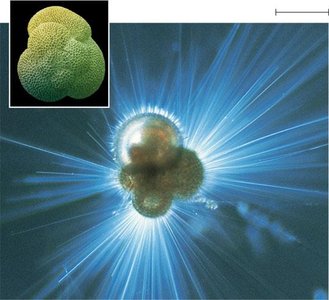
Foraminiferans: Multi-chambered calcium carbonate tests; extensive fossil record.
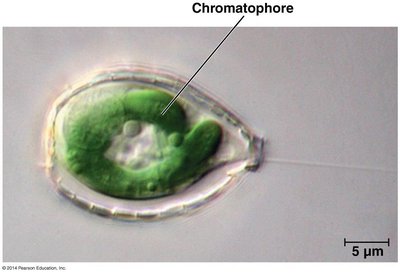
Cercozoans: Includes flagellated and amoeboid forms; some are mixotrophic or photoautotrophic.
Archaeplastida
Red and Green Algae
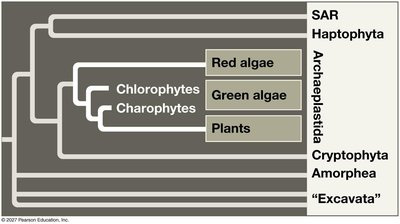
Archaeplastida includes red algae, green algae, and plants, all derived from primary endosymbiosis.
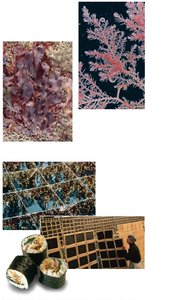
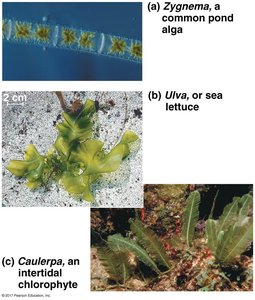
Red Algae: Multicellular, abundant in tropical coastal waters; some are used as food (nori).
Green Algae: Includes chlorophytes and charophytes; plants descended from charophytes.
Amorphea
Amoebozoans and Opisthokonts
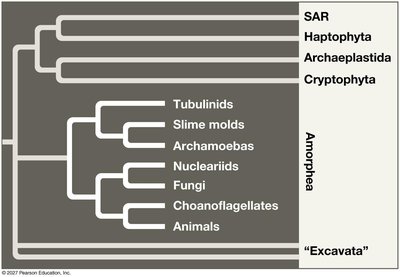
Amorphea includes amoebozoans (with lobe- or tube-shaped pseudopodia) and opisthokonts (animals, fungi, and related protists).
Tubulinids: Common unicellular amoebozoans.
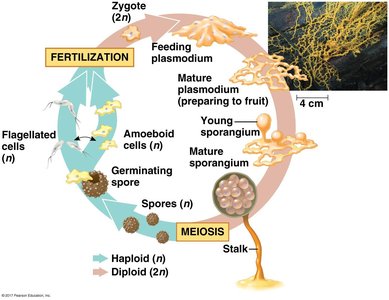
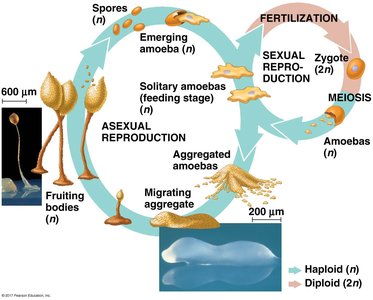
Slime Molds: Plasmodial and cellular types; complex life cycles.
Archamoebas: Often parasitic; Entamoeba histolytica causes amoebic dysentery.
Opisthokonts: Includes animals (descended from choanoflagellates) and fungi (descended from nucleariids).
Excavata
Metamonads and Discobans
Excavata is characterized by a unique cytoskeleton and an "excavated" feeding groove.
Metamonads: Lack plastids, have modified mitochondria, often live in anaerobic environments; includes Giardia intestinalis and Trichomonas vaginalis.
Discobans: Diverse clade; includes Trypanosoma (causes sleeping sickness and Chagas' disease).
Ecological Relationships of Protists
Symbiosis and Environmental Impact
Protists play crucial roles in ecological relationships:
Mutualism: Dinoflagellates nourish coral polyps; hypermastigotes digest cellulose in termites.
Pathogenicity: Some protists cause diseases (malaria, red tide).
Primary Producers: Photosynthetic protists and prokaryotes are the main producers in aquatic environments.
Summary Table: Major Protist Groups and Characteristics
Group | Key Features | Ecological Role |
|---|---|---|
Stramenopiles | Hairy and smooth flagella, includes diatoms, brown algae | Phytoplankton, decomposers |
Alveolates | Membrane sacs (alveoli), includes dinoflagellates, ciliates | Phytoplankton, parasites |
Rhizarians | Threadlike pseudopodia, includes forams, radiolarians | Marine sediment formation |
Archaeplastida | Red and green algae, plants | Primary producers |
Amorphea | Amoebozoans, opisthokonts | Decomposers, pathogens |
Excavata | Modified mitochondria, feeding groove | Parasites, pathogens |
Additional info: Modern protist classification is based on molecular phylogenetics, not just morphology or nutrition. The study of protists is essential for understanding eukaryotic evolution, ecological dynamics, and the origins of multicellularity.
