 Back
Protists: Diversity, Classification, and Evolutionary Relationships
Study Guide - Smart Notes
 Tailored notes based on your materials, expanded with key definitions, examples, and context.
Protists: An Overview
Definition and Classification
Protists are a diverse group of eukaryotic organisms that do not fit into the categories of plants, fungi, or animals. Historically, they were placed in the Kingdom Protista, but this classification is now obsolete due to their polyphyletic nature.
Eukaryotic and mostly unicellular, though some are colonial or multicellular.
Protists are now distributed among multiple kingdoms and supergroups based on genetic and structural evidence.
Some protists are more closely related to plants, animals, or fungi than to other protists.
Structural and Functional Diversity
Protists exhibit remarkable structural and functional diversity, often surpassing other eukaryotic groups.
Most are unicellular, but some are colonial or multicellular.
Single-celled protists carry out all life functions within one cell, making them highly complex.
Nutritional Diversity
Protists are the most nutritionally diverse eukaryotes.
Photoautotrophs: Contain chloroplasts and perform photosynthesis.
Chemoheterotrophs: Absorb organic molecules or ingest food particles.
Mixotrophs: Combine photosynthesis and heterotrophic nutrition.
Ecological Categories
Protists can be grouped by their ecological roles:
Protozoa: Animal-like, ingestive protists.
Fungus-like: Absorptive protists.
Algae: Plant-like, photosynthetic protists.
Habitats and Reproduction
Found wherever water is present, including moist soil and aquatic environments.
May be benthic (bottom-dwellers) or planktonic (drifting or weakly swimming).
Reproduction can be asexual or sexual; many form resistant cysts to survive harsh conditions.
Protist Life Cycles
Types of Life Cycles
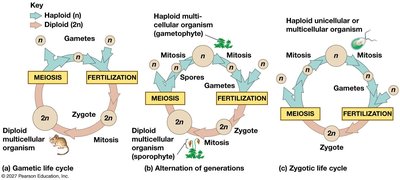
Protists display a variety of life cycles, including gametic, zygotic, and alternation of generations.
Gametic Life Cycle: Diploid organism produces haploid gametes via meiosis; gametes fuse to form a diploid zygote.
Zygotic Life Cycle: Haploid organism produces gametes; fertilization forms a diploid zygote, which undergoes meiosis.
Alternation of Generations: Both haploid (gametophyte) and diploid (sporophyte) multicellular stages alternate.
Endosymbiosis and Protist Evolution
Primary and Secondary Endosymbiosis
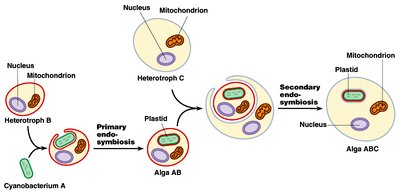
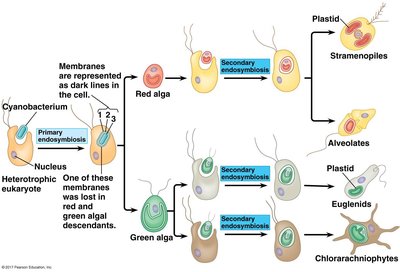
The diversity of protists is largely due to endosymbiotic events.
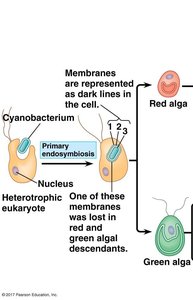
Primary endosymbiosis: An ancestral eukaryote engulfed an aerobic prokaryote (mitochondrion) and a cyanobacterium (plastid).
Secondary endosymbiosis: Red or green algae were engulfed by other eukaryotes, resulting in additional plastid membranes.
Classification: Supergroups of Eukaryotes
Major Supergroups
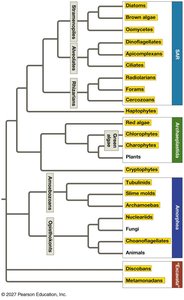
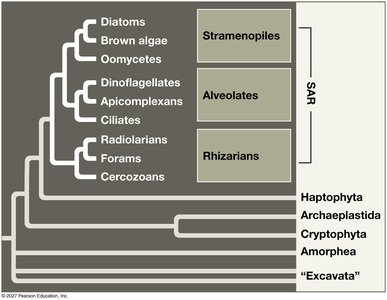
Modern classification divides eukaryotes into several supergroups:
SAR clade: Stramenopiles, Alveolates, Rhizarians
Archaeplastida: Red algae, green algae, plants
Amorphea: Amoebozoans, Opisthokonts (animals, fungi)
Excavata: Metamonads, Discobans
SAR Clade
Stramenopiles
Includes diatoms, brown algae, and oomycetes.
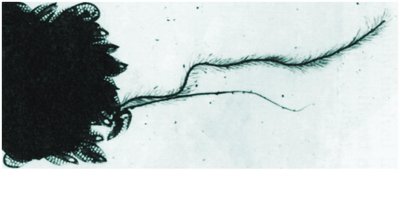
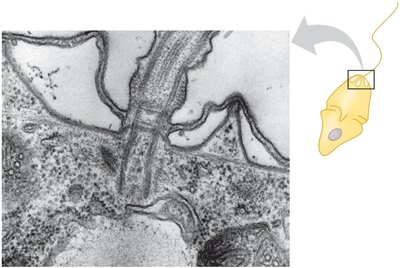
Characterized by a "hairy" flagellum paired with a "smooth" flagellum.
Diatoms
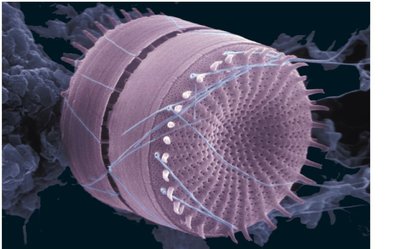
Unicellular algae with glass-like walls of silicon dioxide.
Major component of phytoplankton; important in carbon cycling.
Brown Algae
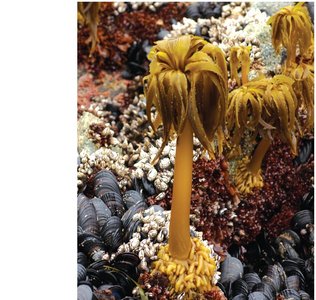
Largest and most complex algae; all are multicellular and mostly marine.
Includes "seaweeds" and giant kelps.
Alternation of Generations in Brown Algae
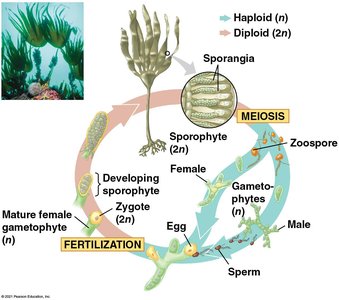
Brown algae exhibit alternation of generations, with distinct haploid and diploid multicellular stages.
Sporophyte (diploid) produces haploid spores by meiosis.
Haploid spores develop into gametophytes, which produce gametes.
Gametes fuse to form a diploid zygote, which grows into a new sporophyte.
Oomycetes
Includes water molds, white rusts, and downy mildews.
Descended from plastid-bearing ancestors but no longer have plastids.
Often decomposers or parasites; responsible for potato blight.
Alveolates
Characterized by membrane-bounded sacs (alveoli) under the plasma membrane.
Includes dinoflagellates, apicomplexans, and ciliates.
Dinoflagellates
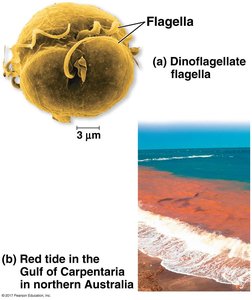
Diverse aquatic mixotrophs and chemoheterotrophs.
Common in phytoplankton; blooms cause toxic "red tides".
Apicomplexans
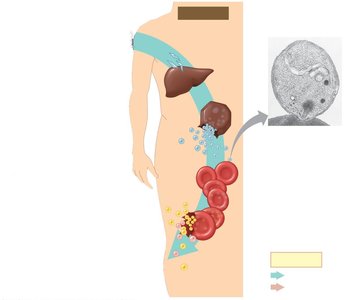
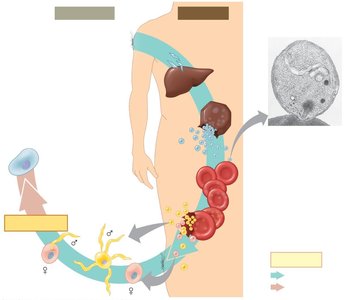
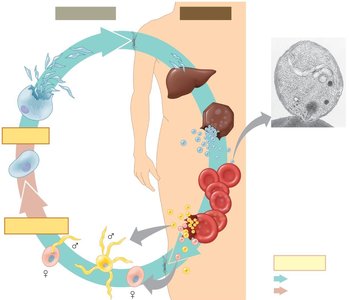
Animal parasites; some cause serious diseases (e.g., malaria).
Have a nonphotosynthetic plastid (apicoplast).
Life cycle requires multiple hosts.
Ciliates
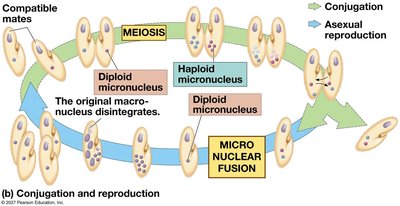
Move and feed using cilia.
Have large macronucleus and small micronuclei.
Conjugation (sexual process) produces genetic variation; reproduction is usually by binary fission.
Rhizarians
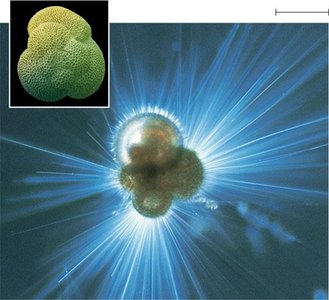
Mostly amoebas with threadlike pseudopodia.
Includes radiolarians, foraminiferans, and cercozoans.
Radiolarians
Marine protists with silica tests; pseudopodia radiate from central body.
Cercozoans
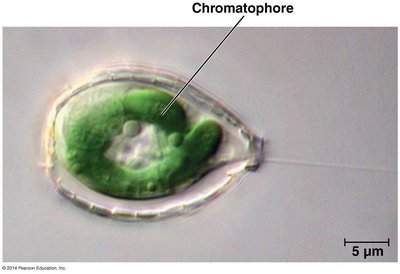
Includes flagellated and amoeboid forms.
Most are chemoheterotrophs; some are mixotrophic or photoautotrophic.
Archaeplastida
Red Algae
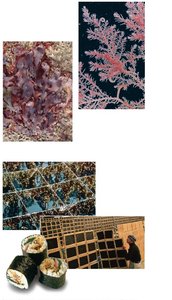
Multicellular; most abundant large algae in tropical coastal waters.
No flagellated stages; some are parasitic.
Green Algae
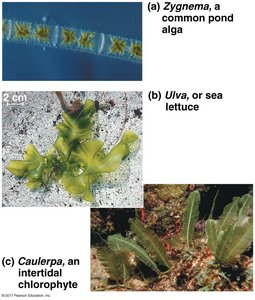
Named for chlorophyll in chloroplasts.
Two main groups: chlorophytes and charophytes (plants descended from charophytes).
Live in freshwater, marine, damp soil, lichens, or snow; include unicellular, colonial, and multicellular forms.
Amorphea
Amoebozoans
Amoebas with lobe- or tube-shaped pseudopodia.
Includes tubulinids, slime molds, and archamoebas.
Slime Molds
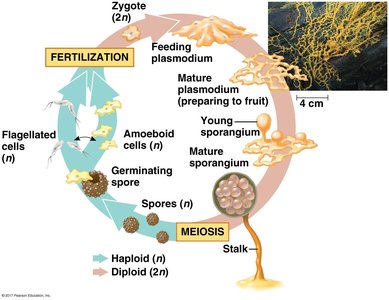
Plasmodial slime molds: Undivided plasmodium with many diploid nuclei.
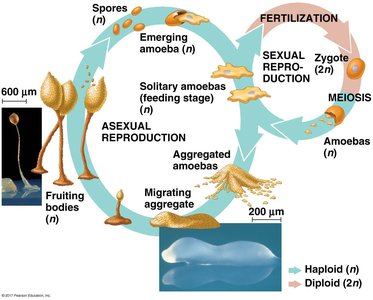
Cellular slime molds: Distinct cells aggregate to form fruiting bodies.
Archamoebas
Often parasites; Entamoeba histolytica causes amoebic dysentery.
Opisthokonts
Includes animals, fungi, and related protists.
Animals descended from choanoflagellates; fungi from nucleariids.
Excavata
Metamonads
Lack plastids, have modified mitochondria, often live in anaerobic environments.
Many are parasites (e.g., Giardia intestinalis, Trichomonas vaginalis).
Discobans
Diverse clade: predatory chemoheterotrophs, photosynthetic autotrophs, pathogenic parasites.
Includes Trypanosoma (causes sleeping sickness and Chagas’ disease).
Ecological Relationships
Symbiosis and Impact
Some protists benefit hosts (e.g., dinoflagellates nourish coral polyps, hypermastigotes digest cellulose in termites).
Others cause diseases (e.g., malaria, red tide).
Photosynthetic protists and prokaryotes are main producers in aquatic environments.
Summary Table: Major Protist Groups and Characteristics
Group | Key Features | Ecological Role |
|---|---|---|
Stramenopiles | Hairy and smooth flagella, includes diatoms, brown algae, oomycetes | Phytoplankton, decomposers, parasites |
Alveolates | Membrane sacs (alveoli), includes dinoflagellates, apicomplexans, ciliates | Phytoplankton, parasites, genetic variation |
Rhizarians | Threadlike pseudopodia, includes radiolarians, forams, cercozoans | Marine sediment formation, predation |
Archaeplastida | Red and green algae, plants | Photosynthesis, food production |
Amorphea | Amoebas, slime molds, opisthokonts | Decomposition, disease, multicellularity |
Excavata | Modified mitochondria, feeding groove | Parasitism, predation |
Key Terms and Concepts
Polyphyletic: Derived from multiple ancestral sources.
Endosymbiosis: Symbiotic relationship where one organism lives inside another.
Alternation of Generations: Life cycle alternating between haploid and diploid multicellular stages.
Phytoplankton: Photosynthetic organisms forming the base of aquatic food chains.
Mixotroph: Organism combining autotrophic and heterotrophic nutrition.
Important Equations
Meiosis and Fertilization
Meiosis:
Fertilization:
Alternation of Generations
Sporophyte (2n) produces spores (n) via meiosis.
Gametophyte (n) produces gametes (n) via mitosis.
Gametes fuse to form zygote (2n).
Summary
Protists are a highly diverse group of eukaryotes with complex evolutionary histories, structural and functional diversity, and significant ecological roles. Their classification continues to evolve as new genetic and structural evidence emerges. Understanding protists is essential for grasping the diversity and evolution of life on Earth.
