 Back
BackProtists: Diversity, Evolution, and Ecological Roles
Study Guide - Smart Notes
 Tailored notes based on your materials, expanded with key definitions, examples, and context.
Protists: An Overview
Definition and Classification
Protists are a diverse group of mostly unicellular eukaryotic organisms that are not classified as plants, animals, or fungi. The term 'protist' is informal, as molecular studies have shown that some protists are more closely related to plants, fungi, or animals than to other protists. This group is no longer considered a single kingdom.
Eukaryotic cells have a nucleus and membrane-bound organelles, distinguishing them from prokaryotes.
Protists exhibit a wide range of structural and functional diversity, including unicellular, colonial, and multicellular forms.
Structural and Functional Diversity
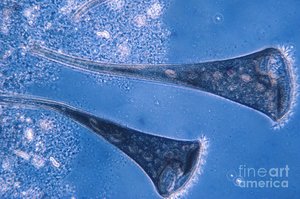
Protists are among the most structurally and functionally diverse eukaryotes. Their complexity arises from the need for each unicellular organism to perform all life functions within a single cell.
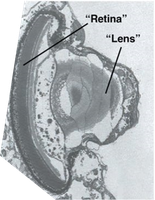
Some protists possess unique organelles, such as the ocelloid in dinoflagellates, which resembles a simple eye.
Protists display nutritional diversity: they can be photoautotrophs (with chloroplasts), heterotrophs (absorbing or ingesting food), or mixotrophs (combining both strategies).
Reproduction varies widely, with both asexual and sexual life cycles present, including all three basic types of sexual life cycles found in animals, plants, and fungi.
Endosymbiosis and the Origin of Protist Diversity
Endosymbiotic Theory
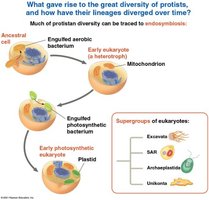
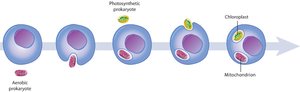
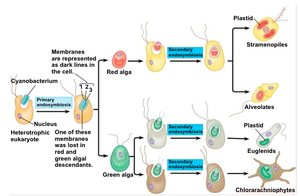
Much of protistan diversity originated through endosymbiosis, a process where one organism lives inside another. Key organelles such as mitochondria and plastids (chloroplasts) are believed to have evolved from engulfed prokaryotes.
Mitochondria likely evolved from an engulfed alpha-proteobacterium.
Plastids (e.g., chloroplasts) evolved from an engulfed cyanobacterium.
Molecular evidence suggests these events occurred only once in evolutionary history.
Plastid Evolution and Secondary Endosymbiosis
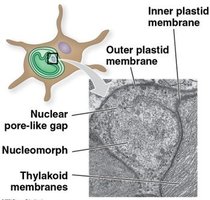
Plastids in red and green algae have two membranes, reflecting their cyanobacterial origin. Secondary endosymbiosis occurred when these algae were themselves engulfed by other eukaryotes, leading to further diversification.
Red and green algae gave rise to various photosynthetic protists through secondary endosymbiosis.
Some descendants retain a vestigial nucleus called a nucleomorph.
Major Supergroups of Eukaryotes
Classification into Four Supergroups
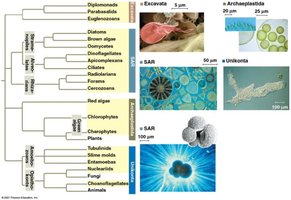
Current hypotheses divide eukaryotes into four supergroups: Excavata, SAR, Archaeplastida, and Unikonta. Each supergroup contains a variety of protist lineages, as well as plants, fungi, or animals.
Excavata: Includes diplomonads, parabasalids, and euglenozoans.
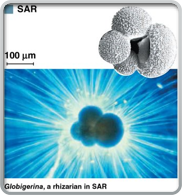
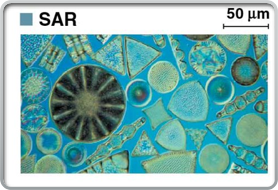
SAR: Includes stramenopiles, alveolates, and rhizarians.
Archaeplastida: Includes red algae, green algae, and plants.
Unikonta: Includes amoebozoans, animals, fungi, and related protists.
Excavata
Excavata is characterized by a unique cytoskeleton and, in some members, an excavated feeding groove. This group includes:
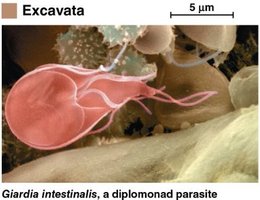
Diplomonads: Have reduced mitochondria (mitosomes), two nuclei, and multiple flagella. Many are parasites, such as Giardia intestinalis.
Parabasalids: Have hydrogenosomes (reduced mitochondria), release hydrogen gas, and include parasites like Trichomonas vaginalis.
Euglenozoans: Distinguished by a spiral or crystalline rod in their flagella; includes kinetoplastids and euglenids.
SAR Supergroup
The SAR supergroup is highly diverse and defined by DNA similarities. It includes:
Stramenopiles: Diatoms, brown algae, and oomycetes.
Alveolates: Dinoflagellates, apicomplexans, and ciliates.
Rhizarians: Forams, radiolarians, and cercozoans.
Archaeplastida
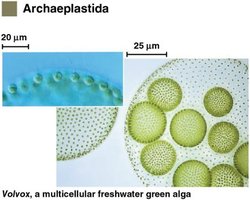
This supergroup includes red algae, green algae, and plants. Red and green algae are important for understanding the evolution of land plants.
Volvox is an example of a multicellular green alga.
Unikonta
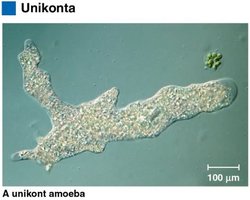
Unikonta includes amoebas with lobe- or tube-shaped pseudopodia, as well as animals, fungi, and related protists.
Amoeba proteus is a representative tubulinid amoeba.
Summary Table: Major Protist Supergroups and Examples
Supergroup | Main Clades | Representative Organisms | Key Features |
|---|---|---|---|
Excavata | Diplomonads, Parabasalids, Euglenozoans | Giardia intestinalis, Trichomonas vaginalis, Euglena | Modified mitochondria, unique flagella, some with feeding groove |
SAR | Stramenopiles, Alveolates, Rhizarians | Diatoms, Brown algae, Dinoflagellates, Forams | Photosynthetic and heterotrophic forms, complex life cycles |
Archaeplastida | Red algae, Green algae, Plants | Volvox, Ulva, Land plants | Primary endosymbiosis, chloroplasts with two membranes |
Unikonta | Amoebozoans, Opisthokonts | Amoeba proteus, Animals, Fungi | Lobe- or tube-shaped pseudopodia, includes animals and fungi |
Conclusion
Protists are a paraphyletic group that display remarkable diversity in structure, function, and ecology. Their evolutionary history is deeply intertwined with the origins of key eukaryotic features, including mitochondria and plastids, through endosymbiosis. Understanding protists is essential for grasping the evolutionary relationships among all eukaryotes, including plants, animals, and fungi.
