 Back
Protists: Diversity, Evolution, and Ecological Roles
Study Guide - Smart Notes
 Tailored notes based on your materials, expanded with key definitions, examples, and context.
Chapter 28: Protists
Introduction to Protists
Protists are a diverse group of mostly unicellular eukaryotic organisms that do not fit into the traditional kingdoms of plants, animals, or fungi. They exhibit a wide range of structural and functional diversity, playing crucial roles in ecological systems as producers, consumers, and decomposers.
The First Eukaryotes and Endosymbiosis
Origin of Eukaryotic Cells
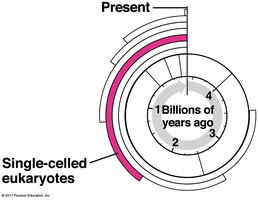
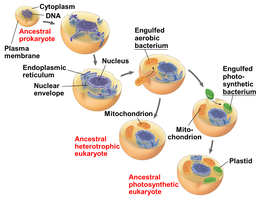
The first eukaryotes appeared over 1.8 billion years ago. Eukaryotic cells are characterized by membrane-bound organelles, including a nucleus, mitochondria, and, in some lineages, plastids. The origin of these organelles is explained by the endosymbiotic theory.
Endosymbiosis: The process by which one organism lives inside another, forming a symbiotic relationship. Mitochondria and plastids (such as chloroplasts) originated from free-living bacteria engulfed by ancestral eukaryotic cells.
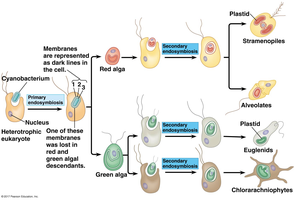
Primary Endosymbiosis: The initial engulfment of a prokaryote by a eukaryote, leading to the formation of mitochondria and plastids.
Secondary Endosymbiosis: Occurs when a eukaryotic cell engulfs another eukaryotic cell that already contains plastids, resulting in more complex plastid structures.
Protist Phylogeny and Classification
Modern Classification
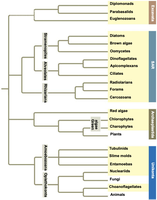
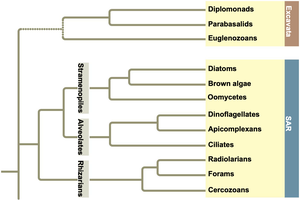
Protists were once grouped in the Kingdom Protista, but molecular studies have revealed that they are distributed among several monophyletic clades. The major groups include Excavata, SAR (Stramenopiles, Alveolates, Rhizarians), Archaeplastida, and Unikonta.
Excavata: Includes diplomonads, parabasalids, and euglenozoans.
SAR: Includes diatoms, brown algae, dinoflagellates, ciliates, and others.
Archaeplastida: Includes red algae, green algae, and land plants.
Unikonta: Includes amoebozoans, slime molds, fungi, and animals.
Dealing with Life’s Problems: Protist Adaptations
Nutrition
Protists exhibit diverse nutritional strategies:
Photoautotrophic: Use light energy to synthesize organic compounds (e.g., algae).
Heterotrophic: Obtain organic molecules by ingesting other organisms or particles (e.g., amoebas, ciliates).
Mixotrophic: Combine photosynthesis and heterotrophic nutrition (e.g., Euglena).
Locomotion
Protists move using various structures:
Pseudopodia: Temporary extensions of the cytoplasm used for movement and feeding (e.g., amoebas).
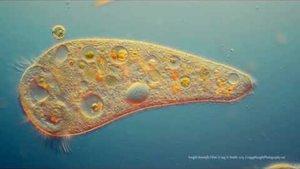
Cilia: Short, hair-like structures that beat in coordinated waves (e.g., Paramecium).
Flagella: Long, whip-like structures used for propulsion (e.g., Euglena).
Osmoregulation
Protists living in freshwater environments must regulate their internal water balance to prevent lysis. Many use contractile vacuoles to expel excess water.
Reproduction
Protists reproduce by a variety of methods, including asexual binary fission, budding, and complex sexual cycles such as alternation of generations (e.g., some algae).
Ecological Roles of Protists
Producers
Protists are major primary producers in aquatic ecosystems, accounting for approximately 30% of global photosynthesis. They are especially important in marine and freshwater environments, where they form the base of the food web.
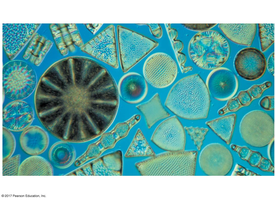
Diatoms: Unicellular algae with silica cell walls, significant contributors to carbon fixation and carbon sinks.
Dinoflagellates: Important phytoplankton, some species cause red tides and toxic algal blooms.
Brown Algae: Large multicellular algae (e.g., kelp) that provide habitat and food for marine organisms.
Parasites
Some protists are important parasites, causing diseases in humans and other organisms:
Trypanosoma: Causes sleeping sickness in humans, transmitted by tsetse flies.
Plasmodium spp.: Cause malaria, transmitted by Anopheles mosquitoes.
Symbiotic Mutualists
Some protists live in mutualistic relationships with other organisms. For example, zooxanthellae (dinoflagellates) live within coral tissues and provide them with photosynthetic products.
Decomposers
Slime molds and other protists act as decomposers, breaking down dead organic material and recycling nutrients in ecosystems.
Summary Table: Major Protist Groups and Their Features
Group | Key Features | Example Organisms | Ecological Role |
|---|---|---|---|
Excavata | Flagella, modified mitochondria | Giardia, Euglena | Parasites, mixotrophs |
SAR | Diverse, includes diatoms, brown algae, ciliates | Diatoms, Paramecium, Plasmodium | Producers, consumers, parasites |
Archaeplastida | Chloroplasts from primary endosymbiosis | Red algae, green algae | Producers |
Unikonta | Amoeboid movement, single flagellum | Amoeba, slime molds | Consumers, decomposers |
Conclusion
Protists are a highly diverse group of eukaryotes that play essential roles in ecological systems. Their evolutionary history is closely tied to the origin of eukaryotic cells through endosymbiosis, and their adaptations allow them to thrive in a variety of environments as producers, consumers, parasites, mutualists, and decomposers.
