 Back
Protists: Diversity, Evolution, and Ecological Roles
Study Guide - Smart Notes
 Tailored notes based on your materials, expanded with key definitions, examples, and context.
Protists: Diversity, Evolution, and Ecological Roles
Introduction to Protists
Protists are a diverse group of mostly unicellular eukaryotic organisms that are not classified as plants, animals, or fungi. They exhibit remarkable structural, functional, and nutritional diversity, and play key roles in ecological systems and evolutionary history.
Protist: Informal term for all eukaryotes that are not plants, animals, or fungi.
Protists are not a single kingdom; some are more closely related to plants, fungi, or animals than to other protists.
Most protists are unicellular, but some are colonial or multicellular.
Protist cells have a nucleus and other membrane-bound organelles, making them more complex than prokaryotes.
The cytoskeleton allows for asymmetric and changing cell shapes.
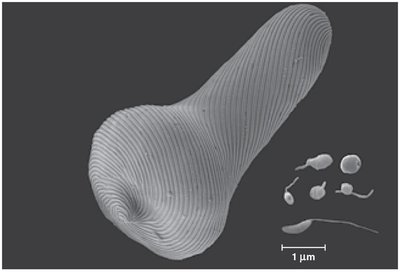
Structural and Functional Diversity in Protists
Protists are the most structurally and functionally diverse group of eukaryotes. Unicellular protists are highly complex, often containing specialized organelles not found in other eukaryotes.
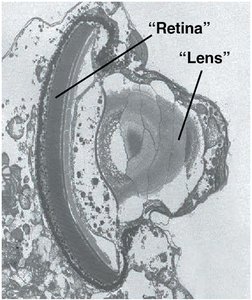
Some dinoflagellates possess an ocelloid, an eye-like organelle for detecting light.
Protists display nutritional diversity:
Photoautotrophs: Contain chloroplasts and perform photosynthesis.
Heterotrophs: Absorb organic molecules or ingest food particles.
Mixotrophs: Combine photosynthesis and heterotrophic nutrition.
Reproduction varies: some reproduce only asexually, others have both sexual and asexual phases, representing all three basic types of sexual life cycles (animal, plant, fungal).
Endosymbiosis and the Evolution of Protists
Endosymbiotic Theory
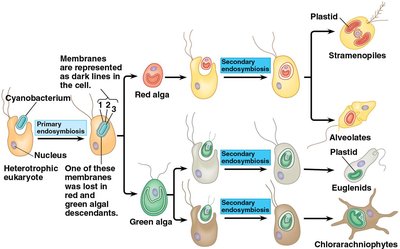
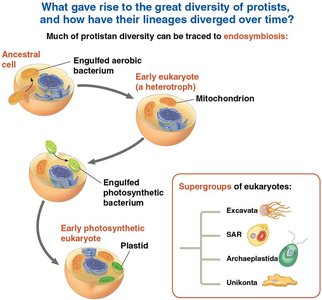
Much of protistan diversity originated through endosymbiosis, a process where one organism lives inside the cells of another. This theory explains the origin of mitochondria and plastids in eukaryotic cells.
Endosymbiosis: Relationship where one organism lives inside another's cells.
Mitochondria evolved from engulfed alpha proteobacteria; plastids (e.g., chloroplasts) evolved from engulfed cyanobacteria.
Mitochondria evolved before plastids.
Plastids arose when a heterotrophic eukaryote engulfed a photosynthetic cyanobacterium.
Red and green algae evolved from this plastid-bearing ancestor.
Secondary Endosymbiosis
Red and green algae were themselves engulfed by other eukaryotes, leading to further diversification through secondary endosymbiosis.
Plastids of red and green algae have two membranes, similar to cyanobacteria.
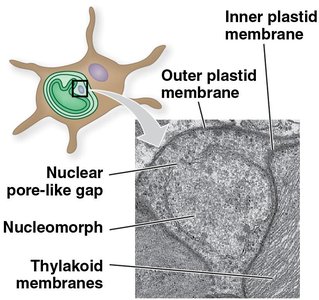
Secondary endosymbiosis resulted in additional membranes and sometimes a vestigial nucleus (nucleomorph) in the engulfed cell.
Classification: The Four Supergroups of Eukaryotes
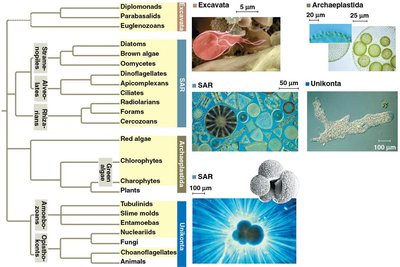
Current hypotheses divide eukaryotes into four supergroups, each containing diverse protist lineages. The root of the eukaryotic tree is unresolved, and some groups remain unclassified.
Excavata: Includes parabasalids, diplomonads, and euglenozoans.
SAR: Includes Stramenopila, Alveolata, and Rhizaria.
Archaeplastida: Includes red algae, green algae, and plants.
Unikonta: Includes amoebas, animals, fungi, and related protists.
Excavata
Excavata is characterized by a unique cytoskeleton and, in some, an "excavated" feeding groove. It includes three main groups: diplomonads, parabasalids, and euglenozoans.
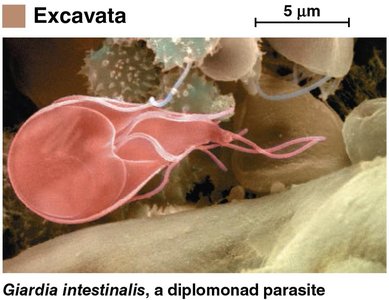
Diplomonads: Lack plastids, have reduced mitochondria (mitosomes), live in anaerobic environments, and are often parasitic (e.g., Giardia intestinalis).
Parabasalids: Have reduced mitochondria (hydrogenosomes), generate energy anaerobically, and include parasites such as Trichomonas vaginalis.
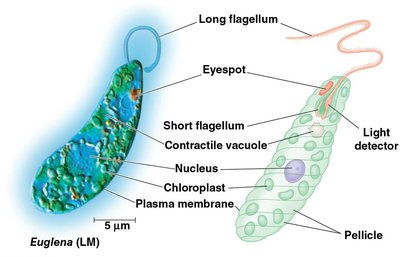
Euglenozoans: Distinguished by a spiral or crystalline rod inside their flagella; includes kinetoplastids and euglenids.
Kinetoplastids
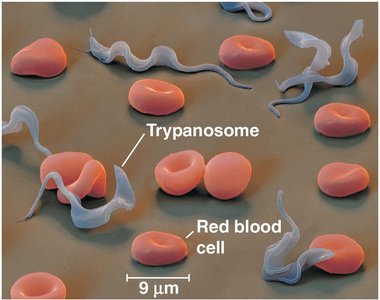
Single mitochondrion with a large mass of DNA (kinetoplast).
Includes free-living consumers and parasites (e.g., Trypanosoma, which causes sleeping sickness and Chagas' disease).
Euglenids
One or two flagella emerging from a pocket at one end of the cell.
Some are mixotrophs, switching between autotrophy and heterotrophy.
SAR Supergroup
The SAR supergroup is defined by DNA similarities and includes three major clades: Stramenopiles, Alveolates, and Rhizarians.
Stramenopiles: Most have a "hairy" and a "smooth" flagellum; includes diatoms, brown algae, and oomycetes.
Alveolates: Have membrane-enclosed sacs (alveoli) under the plasma membrane; includes dinoflagellates, apicomplexans, and ciliates.
Rhizarians: Mostly amoebas with threadlike pseudopodia; includes radiolarians, forams, and cercozoans.
Diatoms
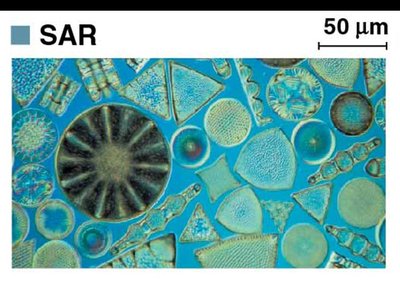
Unicellular algae with glass-like walls of silicon dioxide.
Major component of phytoplankton; important in global carbon cycling.
Brown Algae
Largest and most complex algae; mostly marine "seaweeds".
Exhibit alternation of generations (haploid and diploid multicellular stages).
Oomycetes
Water molds, white rusts, and downy mildews; resemble fungi but have cellulose cell walls.
Important decomposers and parasites (e.g., Phytophthora infestans causes potato late blight).
Alveolates
Dinoflagellates: Two flagella in grooves of cellulose plates; cause "red tides".
Apicomplexans: Animal parasites with complex life cycles (e.g., Plasmodium causes malaria).
Ciliates: Use cilia for movement and feeding; have micronuclei and macronuclei; reproduce by conjugation and binary fission.
Rhizarians
Radiolarians: Silica skeletons, marine, use pseudopodia for feeding.
Forams: Porous calcium carbonate shells (tests), important fossils for dating rocks.
Cercozoans: Amoeboid and flagellated, feed with threadlike pseudopodia; include mixotrophs and autotrophs (e.g., Paulinella chromatophora).
Archaeplastida
Archaeplastida includes red algae, green algae, and plants. This group is united by the presence of plastids derived from primary endosymbiosis with cyanobacteria.
Red algae: Contain phycoerythrin pigment; mostly multicellular; some are edible (e.g., Porphyra).
Green algae: Chloroplasts similar to plants; includes chlorophytes and charophytes (the latter are closest relatives to plants).
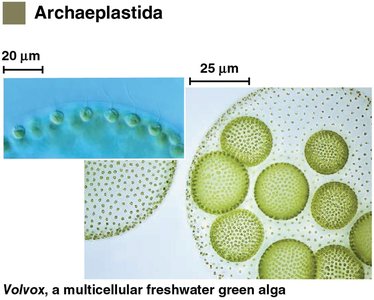
Green algae exhibit diverse forms: unicellular, colonial, multicellular, and multinucleate.
Unikonta
Unikonta includes animals, fungi, and some protists. The two major clades are amoebozoans and opisthokonts.
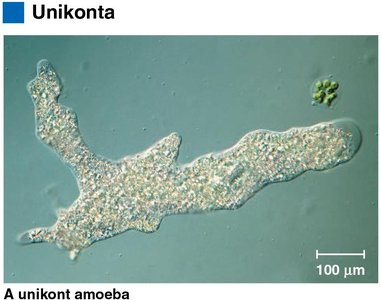
Amoebozoans: Amoebas with lobe- or tube-shaped pseudopodia; includes tubulinids, slime molds, and entamoebas.
Opisthokonts: Includes animals, fungi, and related protists.
Slime Molds
Once classified as fungi due to spore-producing fruiting bodies (convergent evolution).
Two main types: plasmodial (large multinucleate mass) and cellular (aggregate of individual cells).
Entamoebas
Parasitic amoebozoans; Entamoeba histolytica causes amoebic dysentery in humans.
Ecological Roles of Protists
Symbiotic Protists
Protists form symbiotic relationships with other organisms, acting as both beneficial symbionts and harmful parasites.
Dinoflagellates nourish reef-building corals.
Protists in termite guts aid in wood digestion.
Some are parasites, causing diseases such as malaria and sudden oak death.
Photosynthetic Protists as Producers
Photosynthetic protists are primary producers in aquatic ecosystems, converting CO2 into organic compounds and supporting food webs.
Major contributors to global carbon cycling.
Population booms (blooms) can cause ecological changes, such as "dead zones" in marine environments.
Climate change and warming sea surface temperatures threaten the productivity of photosynthetic protists, impacting marine ecosystems and the global carbon cycle.
Summary Table: Major Protist Supergroups and Examples
Supergroup | Main Clades | Key Features | Examples |
|---|---|---|---|
Excavata | Diplomonads, Parabasalids, Euglenozoans | Modified mitochondria, unique flagella, feeding groove | Giardia, Trichomonas, Euglena |
SAR | Stramenopiles, Alveolates, Rhizarians | Hairy/smooth flagella, alveoli, threadlike pseudopodia | Diatoms, Brown algae, Dinoflagellates, Forams |
Archaeplastida | Red algae, Green algae, Plants | Primary plastids, multicellularity | Volvox, Ulva, Porphyra |
Unikonta | Amoebozoans, Opisthokonts | Lobe/tube-shaped pseudopodia, multicellularity | Amoebas, Slime molds, Animals, Fungi |
