 Back
BackProtists: Diversity, Evolution, and Ecological Roles
Study Guide - Smart Notes
 Tailored notes based on your materials, expanded with key definitions, examples, and context.
Protists: An Overview
Introduction to Protists
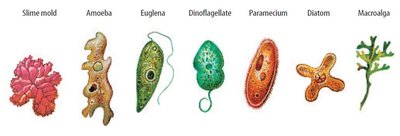
Protists are a diverse group of mostly unicellular eukaryotic organisms that are not classified as plants, animals, or fungi. They exhibit remarkable structural and functional diversity, occupying a wide range of ecological niches. Protists are essential for understanding the evolution of eukaryotes and play significant roles in ecological systems as producers, consumers, and symbionts.
Evolutionary Relationships and Endosymbiosis
Endosymbiosis in Eukaryotic Evolution
Endosymbiosis is a process in which one organism lives inside the cell of another organism, leading to the evolution of complex cell structures. Mitochondria and plastids (such as chloroplasts) originated from prokaryotes that were engulfed by ancestral eukaryotic cells. Mitochondria evolved from an alpha-proteobacterium, while plastids evolved from a cyanobacterium through secondary endosymbiosis, where a eukaryotic cell engulfed another eukaryotic cell containing plastids.
Supergroups of Eukaryotes
Modern classification divides eukaryotes into four major supergroups based on molecular and morphological evidence:
Excavata
SAR (Stramenopiles, Alveolates, Rhizarians)
Archaeplastida
Unikonta
Excavata: Protists with Modified Mitochondria and Unique Flagella
Characteristics of Excavata
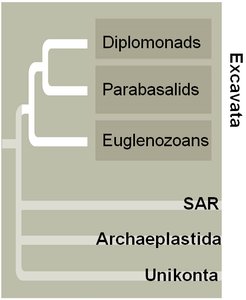
The Excavata supergroup is characterized by an "excavated" feeding groove on one side of the cell body and includes three main clades: Diplomonads, Parabasalids, and Euglenozoans. Many excavates have modified mitochondria and unique flagellar structures.
Diplomonads and Parabasalids
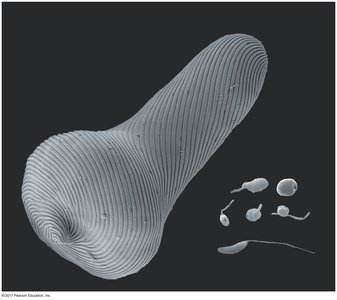
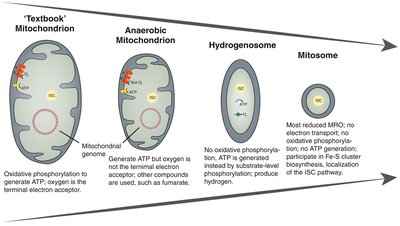
Diplomonads have reduced mitochondria called mitosomes, derive energy anaerobically, and often have two nuclei. Example: Giardia intestinalis.
Parabasalids possess hydrogenosomes (reduced mitochondria that generate some energy anaerobically). Example: Trichomonas vaginalis, a sexually transmitted parasite.
Euglenozoans
Euglenozoans are distinguished by a spiral or crystalline rod inside their flagella. This group includes kinetoplastids and euglenids.
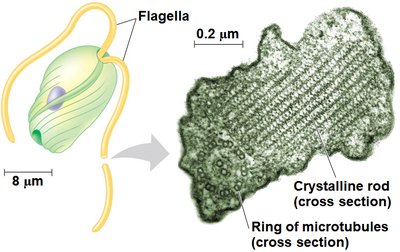
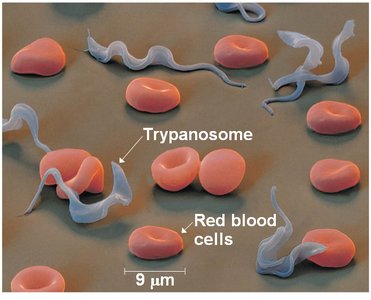
Kinetoplastids have a single large mitochondrion with a kinetoplast (a mass of DNA). Some are free-living, while others are parasitic, such as Trypanosoma (causes African sleeping sickness and Chagas' disease).
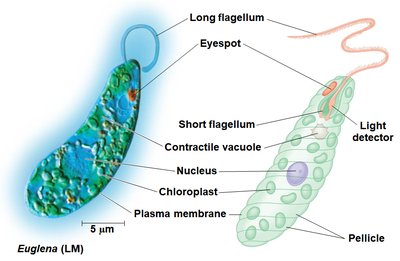
Euglenids are mostly aquatic, have one or two flagella, and can be mixotrophic (capable of both photosynthesis and heterotrophy).
SAR: A Highly Diverse Supergroup
Overview of SAR
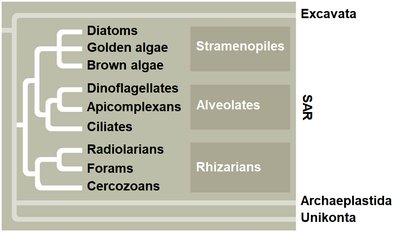
The SAR supergroup is named for its three major clades: Stramenopiles, Alveolates, and Rhizarians. This group is highly diverse and includes many ecologically important protists.
Stramenopiles
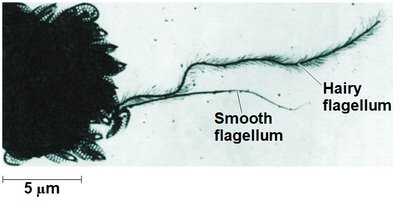
Stramenopiles are defined by the presence of a "hairy" flagellum paired with a smooth flagellum. Major groups include diatoms, golden algae, and brown algae.
Diatoms
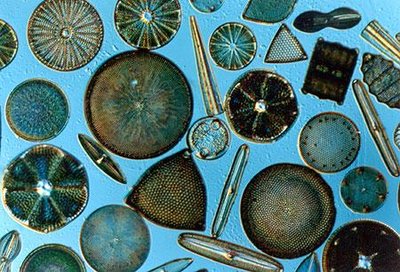
Unicellular algae with unique, glass-like walls made of silicon dioxide.
Major component of phytoplankton, important for carbon cycling and sequestration.
Brown Algae
Largest and most complex algae, all multicellular and mostly marine.
Have plant-like structures: holdfast (anchor), stipe (stem-like), and blades (leaf-like).

Alveolates
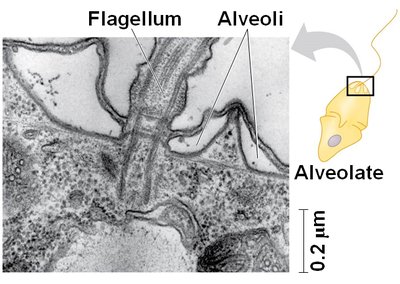
Alveolates are characterized by membrane-bound sacs (alveoli) just under the plasma membrane. Major groups include dinoflagellates, apicomplexans, and ciliates.
Dinoflagellates
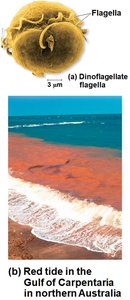
Have two flagella and cellulose plates; abundant in marine and freshwater phytoplankton.
Some species cause toxic "red tides" during population blooms.
Apicomplexans
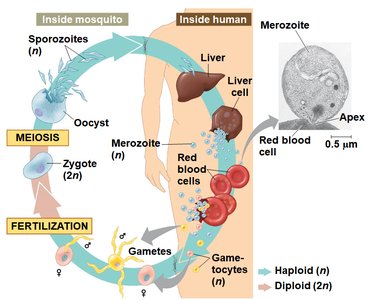
Mostly animal parasites; have a complex life cycle with both sexual and asexual stages.
Plasmodium causes malaria, requiring both mosquito and human hosts.
Ciliates
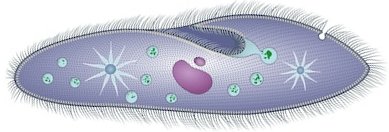
Use cilia for movement and feeding; have two types of nuclei (macronucleus and micronucleus).
Genetic variation occurs through conjugation, a sexual process distinct from reproduction.
Example: Paramecium.
Rhizarians
Rhizarians are mostly amoeboid protists with threadlike pseudopodia. Major groups include radiolarians, foraminiferans (forams), and cercozoans.
Foraminiferans (Forams)
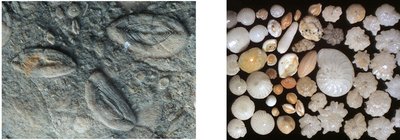
Have porous shells (tests) made of calcium carbonate; pseudopodia extend through the pores.
Important for paleoclimatology due to their fossil record and use in estimating past ocean temperatures.
Archaeplastida: Red and Green Algae
Red Algae
Contain the pigment phycoerythrin, which masks the green of chlorophyll and allows them to live at greater depths.
Mostly multicellular and abundant in coastal waters of the tropics.
Green Algae
Named for their grass-green chloroplasts; closely related to land plants.
Include two main groups: chlorophytes and charophytes (the latter are most closely related to plants).
Exhibit complex life cycles, including alternation of generations.
Unikonta: Protists Related to Fungi and Animals
Amoebozoans
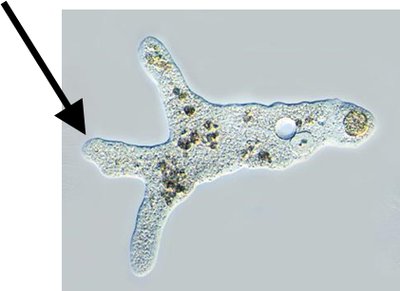
Amoebas with lobe- or tube-shaped pseudopodia.
Include slime molds, tubulinids, and entamoebas.
Slime Molds
Once classified as fungi due to their spore-producing fruiting bodies (an example of convergent evolution).
Two main types: plasmodial (form a multinucleate mass) and cellular (form multicellular aggregates).
Tubulinids and Entamoebas
Tubulinids are common, free-living amoebas in soil and water, feeding on bacteria and other protists.
Entamoebas are parasites; Entamoeba histolytica causes amebic dysentery in humans.
Ecological Roles of Protists
Symbiotic Protists
Some protists form beneficial symbioses, such as dinoflagellates nourishing coral polyps and wood-digesting protists in termite guts.
Others are parasitic, causing diseases like malaria and potato blight.
Producer Protists
Photosynthetic protists are major producers in aquatic ecosystems, converting CO2 to organic compounds and forming the base of food webs.
Their populations can rapidly increase (blooms) when nutrients are abundant.
