 Back
BackProtists: Diversity, Evolution, and Life Cycles
Study Guide - Smart Notes
 Tailored notes based on your materials, expanded with key definitions, examples, and context.
Introduction to Protists
What is a Protist?
Protists are a diverse, primarily unicellular group of eukaryotic organisms that are not classified as plants, animals, or fungi. They are paraphyletic, meaning the group does not include all descendants of their most recent common ancestor. Most eukaryotes are protists, and they likely represent the earliest eukaryotic forms.
Eukaryotic: Possess a membrane-bound nucleus and organelles.
Not monophyletic: The term "protist" is used for convenience, not as a formal taxonomic group.
Diversity: Some protists are more closely related to plants, animals, or fungi than to other protists.
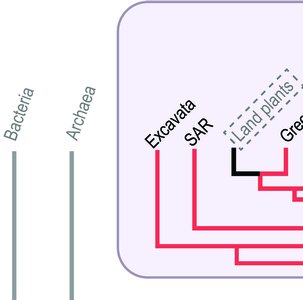
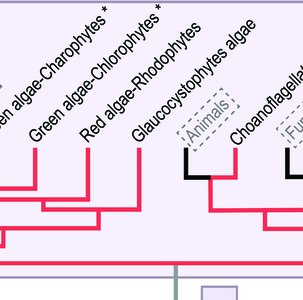
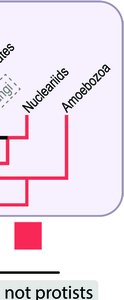

Example: All protists have a membrane-bound nucleus, but they may be unicellular or multicellular, and may or may not have a cell wall.
Diversity of Protist Structure & Function
Structural and Functional Diversity
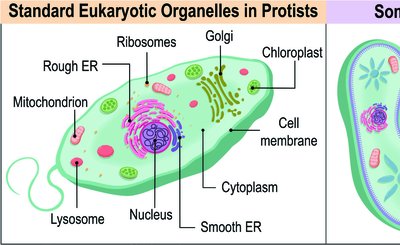
Protists exhibit remarkable diversity in their structure and function. There is no single characteristic unique to all protists, but most share standard eukaryotic organelles.
Organelles: Nucleus, mitochondria, endoplasmic reticulum, Golgi apparatus, etc.
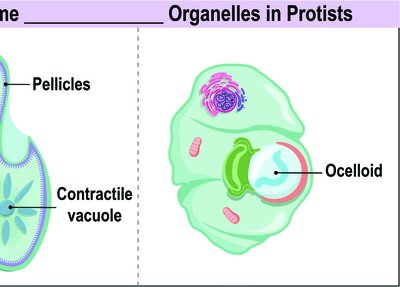
Unique Features: Some protists have specialized organelles such as contractile vacuoles, pellicles, or ocelloids.
Habitats: Most are unicellular and inhabit aquatic or moist environments.
Nutrition: Protists can be heterotrophic, autotrophic (photosynthetic), or mixotrophic (combining both modes).
Example: A mixotrophic protist that loses its chloroplasts can survive by engulfing nutrients via phagocytosis.
Evolution of Protists
Endosymbiosis and the Origin of Eukaryotes
The evolution of protists is closely tied to the process of endosymbiosis, where one organism lives inside another. This process led to the origin of key eukaryotic organelles.
Primary Endosymbiosis: A host cell engulfs a prokaryotic cell (e.g., an aerobic bacterium), which evolves into an organelle such as the mitochondrion.
Secondary Endosymbiosis: A eukaryotic host cell engulfs another eukaryotic cell (e.g., red or green algae), leading to organelles with multiple membranes (e.g., complex chloroplasts).
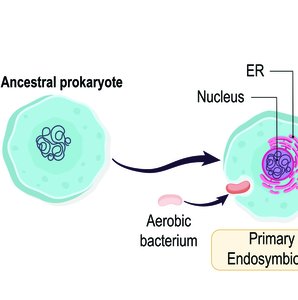
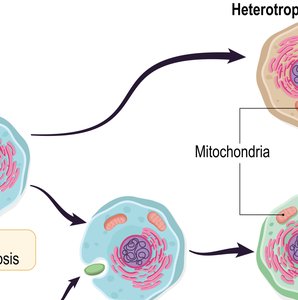
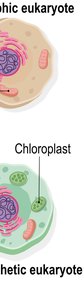

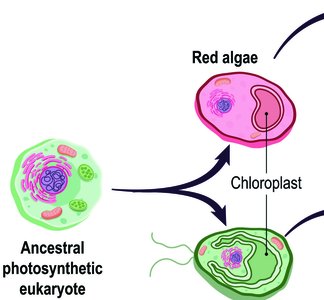
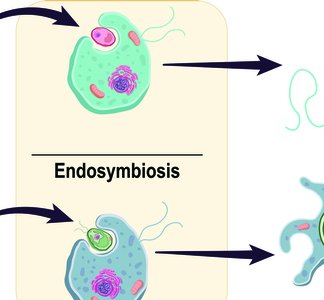
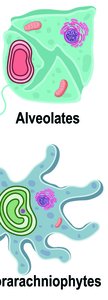
Key Point: Endosymbiosis provided eukaryotes with new metabolic capabilities, such as aerobic respiration and photosynthesis.
Example: The engulfed aerobic bacterium provided the host cell with ATP, which was advantageous for survival.
Protist Life Cycles
General Life Cycle Diversity
Protists display a wide variety of life cycles, which may be sexual, asexual, or both. Some involve alternation between haploid and diploid forms, and may require multiple hosts.
Sexual and Asexual Reproduction: Many protists can reproduce both ways, increasing genetic diversity and adaptability.
Alternation of Generations: Some protists, such as Laminaria, alternate between multicellular diploid (sporophyte) and multicellular haploid (gametophyte) stages.
Plasmodium Life Cycle (Malaria)
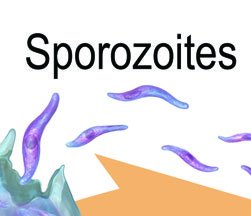
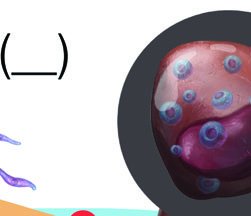
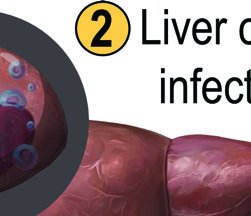
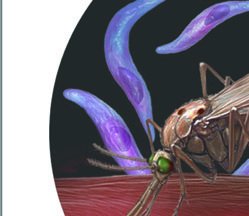
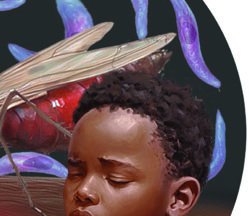
The protist Plasmodium causes malaria, a deadly disease transmitted by mosquitoes. Its life cycle involves both sexual and asexual stages and requires two hosts (mosquito and human).
Sporozoites are injected into humans by mosquitoes.
They infect liver cells, become merozoites, and reproduce asexually.
Merozoites infect red blood cells, causing symptoms.
Some merozoites become gametocytes, which are taken up by mosquitoes.
Fertilization and meiosis occur in the mosquito, completing the cycle.


Laminaria Life Cycle: Alternation of Generations
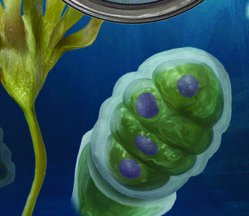
Laminaria (a brown alga) demonstrates alternation of generations, switching between multicellular diploid sporophyte and multicellular haploid gametophyte stages.
Sporophyte (2n): Produces haploid zoospores via meiosis.
Gametophyte (n): Grows from spores and produces gametes via mitosis.
Fertilization: Sperm and egg fuse to form a diploid zygote, which grows into a new sporophyte.





Paramecium Life Cycle: Conjugation & Asexual Reproduction
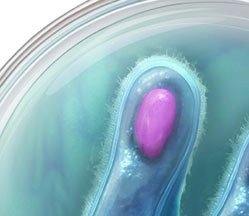
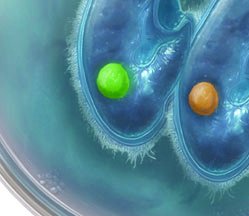
Paramecium, a ciliate protist, can exchange genetic material via conjugation (sexual process) and reproduce by binary fission (asexual process).
Two types of nuclei: Macronucleus (controls daily functions) and micronucleus (involved in reproduction).
Conjugation: Two cells exchange micronuclei, increasing genetic diversity.
Binary Fission: Produces new cells, each with both types of nuclei.
Eukaryotic Supergroups: Exploring Protist Diversity
The Four Supergroups of Eukaryotes
Modern classification divides eukaryotes into four supergroups based on genetic and morphological evidence. This system reflects evolutionary relationships more accurately than traditional taxonomy.
Excavata
SAR (Stramenopiles, Alveolates, Rhizaria)
Archaeplastida
Unikonta
Key Point: The supergroup framework is flexible and can accommodate new phylogenetic discoveries.
Example: Animals are most closely related to choanoflagellates and nucleariids within the Unikonta supergroup.
Summary Table: Key Features of Protists
Feature | Description | Example |
|---|---|---|
Cell Type | Eukaryotic (membrane-bound nucleus and organelles) | Amoeba, Paramecium |
Nutrition | Heterotrophic, autotrophic, or mixotrophic | Euglena (mixotroph) |
Reproduction | Sexual, asexual, or both | Plasmodium (both) |
Habitat | Aquatic or moist environments | Algae in ponds |
Unique Organelles | Contractile vacuole, pellicle, ocelloid | Paramecium (contractile vacuole) |
Additional info: The classification and understanding of protists is continually evolving as new genetic and molecular data become available. The supergroup system is not rank-based and is designed to reflect evolutionary relationships rather than rigid taxonomic levels.
