 Back
Protists: Diversity, Structure, and Ecological Roles
Study Guide - Smart Notes
 Tailored notes based on your materials, expanded with key definitions, examples, and context.
Protists: Diversity, Structure, and Ecological Roles
Introduction to Protists
Protists are a diverse group of mostly unicellular eukaryotic organisms that inhabit a wide range of aquatic and moist environments. They are more structurally and functionally diverse than any other group of eukaryotes, and their study provides insight into the evolution and complexity of eukaryotic life.
Protists are eukaryotes, meaning their cells contain membrane-bound organelles, including a nucleus.
Most protists are unicellular, but some form colonies or are multicellular.
They exhibit a variety of reproductive strategies, including both asexual and sexual reproduction (meiosis and fertilization).
Structural and Functional Diversity in Protists
Protists display remarkable diversity in their cellular structures and functions, allowing them to occupy a wide range of ecological niches.
Single-celled protists can be highly complex, with organelles performing specialized functions.
Protists are the most nutritionally diverse eukaryotes:
Photoautotrophs: Contain chloroplasts and perform photosynthesis.
Heterotrophs: Absorb organic molecules or ingest food particles.
Mixotrophs: Combine photosynthesis and heterotrophic nutrition.
Major Groups of Protists
Diplomonads and Parabasalids
These groups are primarily found in anaerobic environments and are notable for their modified mitochondria.
Diplomonads have mitosomes (reduced mitochondria) and are often parasitic. Example: Giardia intestinalis, a parasite in the human intestine.
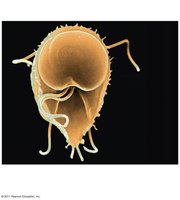
Parabasalids include Trichomonas vaginalis, a pathogen causing infections in humans.
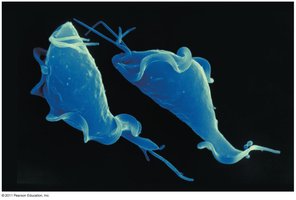
Euglenozoans
The Euglenozoa clade includes a variety of nutritional types, such as predatory heterotrophs, photosynthetic autotrophs, and parasites.
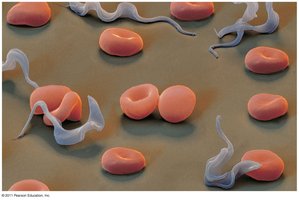
Kinetoplastids are a subgroup that includes Trypanosoma, the causative agent of sleeping sickness in humans.
Diatoms
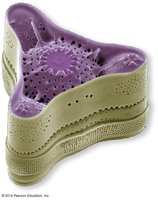
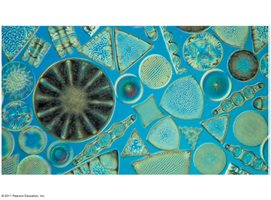
Diatoms are unicellular algae with unique, glass-like cell walls made of silicon dioxide. They are important primary producers in aquatic ecosystems.
Their fossilized walls form diatomaceous earth, which accumulates on the ocean floor.
Brown Algae
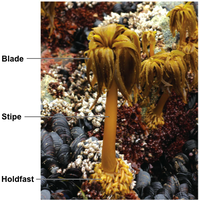
Brown algae are the largest and most complex algae, all multicellular and mostly marine. They include the giant kelps found in deep ocean waters.
Brown algae have plantlike structures: the holdfast (anchors the alga), stipe (stemlike support), and blades (leaflike structures).
Similarities to plants are due to analogous, not homologous, structures.
Dinoflagellates
Dinoflagellates are abundant in marine and freshwater phytoplankton and display a range of nutritional strategies, including phototrophy, mixotrophy, and heterotrophy.
Apicomplexans: Plasmodium and Malaria
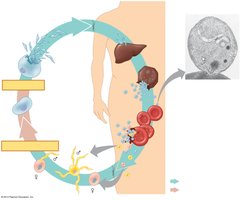
Plasmodium is the protist responsible for malaria, a disease transmitted by mosquitoes. The parasite requires both mosquito and human hosts to complete its life cycle.
The parasite enters red blood cells using a specialized structure called the apex.
Symptoms of malaria include fever and chills, resulting from the destruction of red blood cells by emerging gametocytes.
Vectors (mosquitoes) play a crucial role in transmission.
Red and Green Algae
Red algae are typically multicellular and are abundant in tropical coastal waters. Their red color is due to accessory pigments that mask chlorophyll.
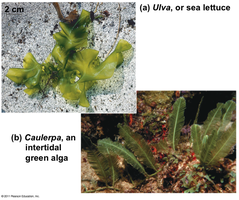
Green algae have chloroplasts similar to those of land plants. Land plants evolved from a group of green algae known as Charophytes.
Ecological Roles of Protists
Protists in Ecological Communities
Protists are found in diverse aquatic environments and play essential roles as symbionts and producers.
As symbionts, some protists benefit their hosts (e.g., dinoflagellates nourish coral polyps; wood-digesting protists help termites digest cellulose).
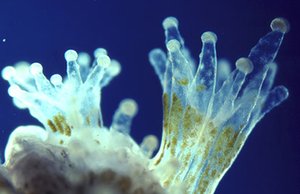
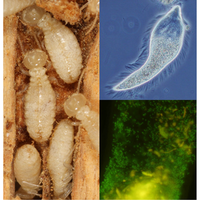
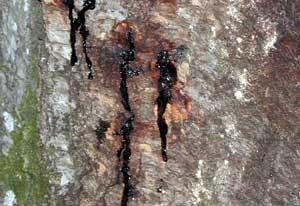
Some protists are parasitic, causing diseases such as malaria (Plasmodium), fish kills (Pfiesteria), and sudden oak death (Phytophthora ramorum).
Photosynthetic Protists as Producers
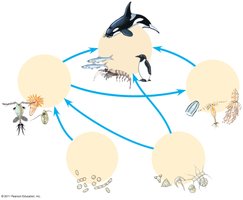
Photosynthetic protists are major producers in aquatic ecosystems, forming the base of many food webs. They convert solar energy into chemical energy, supporting higher trophic levels.
Blooms of photosynthetic protists can occur when nutrients (e.g., phosphorus) are abundant.
Prokaryotic producers (such as cyanobacteria) also contribute to primary production.
Impact of Climate Change
The biomass of photosynthetic protists has declined as sea surface temperatures have increased, which may have significant effects on marine ecosystems, fishery yields, and the global carbon cycle.
