 Back
Protists: Diversity, Structure, and Evolution in Eukaryotes Ch. 28
Study Guide - Smart Notes
 Tailored notes based on your materials, expanded with key definitions, examples, and context.
Protists: Diversity, Structure, and Evolution in Eukaryotes
Introduction to Protists
Protists are a diverse group of mostly unicellular eukaryotic organisms that do not fit into the categories of animals, plants, or fungi. They are found in a variety of aquatic and moist environments and play crucial ecological roles as producers, consumers, and symbionts.
Definition: Eukaryotic organisms that are not classified as animals, plants, or fungi.
Cellularity: Mostly unicellular, but some are colonial or multicellular.
Classification: Protists are a polyphyletic group, meaning they do not share a single common ancestor exclusive to them.
Ecological Roles: Can be producers (photoautotrophs), consumers (heterotrophs), or both (mixotrophs).
Ecological Relationships of Protists
Protists inhabit diverse environments and interact with other organisms in various ways, including mutualism, parasitism, and as primary producers in aquatic ecosystems.
Symbionts: Some protists, such as dinoflagellates, nourish coral polyps, while others, like hypermastigotes, help termites digest cellulose.
Parasites: Examples include Plasmodium (malaria), Pfiesteria shumwayae (fish kills), and Phytophthora ramorum (sudden oak death).
Nutrition in Protists
Protists exhibit the greatest nutritional diversity among eukaryotes, utilizing various strategies to obtain energy and nutrients.
Photoautotrophs: Contain chloroplasts and perform photosynthesis.
Heterotrophs: Absorb organic molecules or ingest food particles.
Mixotrophs: Combine photosynthesis and heterotrophic nutrition.
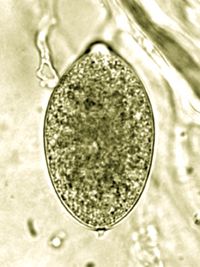
Structural and Functional Diversity
Protists display remarkable structural and functional diversity, often within a single cell. This complexity allows them to perform all necessary life functions independently.
Cellular Complexity: Organelles within a single cell carry out all biological functions.
Reproduction: Can reproduce sexually or asexually, depending on the species.
Endosymbiosis and Eukaryotic Evolution
Origin of Mitochondria and Plastids
Much of protist diversity can be traced to endosymbiosis, a process in which one organism lives inside another. This theory explains the origin of mitochondria and plastids (chloroplasts) in eukaryotic cells.
Mitochondria: Evolved from the endosymbiosis of an aerobic prokaryote (likely an alpha-proteobacterium).
Plastids: Evolved from the endosymbiosis of a photosynthetic cyanobacterium.
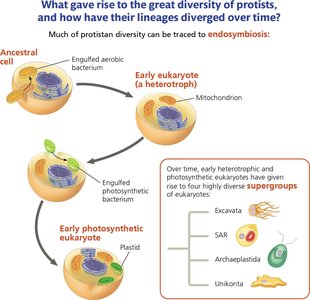
Evidence for Endosymbiosis:
Similar size and structure between mitochondria/chloroplasts and bacteria.
Both have single circular chromosomes and similar ribosomes (70S).
Reproduce by binary fission.
DNA sequence similarities to bacterial ancestors.
Lynn Margulis was a key proponent of the endosymbiotic theory.

Classification: The Four Supergroups of Eukaryotes
Modern classification divides eukaryotes into four supergroups, each containing various protist lineages.
Excavata
SAR Clade (Stramenopiles, Alveolates, Rhizarians)
Archaeplastida
Unikonta
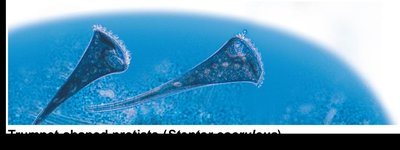
Excavata
Members of Excavata often have an excavated feeding groove, modified mitochondria, and unique flagella. This group includes diplomonads, parabasalids, and euglenozoans.
Diplomonads: Anaerobic, have mitosomes (modified mitochondria), two nuclei, multiple flagella, often parasitic (e.g., Giardia intestinalis).
Parabasalids: Reduced mitochondria (hydrogenosomes), generate energy anaerobically, include Trichomonas vaginalis (causes trichomoniasis, an STD).
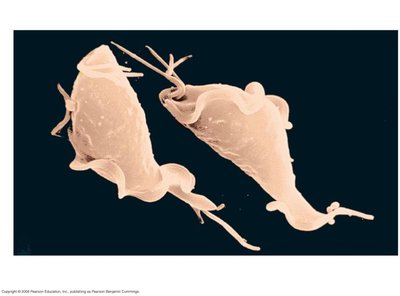
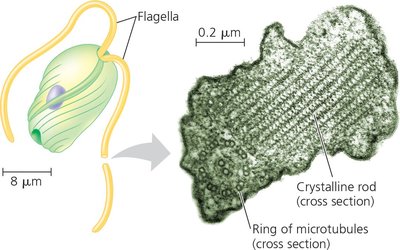
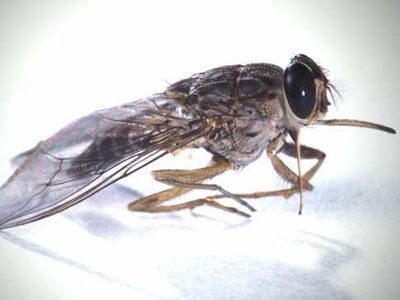
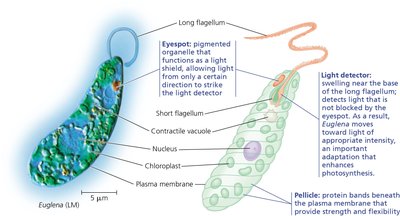
Euglenozoans: Characterized by a spiral or crystalline rod inside their flagella; includes kinetoplastids (e.g., Trypanosoma, causes sleeping sickness) and euglenids (mixotrophic, have eyespot for light detection).
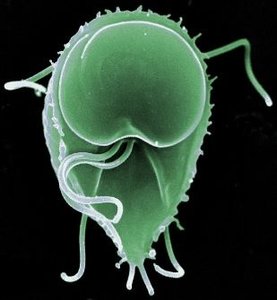
The SAR Clade
The SAR clade is a monophyletic group based on genome analysis, consisting of Stramenopiles, Alveolates, and Rhizarians.
Stramenopiles: Have hairy and smooth flagella; includes diatoms, golden algae, and brown algae.
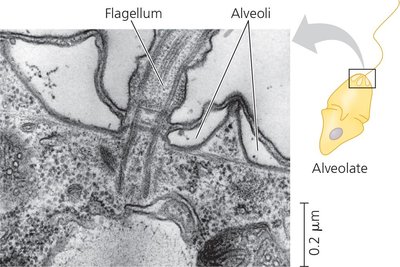
Alveolates: Possess membrane-bound sacs (alveoli) under the plasma membrane; includes dinoflagellates, apicomplexans, and ciliates.
Rhizarians: Amoebas with threadlike pseudopodia; includes forams, cercozoans, and radiolarians.
Stramenopiles
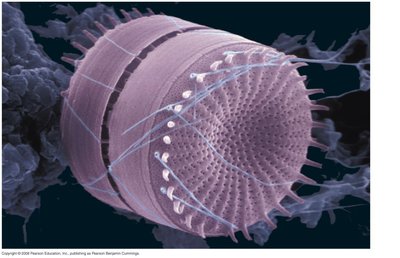
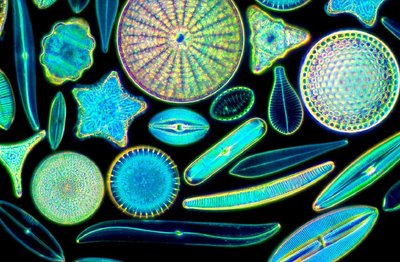
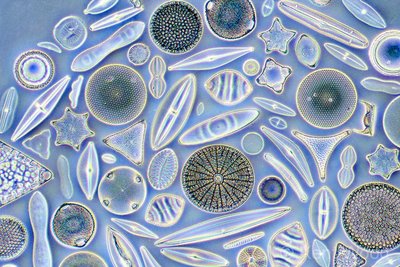
Diatoms: Unicellular algae with glass-like silica walls, major component of phytoplankton, important in carbon cycling.
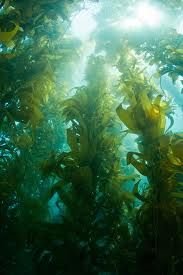
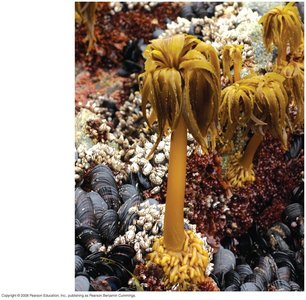
Brown Algae: Largest, most complex algae, all multicellular, includes kelps, exhibit alternation of generations.
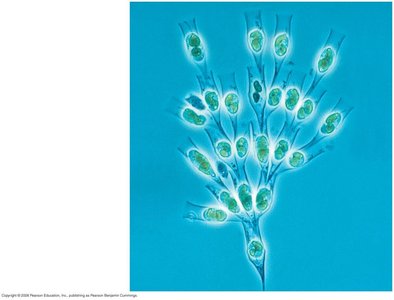
Golden Algae: Yellow and brown carotenoids, typically biflagellated, can be unicellular or colonial.
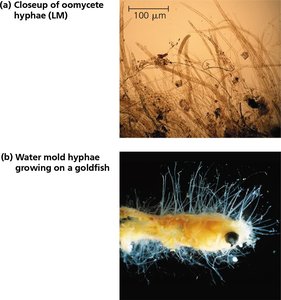
Oomycetes: Water molds, white rusts, and downy mildews; decomposers or parasites, have hyphae for nutrient uptake.
Alveolates
Dinoflagellates: Aquatic mixotrophs/heterotrophs, two flagella, can cause red tides (harmful algal blooms).
Apicomplexans: Parasites of animals, complex life cycles (e.g., Plasmodium causes malaria).
Ciliates: Use cilia for movement and feeding, have macronuclei and micronuclei, reproduce by binary fission and conjugation.
Rhizarians
Forams: Porous shells (tests), pseudopodia extend through pores, extensive fossil record.
Cercozoans: Mostly heterotrophic, some mixotrophic, important consumers in aquatic and soil ecosystems.
Radiolarians: Marine protists with silica skeletons, pseudopodia radiate from central body.
Supergroup Archaeplastida
Archaeplastida includes red algae, green algae, and land plants. This group is thought to have arisen from primary endosymbiosis.
Red Algae: Reddish due to phycoerythrin pigment, mostly multicellular, important in coral reefs and as food (nori).
Green Algae: Grass-green chloroplasts, includes chlorophytes and charophytes, can be unicellular, colonial, or multicellular.
Supergroup Unikonta
Unikonta contains protists closely related to fungi and animals, including amoebozoans (slime molds, tubulinids, entamoebas).
Amoebozoans: Move using lobe- or tube-shaped pseudopodia.
Slime Molds: Plasmodial (multinucleate supercell) and cellular (aggregate to form fruiting bodies).
Tubulinids: Unicellular, heterotrophic, found in soil and water.
Entamoebas: Parasitic, cause diseases such as amoebic dysentery.
Summary Table: Major Protist Groups
Supergroup | Major Groups | Key Features | Examples |
|---|---|---|---|
Excavata | Diplomonads, Parabasalids, Euglenozoans | Excavated groove, modified mitochondria, unique flagella | Giardia, Trichomonas, Trypanosoma, Euglena |
SAR Clade | Stramenopiles, Alveolates, Rhizarians | Hairy/smooth flagella, alveoli, threadlike pseudopodia | Diatoms, Brown algae, Dinoflagellates, Forams |
Archaeplastida | Red algae, Green algae, Land plants | Plant-type chloroplasts, phycoerythrin pigment | Porphyra, Ulva, Mosses |
Unikonta | Amoebozoans, Opisthokonts | Lobe/tube-shaped pseudopodia, close to fungi/animals | Amoeba, Slime molds, Fungi, Animals |
Additional info: This summary integrates foundational concepts from Chapter 28 (Protists) and connects them to evolutionary and ecological themes relevant to General Biology. For further study, see chapters on endosymbiosis, eukaryotic evolution, and the diversity of life.
